Popular

HEP Experiment hep-ex

34 articles

Results from high-energy/particle physics experiments and prospects for future results: tests of the standard model, measurements of standard model parameters, searches for physics beyond the standard model, astroparticle physics experimental results.

articles

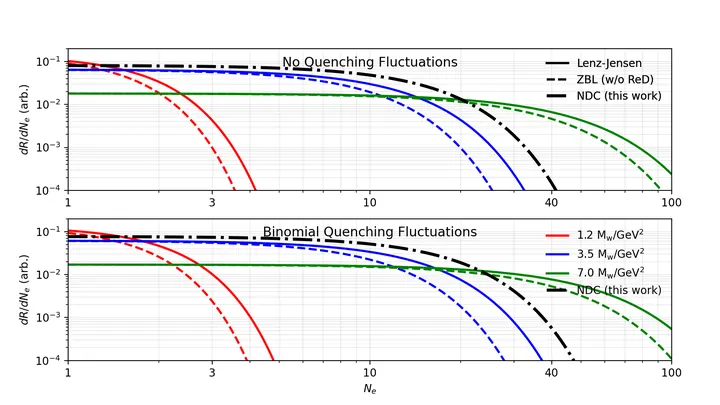
Peering Inside the Proton: New Detector Hunts for Unknown Forces

In the US, the SoLID detector is being prepared for launch — a device that will peer inside protons and neutrons, creating 3D snapshots of their structure. It will study how the energy gluing particles together gives rise to almost all mass in matter. Additionally, SoLID will hunt for new particles
arXiv:2408.16037 · 2024-08-28

Rare Attention: New AI Sees the Big Picture in Particle Streams

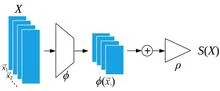
Scientists have created the IAFormer neural network to analyze particle collisions. Instead of calculating all possible connections, it focuses only on the important ones — like an experienced chef who ignores unnecessary utensils. This speeds up data processing by tens of times without reducing acc
arXiv:2505.03258 · 2025-05-06

Anti-qubit: Reverse Time for a Quantum Sensor

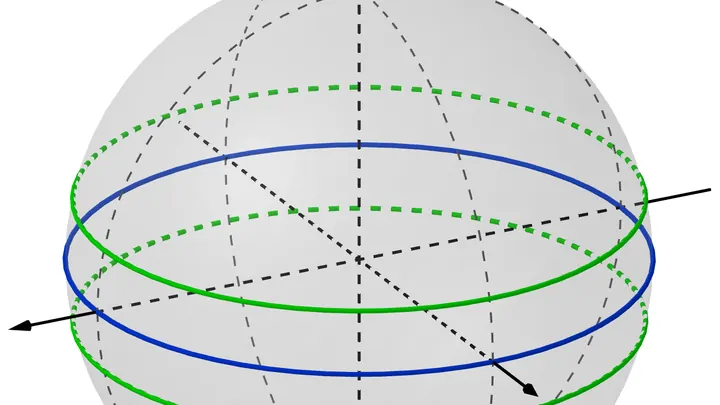
Physicists have created an 'anti-qubit' — a quantum bit that evolves backward, like a film in reverse. Paired with an ordinary qubit, it becomes a gold standard sensor that even picks up the hidden direction of weak fields.
arXiv:2506.04315v1 · 2025-06-04

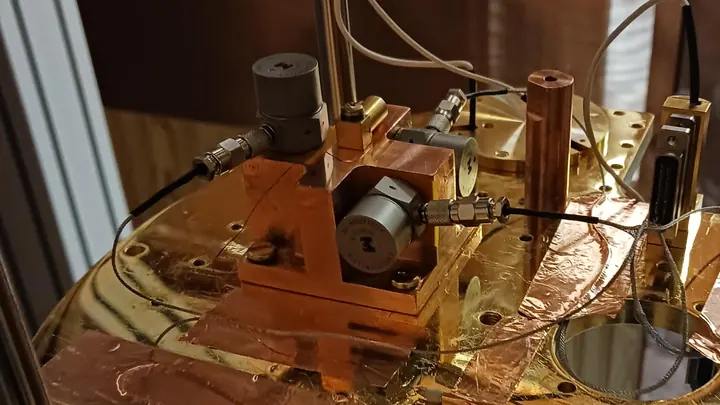
A Dust Particle Suspended in Light Hunts for Dark Matter

Physicists have turned a dust grain levitating in a vacuum into a detector capable of feeling the faint bump from a passing dark matter particle. The hunt for this mysterious substance that binds galaxies together has reached a new level: they've set record limits on its interaction with ordinary ma
arXiv:2508.00815 · 2025-08-01

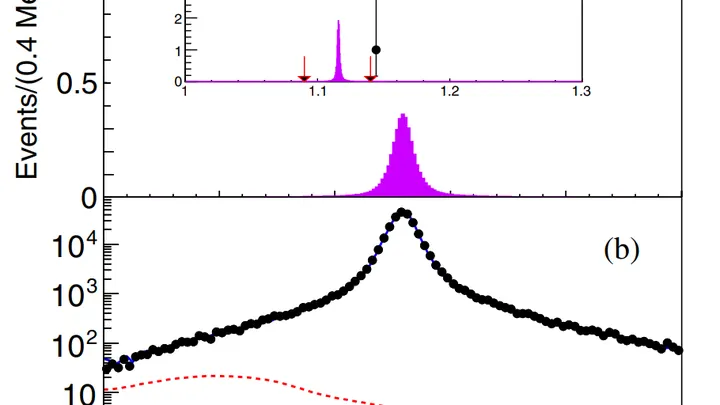
Who’s Who in the World of Particles and Antiparticles

Physicists at LHCb have learned to identify neutral B mesons—particles that can turn into their antiparticles—more precisely. The new method analyzes not individual traits but the entire decay picture, improving accuracy by 35%. This brings us closer to understanding why matter defeated antimatter i
arXiv:2508.20180 · 2025-08-27

A Bond Beyond Time

Muon pairs are born with strictly linked properties. It turns out the link holds even if one particle disintegrates before the other is measured. Our observations aren't a snapshot of reality, just a handy tool.
arXiv:2509.04436 · 2025-09-04

Cosmic Rain Will Improve Hurricane Forecasts

An invisible stream of particles from space helps assess atmospheric density. Scientists have shown that even a small muon detector can significantly improve hurricane predictions. This method provides a three-dimensional picture unattainable with ordinary pressure sensors.
arXiv:2509.04627 · 2025-09-04

How Acceleration Heats Up the Void

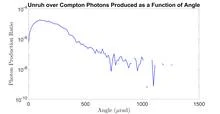
Physicists have simulated the radiation that appears when electrons are suddenly accelerated by a laser. This 'heat from nothing,' predicted by the Unruh effect, was teased out from other signals using ultra-precise simulations and extremely small observation angles. The finding brings us closer to
arXiv:2509.07386 · 2025-09-09

Magnetar Confirms: The Vacuum Isn't Empty

The polarization of X-rays from a dead star with a monstrous magnetic field has been measured. It changes with energy as if the vacuum behaves like a crystal, bending light. This is the first direct evidence of a quantum effect predicted over 80 years ago.
arXiv:2509.19446 · 2025-09-23

The Muon Magnetism Mystery

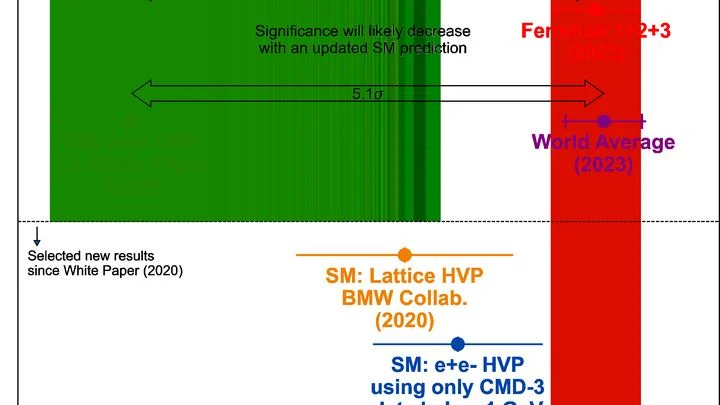
The muon's magnetic strength slightly exceeds predictions. MUonE will probe if the vacuum's own churning is to blame — and whether unknown particles lurk within.
arXiv:2512.02209 · 2025-12-01

A New Record in the Search for Dark Matter

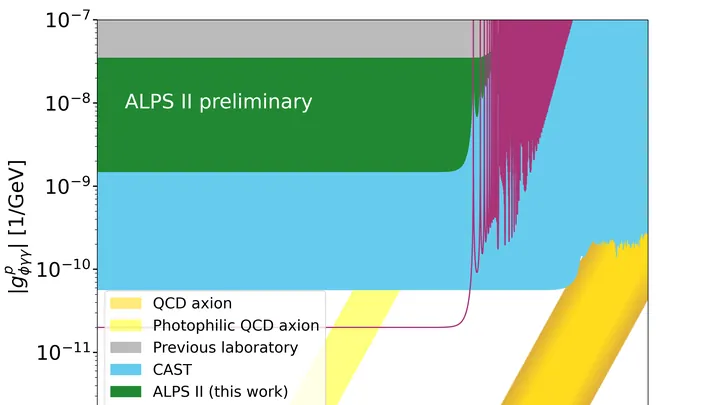
The first stage of ALPS II, a setup to search for axions—dark matter candidates—has concluded at DESY. No particles were detected, but the instrument's sensitivity proved 20 times better than previous records. The system is now being upgraded to boost accuracy another 100-fold.
arXiv:2512.14110 · 2025-12-16

Quantum Sensors Will Hear the Hum of Dark Matter

A network of quantum detectors, working as a single organism, catches elusive dark matter. The collective effect yields supersensitivity and noise resilience. Along the way, the system also detects gravitational waves.
arXiv:2512.14821 · 2025-12-16

How Neutrinos Switch Flavors While Traveling Through the Sun

Solar neutrinos change their type on the way to Earth — theory predicted this, but directly observing the transition has been elusive due to background noise. A new filtering method in the JUNO detector will make it possible to see this process for the first time, strengthening our current picture o
arXiv:2512.14824 · 2025-12-16

Dark Matter: A Hidden Threat to Neutron Stars

In a five-dimensional space, gravity behaves differently, and a tiny cloud of dark matter inside a neutron star can compress it into a black hole. The hole grows, devouring the star, thereby ruling out many possible compositions of dark matter.
arXiv:2512.14837 · 2025-12-16

Hunting Dark Matter with Qubits

Scientists turned quantum qubits into dark matter hunters. Invisible particles, nudging electrons in a qubit, cause a jitter like a snapped note on a string. Analyzing this jitter yielded record constraints on dark matter properties.
arXiv:2601.02474 · 2026-01-05

A Trap for Invisible Axions: A Magnetic Detector

Physicists are hunting axions—light particles that might make up dark matter. They built a device with a levitating magnetized rod that should tremble if axions fly through it. In a new experiment, the rod stayed still, but the scientists set record constraints on how strongly axions interact with o
arXiv:2601.04576v1 · 2026-01-08

Dark Matter and Its Taste Preferences

Like a fussy chef, dark matter can only 'cook' the Universe using certain particles. New work shows how strongly it prefers quarks (the building blocks of atomic nuclei) over leptons (electrons and their kin). Using the idea of culinary symmetries and their violations, scientists estimated how far o
arXiv:2601.07921v1 · 2026-01-12

How ytterbium atoms hunt for new forces of nature

Physicists measured with unprecedented precision how the glow colors of different ytterbium isotopes differ. They compared these atomic 'voices' using a King plot—a tool for hunting unknown forces. It turned out that the anomaly previously thought to be a hint of a fifth force was due to inaccurate
arXiv:2601.08487 · 2026-01-13

Cosmic Seesaw: How the Young Universe's Pulsations Boosted Dark Matter

New research shows that small temperature fluctuations acted like well-timed pushes on a swing, amplifying the production of axions many times over. As a result, the likely mass of dark matter particles shifts into a region where they haven't been searched for yet. This changes the search strategy.
arXiv:2602.06922 · 2026-02-06

How LHC can hear dark matter

Sometimes the Large Hadron Collider registers unexplained glitches — UFOs. Perhaps they are caused by tiny clumps of dark matter made of antimatter. Flying through the Earth's crust nearby, such an object generates a sound wave that momentarily disrupts proton beams. Three coincidences within a coup
arXiv:2602.10562 · 2026-02-11

Quantum Magic of Heavy Particles

In an experiment at the Large Hadron Collider, the CMS collaboration has for the first time measured quantum discord and steerability in top quarks. The main discovery is 'quantum magic,' a special state that cannot be reduced to ordinary correlations. This sheds light on the fundamental laws of the
arXiv:2602.15115 · 2026-02-16

Radon Hides Dark Matter

Scientists found that noise in dark matter detectors is caused by radon. Its atoms settle on internal metal grids and, when decaying, mimic signals from elusive particles. The created model matched data from the LUX and LZ experiments. This will help purify future experiments and maybe finally catch
arXiv:2602.21177 · 2026-02-24

Levitating Magnet Catches Dark Matter

The invisible substance that makes up most of the cosmos might reveal itself through the faintest nudges. A new method uses a levitating superconductor that picks up the slightest influences. Analysis shows that the magnetic response will be especially bright – this opens the door to a laboratory se
arXiv:2603.22647 · 2026-03-23

Trap for the Invisible: How to Catch Dark Matter

A method for direct detection of axions — dark matter candidates — is proposed. The system, consisting of a layered resonator, a cloud of supersensitive atoms, and a superconducting nanowire, can catch single photons born from axions. This opens up a previously unexplored frequency range for dark ma
arXiv:2603.23337 · 2026-03-24

How Neutrinos Test the Constancy of the Laws of Physics

New neutrino detectors promise to be tens of times more sensitive than existing instruments. They will catch the slightest glitch in the constancy of the speed of light—a violation that would rewrite our understanding of space and time.
arXiv:2604.19880 · 2026-04-21

A Trap for Dark Matter Particles

Dark matter is invisible, but its gravity gives it away. It might consist of axions—light particles that can turn into radio waves inside a magnet. The new detector acts like a full-band receiver: it scans a vast range of axion 'frequencies,' filtering out noise, and promises to catch their signal h
arXiv:2605.11078 · 2026-05-11

Radioactive Molecules — Hunters for Unknown Particles

Physicists have turned unstable molecules into sensitive bloodhounds, picking up the slightest influence of unknown particles and forces. This approach complements experiments at huge accelerators and could lead to the discovery of dark matter.
arXiv:2605.12767 · 2026-05-12

Twice-Charged Twins on the Hunt

Bileptons — doubly-charged particles — are predicted by theories beyond the Standard Model. They give away a rare signal: four light particles (leptons) at once. New calculations show that the current collider is almost blind to them, but the future High-Luminosity LHC could discover them even if th
arXiv:2605.15286 · 2026-05-14

Dark Matter: One Survivor Among Triplets

Researchers checked several types of triplet particles predicted by theory against astrophysical data. Almost all conflict with observations, except one. Future gamma-ray telescopes will be able to confirm or refute it.
arXiv:2605.29031 · 2026-05-27

Lead Archives: Ancient Minerals vs. Higgsino

Dark matter is physics' greatest intrigue. Paleodetection opens a new chapter: million-year-old minerals, like laurionite (PbClOH), preserve traces of dark particles. Thanks to massive lead nuclei and exceptional purity, crystals can detect the Higgsino — the superpartner of the Higgs boson, whose s
arXiv:2606.05299v1 · 2026-06-03

Plateau and Dip: The Music of Cosmic Strings

Two unrelated puzzles of the Standard Model — the flavor hierarchy and the strong CP problem — find a common solution in a model with flavor gauge symmetry and an axion. Born in the early Universe, two types of cosmic strings after the QCD phase transition become efficient sources of gravitational w
arXiv:2606.05320v1 · 2026-06-03

Triple Quantum Entanglement: The Whole Is Greater Than the Sum of the Pairs

At a future collider, electrons and positrons collide, producing a top quark, an antitop, and a Z boson. Their spins form a single quantum system, where the overall connection is more noticeable than individual pairs. Physicists have shown that such triple entanglement can actually be measured, open
arXiv:2606.11296 · 2026-06-09

Hunting Ghost Particles from a Supernova

A new method will allow catching particles with a microscopic charge, born in supernova explosions. They arrive after neutrinos, like a delayed wave. Perhaps dark matter is made of exactly such particles.
arXiv:2606.11310 · 2026-06-09

Neutrino Tomography of Earth: A New Look at the Planet's Interior

Earth's internal structure is traditionally studied using seismic methods and gravimetry. But neutrinos—particles that barely interact with matter—offer a fundamentally different, gentle probe. The IceCube collaboration analyzed 10.7 years of muon neutrino observations with energies from 500 GeV to
arXiv:2607.02644v2 · 2026-07-02