Neutrinos are fundamental particles without electric charge, almost imperceptible. They are produced in nuclear transformations in the Sun's interior, in supernova explosions, and in nuclear reactors. Their amazing feature is neutrino oscillations: one type of neutrino (called flavors) can turn into another in flight, which indicates they have mass.
History
In 1930, Wolfgang Pauli in a letter to 'radioactive ladies and gentlemen' postulated the existence of a light neutral particle to save the law of energy conservation in beta decay. Enrico Fermi in 1934 built the theory of weak interaction and introduced the term 'neutrino'. The first direct detection (electron antineutrinos from a reactor) was achieved by Clyde Cowan and Frederick Reines in 1956 in the 'Poltergeist' experiment. Later, the discovery of muon (1962) and tau (2000) neutrinos completed the picture. Experiments at Super-Kamiokande (1998) and SNO (2001) proved neutrino oscillations, which became the first direct indication of physics beyond the Standard Model.
How it works
Neutrinos are emitted in weak interactions, where W- or Z-bosons transform one particle into another. For example, in beta decay of a neutron (n → p + e⁻ + ν̄ₑ), an antineutrino is born. Due to the extremely small probability of interaction, neutrinos are registered in massive detectors: a neutrino strikes a nucleus or an electron, creating a charged lepton that emits Cherenkov or scintillation light. Oscillations arise because flavor states are superpositions of mass states. As the wave function propagates, it accumulates different phases for different mass components, leading to periodic changes in the probability of detecting a particular flavor — this effect is described by the oscillation formula.
In practice
Neutrino detectors allow us to peer into the interior of the Sun and warn of a supernova explosion hours before optical telescopes notice it.
Fun fact
The neutrino burst from supernova 1987A was recorded several hours before the arrival of light, alerting astronomers to the magnificent event.
Picture a room where hundreds of people are talking at once while you strain to hear a pin drop. That is essentially how physicists with the PandaX-4T collaboration listened for silence inside 3.7 tonnes of liquid xenon.
In an underground laboratory in South Dakota sits a tank of liquid xenon. It catches rare events: particles pass through the Earth, strike xenon nuclei, and those recoil like billiard balls after a hit. One such recoil was recorded at an energy of 248 keV, and it turned out to be as lonely as a loud bell strike on a quiet night.
Imagine an interpreter at a meeting where everyone speaks a language they don't know. At first, they have to listen to every word, write it down verbatim, and then check against the original. That's how simulations for the IceCube neutrino telescope work: they track every photon born in the Antarctic ice, traveling hundreds of meters to hit a sensor.
The night sky in neutrino light resembles a canvas worked on by two hands. One holds a broad, soft brush: these are supernova remnants, the shells left behind after stellar explosions. The other grips a fine, hard pen — microquasars, binary systems where a black hole twists matter into narrow jets.
The neutron is a particle that usually sits in the atomic nucleus and doesn't disappear. But some theories suggest that occasionally it might transform into its invisible twin — a particle that ordinary detectors can't catch.
Neutrinos are nearly elusive particles that pass through Earth without noticing it. But sometimes one slams into an atomic nucleus in water, and a whole shower of particles is born: muons, protons, pions. Catching that moment is like photographing a bullet hitting an apple from a kilometer away.
Neutrinos are tiny particles that pass through our bodies by the billions every second without touching a single atom. They have a mysterious property: on their way from the Sun or an accelerator, they can change their type, or 'flavor'—for example, turning from an electron neutrino into a muon neutrino.
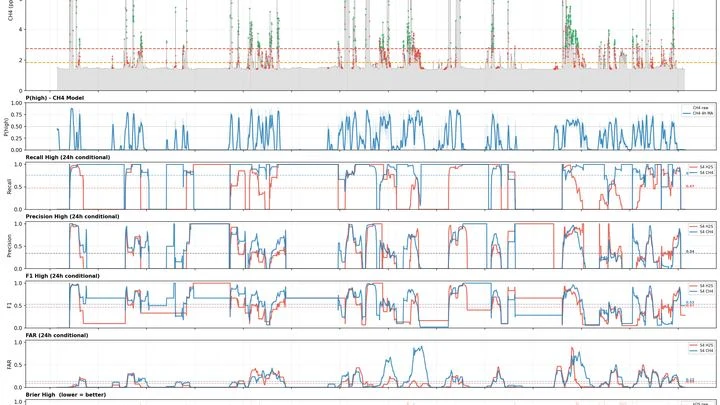
At a landfill on the outskirts of town, the wind shifts direction, and a couple of hours later the nearest village smells of rotten eggs. That's hydrogen sulfide — a gas produced when waste decomposes, and in large doses it's hazardous to health. Usually, authorities only learn about the problem after residents have already breathed it in and called to complain.
An invisible stream of particles passes through your body every second. These are neutrinos — tiny messengers from distant stars and earthly reactors. Catching them is nearly impossible: they fly through matter like a bullet through fog. But physicists have learned to set traps for them.
The night sky looks calm, but in reality, invisible particles, cosmic rays, are constantly flying through us. Among them are electrons and their antimatter counterparts, positrons. When they collide with detectors on satellites or balloons, the instruments record their energy.
In the cold Taurus cloud, where stars are born, telescopes have detected molecules with the smell of bitter almonds — aromatic nitriles. On Earth, you can find them in peach pits, but in space they hang in icy dust. What happens to them under the harsh ultraviolet light of young stars? Chemists recreated this process in the lab.
A white dwarf is the former core of a star like the Sun, squeezed down to the size of Earth. A teaspoon of its material would weigh several tons. A neutron star is an even denser remnant: a city the size of Manhattan, but with more mass than the Sun.
The universe is constantly sending us signals, but many are too faint to notice. Relic neutrinos, particles left over from the Big Bang, pass through Earth by the billions every second, yet catching even one is a feat on the edge of possibility. We need a detector that can sense energy a thousand times smaller than what it takes to move a speck of dust.
A cosmic "caliper" will soon measure a neutron star to within a hundred meters. For an object a couple dozen kilometers across, that's like measuring the thickness of a human hair from a kilometer away.
A neutron star is the remnant of an exploded supernova.
Buried in Antarctic ice, there's a detector the size of a cubic kilometer. It doesn't catch light but ghostly particles — neutrinos. Yet sometimes, a different beast might flash through: a pair of muons born together and flying apart in a wide fan. No known particle of ordinary matter can paint that pattern.
At the heart of a dying star, as its core collapses into a neutron sphere, an invisible storm is born. Trillions of neutrinos, particles that barely interact with matter, race through the scorching plasma. There are so many of them that they begin to influence each other, changing their 'flavors' (electron, muon, tau) like chameleons.
In 1976, physicists predicted that an electron could do more than just fly past a nucleus: it could slam into it, transferring energy and making the nucleus 'shudder.' They called this effect NEEC — nuclear excitation by electron capture. But for nearly fifty years, no one has managed to observe it in an experiment.
In the distant Cigar Galaxy, there is an unusual beacon. It doesn't shine in the usual sense: its rays are born in a scorching cloud around a black hole that is devouring matter from a companion star. Such objects are called ultraluminous X-ray sources. Their X-ray brilliance is so intense that it outshines entire galaxies.
This cloud, the corona, is like a boiling cauldron.
Deep beneath the ice of the South Pole, nearly two and a half kilometers down, an unusual telescope is at work. It is not pointed at the sky but through the Earth. Its quarry: neutrinos, nearly elusive particles that pass through planets and stars without interacting with anything.
High in the mountains, where the air is clear and still, physicists are preparing to catch elusive visitors from space — neutrinos. These particles, like ghosts, pass straight through the Earth, leaving almost no trace. But occasionally a neutrino does slam into an atom, producing a shower of particles that can be seen.
Solar neutrinos are tiny particles born in the Sun's core by the trillions every second. They pass through Earth almost without noticing it, and for a long time they were considered absolutely stable. But perhaps they too can "age"—decaying imperceptibly, vanishing on their way to us.
In 1998, physicists caught neutrinos doing something astonishing: the particle changes its type on the fly. That is only possible if it has mass. This became the only laboratory proof of physics beyond the Standard Model. But exactly how much a neutrino weighs remains a mystery.
A massive star exhausts its fuel, and its core collapses in a fraction of a second. A supernova is born, along with a brief but powerful shower of neutrinos. These particles barely interact with matter, so they fly away freely, carrying information about the catastrophe.
Some 123 parsecs from Earth, in the constellation Corona Australis, drifts the neutron star RX J1856.5-3754. Its diameter is about 12 kilometers, smaller than Moscow's Ring Road, but its surface temperature reaches 460 000 kelvin. The star emits a slow, almost inaudible exhalation.
In southern India, in the city of Madurai, from 2018 to 2022, an unusual 'catcher' of cosmic particles stood — the mini-ICAL prototype, weighing 85 tons. It is a 600-times scaled-down version of the future neutrino detector (those elusive ghost particles) that will be built deep underground.
At nine in the morning, the DarkSide-50 detector, 1400 meters beneath Gran Sasso, records a weak ionization pulse. By eleven at night, the frequency of such events drops noticeably. This is not an electronics glitch or a seasonal background variation.
In the first moments after the Big Bang, the Universe was a hot soup of particles. Among them floated superheavy neutrinos — thousands of times more massive than their light counterparts that permeate us today. Their masses were almost identical, like triplets rather than random passersby.
A billiard ball clicks against another in complete darkness. The sound of the impact and the clatter of balls dropping into pockets: that's all you hear. This is roughly how physicists study the interactions of elementary particles at energies that no terrestrial accelerator can reproduce.
Neutrinos are like invisible dancers who change masks mid-flight. The three types (electron, muon, and tau neutrinos) constantly morph into each other. This dance is described by a complex mixing matrix, and physicists have long tried to break it down into simple moves.
The authors of the new work reassembled one such decomposition, TM1, using the 'flavor spin' formalism.
Three rain gauges are set up across a big city. Two of them record rare but very intense downpours, while the third, the most sensitive, stays dry. That's roughly the puzzle posed by neutrino detectors: those nearly elusive particles that arrive from the depths of space.
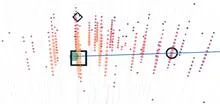
The ANITA-IV balloon-borne experiment, floating over Antarctica, reported four suspicious signals.
A huge pool of clear liquid is hidden deep underground. Inside, there is nothing but a pristine 'broth' that flashes with faint light when an invisible particle flies through. This is the JUNO detector—20,000 tons of liquid scintillator built to hunt for neutrinos.
The main enemy of such a hunt is not darkness but its own noise.
A neutron star is the collapsed core of a massive star, squeezed to the size of a city. A teaspoon of its material weighs as much as a mountain. But inside this superdense sphere, a surprise may lurk: under unimaginable pressure, neutrons break apart into quarks, giving the star a new, more compact core.
A neutron star is a city the size of Manhattan that weighs as much as half a million Earths. A teaspoon of its material would outweigh Mount Everest. Now, into this superdense sphere, something invisible and elusive has been mixed — dark matter particles.
That's exactly what physicists did in a new study.
A heaping teaspoon, and the scale reads a billion tons. That's roughly what a teaspoon of neutron star matter would weigh if you could scoop it up and put it on a scale. Such objects are born after a supernova explosion: the star's core collapses into a sphere the size of a city, and the density exceeds that of an atomic nucleus.
In 2017, the LIGO and Virgo detectors recorded the spacetime tremor from the collision of two neutron star merger — event GW170817. After the initial burst came an after-ring: a kilohertz oscillation of the newly formed superdense remnant.
Dark matter remains the inaudible bass line of the cosmic symphony — it emits no light, but its gravitational pull shapes galaxies. Vera Rubin first caught this rhythm in the 1970s by observing the rotation of stars.
Neutron stars are the last clumps of visible matter before collapsing into a black hole. In their interiors, matter is squeezed to trillion-fold densities. Here, nuclear forces and gravity weave into an exotic substance inaccessible to any earthly particle accelerator.