Two Mutant Brothers: Why One Gene Change Can Alter Lung Cancer's Fate express
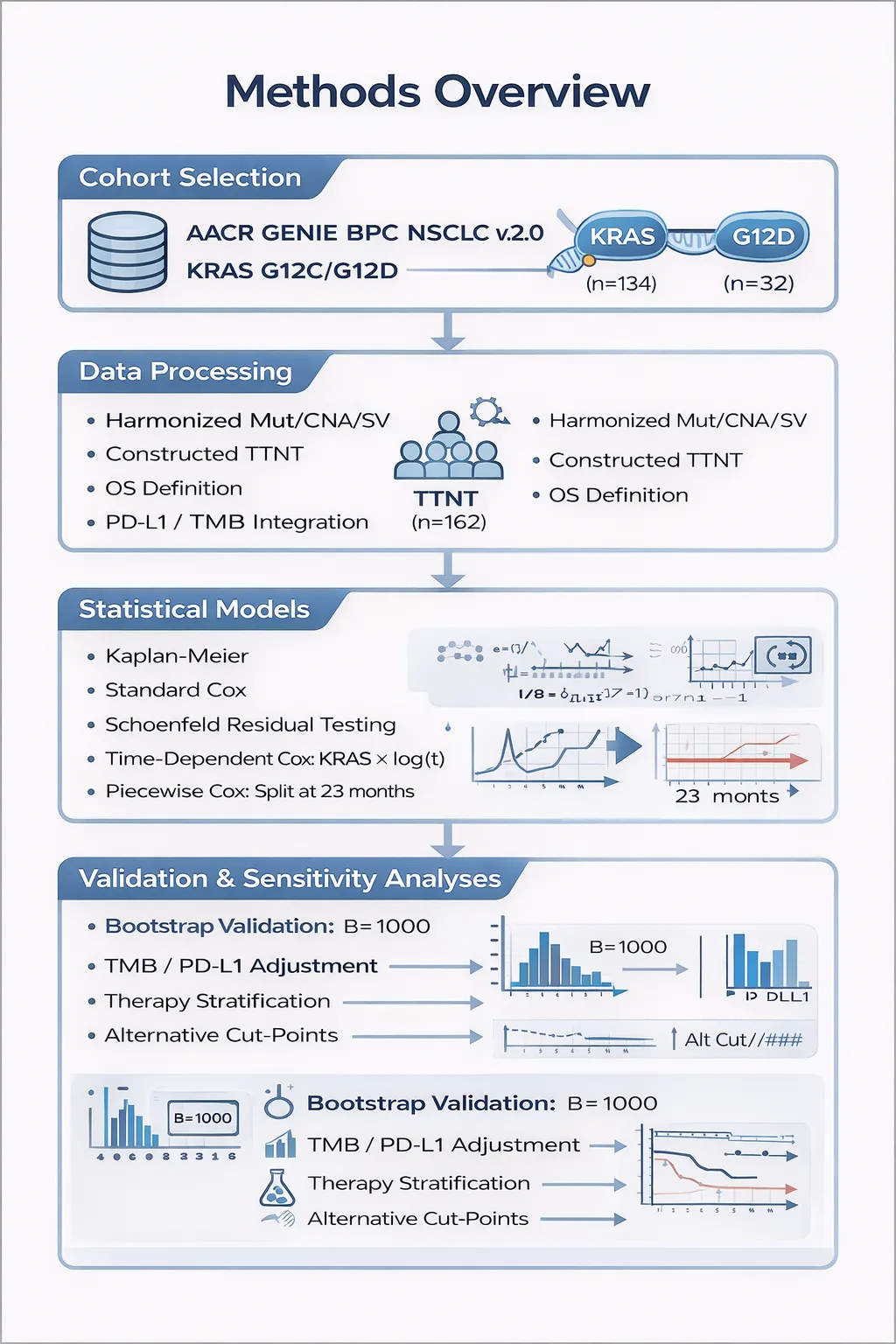
Cancer cells are like broken cars: one glitch makes them drive without stopping. In the KRAS gene, such glitches happen most often. But glitches come in different flavors: the wrong amino acid can sit in one spot of the protein, and that determines how the tumor behaves.
In the new study, two such glitches were compared: G12C and G12D. Patients with G12D had a longer time before the next treatment, especially in the first two years. After two years, the difference fades, but overall survival is still better for G12D. Tumors with G12C more often carry additional glitches in the STK11 and KEAP1 genes, which make the cancer more aggressive.
So far, drugs are approved only against G12C, while none exist for G12D. The results suggest we need to develop separate drugs for each mutation. Then treatment becomes more precise, like a key fitting its own lock.
The G12C and G12D mutations differ by just one letter in the DNA, but one makes the tumor sensitive to a drug, while the other does not, yet.