Popular

Eugene Wigner

1902–1995 · quantum mechanics, nuclear physics, symmetry theory
Hungarian-American theoretical physicist, one of the pioneers of quantum mechanics and nuclear physics. Introduced symmetries into quantum theory, developed the theory of group representations in physics. Described the 'Wigner's friend' paradox, concerning the role of the observer. Nobel Prize laureate.

Biography

Studied at the Berlin Institute of Technology, where he earned a degree in chemical engineering, but became interested in physics. Worked in Göttingen (assistant to Hilbert), Princeton, participated in the Manhattan Project. Remained a professor at Princeton University until retirement. Nobel Prize (1963).

Key discoveries

💡 As a teenager, Wigner attended the same gymnasium as John von Neumann; their friendship led to a long collaboration and mutual influence.
Quote: "The miraculous puzzle of the correspondence between the mathematical language and the laws of physics is a wonderful gift that we neither understand nor deserve."
Links in the knowledge graph 1
Related tags
superpositionuncertainty principle
Related laws
CPT theorem
Related scientists
Alain AspectDavid DeutschLouis de BroglieLeo EsakiWerner HeisenbergArtur EkertGilles BrassardDavid DiVincenzo

Related articles

Quantum Simulator Discovers Plasma Memory

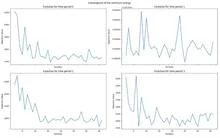
Physicists simulated a collision of charged particles. Contrary to expectations, instead of chaos, a plasma emerged, expanding as a shock wave and retaining memory of the initial charge clumps. The reason — plasma oscillations akin to a pendulum. This discovery helps understand matter under extreme
arXiv:2510.11679 · 2025-10-13

Universal AI Key to Light States

Scientists have created an AI model that learns from simple quantum states of light and then instantly adapts to complex ones—multi-beam and 'squeezed'—to check their quality. This will accelerate the development of quantum computers and secure communication channels.
arXiv:2512.18801 · 2025-12-21

The Universe Is a Finite Book You Can Never Read to the End

New research shows: if the Universe accelerates its expansion and is built from a finite set of quantum states, any model of it stays ambiguous. The culprit is quantum measurement. An observer inside such a Universe can only access a minuscule share of the total information. That's an unbreakable bo
arXiv:2605.13490 · 2026-05-13

Quantum Cat Made of 120 Photons

Physicists created a quantum state of light in which 120 photons act like a spinning coin—heads and tails are seen at once. The new method combines a quantum switch with a precise mathematical trick, achieving 96% accuracy even with noise. This pushes forward the test of the boundary between the qua
arXiv:2606.03293 · 2026-06-02

Noise Gives Birth to Quantum Order

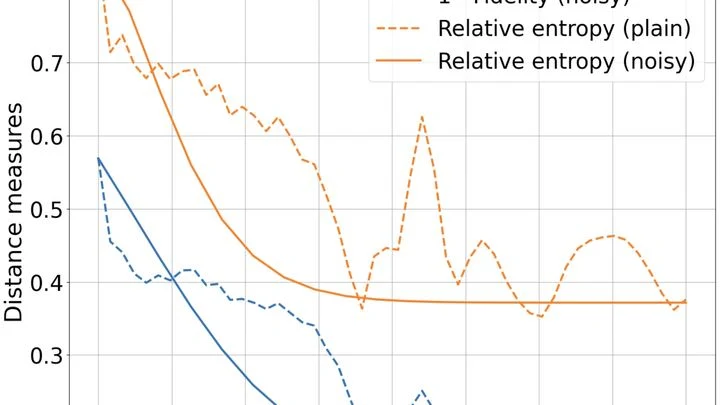
Physicists have discovered that coordinated noise creates a stable pattern of particles moving strictly in one direction. It resembles a stadium wave frozen in one direction. The finding overturns the idea that interference always ruins quantum effects: noise can be the architect of order.
arXiv:2607.07801 · 2026-07-08