Amino acids are small organic molecules featuring an amino group and a carboxyl group, and they link together to form proteins, the workhorses of life. There are 20 standard amino acids, each with a distinct side chain that dictates protein folding and function. Their detection is a key goal in astrobiology, as they are considered essential biosignatures for life beyond Earth.
History
The first amino acid, asparagine, was discovered in 1806 by Louis-Nicolas Vauquelin and Pierre Jean Robiquet. The term 'amino acid' was coined later, and the genetic code linking them to DNA was deciphered in the 1960s.
How it works
Amino acids polymerize via peptide bonds between the carboxyl group of one and the amino group of another, forming polypeptide chains. The sequence of side chains determines how the chain folds into a 3D structure, driven by hydrophobic interactions, hydrogen bonding, and other forces. This folding is crucial for function, as enzymes, antibodies, and structural proteins rely on precise shapes.
In practice
Amino acids are used in pharmaceuticals (e.g., as building blocks for drugs), nutritional supplements, and biodegradable plastics; in research, they are targets for detecting life on Mars and icy moons.
Fun fact
In 1969, the Murchison meteorite that fell in Australia was found to contain over 80 different amino acids, including several not used by terrestrial life, suggesting that these molecules form naturally in space.
A monkey that lives forty years and its relative that dies at ten read the same book of life, but with different notes in the margins. Those notes, identical in all long-lived species and absent in short-lived ones, are what scientists looked for in the genomes of 126 primate species.
In a yeast cell, the nucleus takes up about six percent of the volume, like a small ball in a room. A hundred years ago, biologists noticed that bigger cells have bigger nuclei, but why this is so remained a mystery. Some talked about protein motors, others about envelope tension, still others about shape.
A protein chain folds into a working tool in a fraction of a second, and almost never makes a mistake. For a long time, it was thought that evolution specifically polishes amino acid sequences so that a protein not only works but also easily finds its unique shape. New work turns this idea on its head.
In the black depths of space, on the surfaces of tiny icy dust grains, a quiet construction is underway. There, where temperatures drop to near absolute zero and harsh radiation abounds, the ordinary amino acid glycine, the simplest protein building block, links up with itself.
For a long time, we only saw proteins in their final form — like photographs of dancers frozen in a beautiful pose. Programs like AlphaFold learned to predict that pose from a chain of carbon links. But the real magic is how a protein finds this shape faster than you can blink, performing a swift dance.
Imagine a huge garage with hundreds of parking spots. You're driving a tiny car, a future drug molecule, and you want to find the one free bay where it fits perfectly. But these bays aren't concrete; they're woven from DNA or RNA chains, and no one has posted the parking rules.
From carbon, nitrogen, oxygen, and sulfur, you can assemble 10⁶⁰ different small molecules: that's a 1 with 60 zeros, more than the stars in the visible universe. Life uses only a tiny fraction of this menu, but not randomly.
The search for extraterrestrial life is like a detective investigation: from tiny clues, you must distinguish traces of life from random imprints of non-living nature. On Saturn's moon Enceladus, the investigators are lucky — geysers burst from cracks in the icy crust, ejecting water from the subsurface ocean straight into space.
For nearly half a century, astronomers have been searching for glycine, the simplest amino acid and one of the fundamental building blocks of proteins, in the interstellar medium.
A protein is a tiny magnet with a complex shape, and a nanoparticle is a smooth ball. Depending on which side of the protein approaches the ball, the attraction differs. Scientists have built a detailed map of these "landings" to understand how allergen molecules from birch pollen attach to silica nanoparticles.
They used two approaches.
Long protein threads, their tangled entanglements, and random contacts: this is how the birth of cellular droplets was usually explained. These membrane-less organelles, where important reactions take place, resemble oil drops in water: they arise on their own when molecules separate into phases.
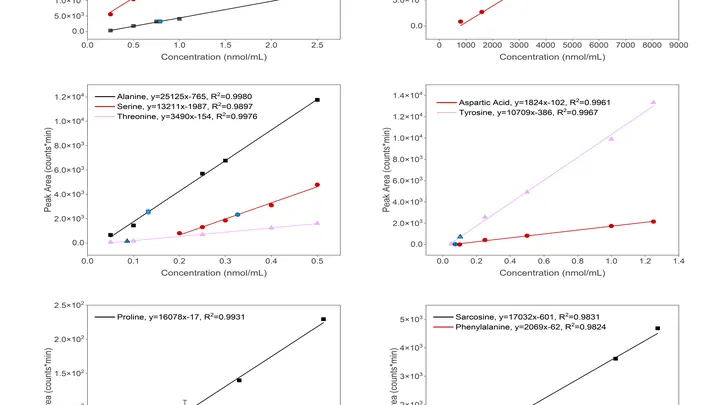
A chemical detective searches for life on other planets. Its tool is a mass spectrometer that identifies molecules by weight (the same device earthly forensic scientists use to analyze clues).
Radio telescopes detected emissions from the celestial object G358.93-0.03 MM1 — a hot cocoon inside which a massive star is igniting. Within that glow, lines of glycolamide appeared, a delicate carbon molecule.
Inside every cell, there is a scaffold of filaments, like construction scaffolding that gives the cell its shape and allows it to move. These filaments are connected by crosslinking proteins: some simply hold them together like ropes, while others act as tiny motors that crawl along the filaments and pull them toward each other.
Proteins are the molecular machines of life. They fold into complex three-dimensional shapes, like a sheet of paper into origami. But if you fold the paper a bit differently, you get a different figure. Likewise, a protein can take on several forms, and that determines how it works.
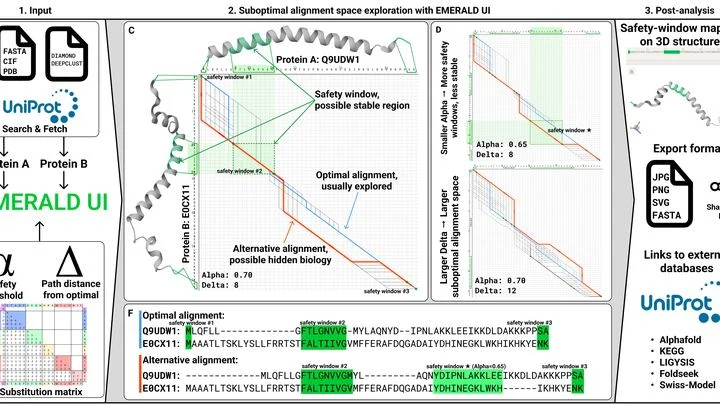
Usually, scientists compare proteins by their sequences — chains of amino acids.
Cometary ice slams into the young Earth. The pressure at the impact point is like stacking six aircraft carriers on your thumbnail. In the lab, such conditions are reproduced by squeezing a tiny sample between two rotating anvils.
This time, adenosine monophosphate — one of the letters of future RNA — was placed under the anvils.
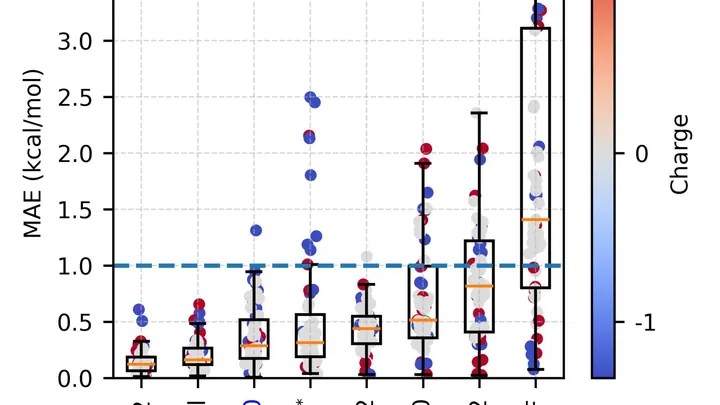
You need to sift through millions of keys to find the one that unlocks the lock of a disease. Each key is a molecule, and the lock is a protein in our body. Checking each key manually is impossible, so chemists use computer models that predict how a molecule will behave in reality. Until recently, accurate calculations took hours or days on powerful computers. The new tool AceFF does it in seconds.
The chemical composition of a sample is like a soundscape. A living forest sounds polyphonic: chirping, rustles, the hum of insects. A barren desert is just the whistle of the wind.