A tumor is an abnormal mass of tissue that forms when cells divide more than they should or do not die when they should. Tumors can be benign (non-cancerous) or malignant (cancerous), and their behavior depends on factors like growth rate, invasiveness, and ability to spread. In medical imaging, tumors are detected because they often have different density, blood flow, or metabolic activity compared to surrounding healthy tissue.
History
The term 'tumor' comes from Latin for 'swelling,' and descriptions of tumors date back to ancient Egyptian and Greek medicine. The modern understanding of tumors as cellular growth disorders emerged in the 19th century with the development of pathology and cell theory.
How it works
Tumors arise from genetic mutations that disrupt the normal cell cycle, leading to uncontrolled proliferation. As the mass grows, it may compress nearby structures, invade adjacent tissues, or, if malignant, shed cells that travel through blood or lymph to form metastases. Imaging techniques such as CT, MRI, or PET exploit differences in X-ray absorption, magnetic resonance, or glucose uptake to visualize the tumor's size, shape, and activity.
In practice
Tumor detection and characterization are central to cancerdiagnosis, treatment planning, and monitoring response to therapy, using modalities like MRI, CT, and PET scans.
Fun fact
Some benign tumors, like pituitary adenomas, can secrete hormones and cause systemic effects far more dangerous than the mass itself.
An old mattress stops bouncing back: the filling clumps up, and the springs lose their resilience. The ovary changes with age in much the same way, except that instead of filling, stiff connective tissue grows inside it, and the role of springs is played by the cells that support the eggs.
A tightly stretched membrane, squeezed into a narrow case, decides on its own where to burst. So does a cell: when it is cramped, the point of division shifts from the middle, and the two halves come out unequal. Previously, it was thought that such asymmetry is predetermined by chemical labels, but the new work shows that mechanics alone is enough.
Every tumor writes its own cosmology. Its cells are galaxies, and mutations are stellar flares marking the branches of a genealogical tree. The key to its history is the rhythm of accumulating genetic typos.
Forget the flat sheet: embryonic tissue is a dynamic landscape of hills and folds. On convexities, cells stretch; in concavities, they compress, as if performing a dance governed by laws eerily similar to spacetime curvature.
A drop of ink in a glass of water spreads quickly and evenly. But if the water is squeezed between tightly packed spheres, the ink cloud crawls slowly and erratically: it dodges obstacles and gets stuck in narrow necks. Water molecules in living tissue move in much the same way.
A crowd in a city square behaves differently depending on whether people hold hands. If each person only lightly touches a neighbor's elbow, people easily spread out in all directions — the crowd expands as a smooth carpet. But if they interlock fingers, movement slows down and the crowd breaks into clumps: dense clusters form here and there, with empty corridors between them.
A tongue tumor is like a stranger in a crowd. On the surface, they all look much alike, but beneath the surface hide very different personalities. Some tumors behave aggressively, others grow slowly. Doctors need to understand who they're dealing with before surgery.
Usually, this means taking a tissue sample — a biopsy.
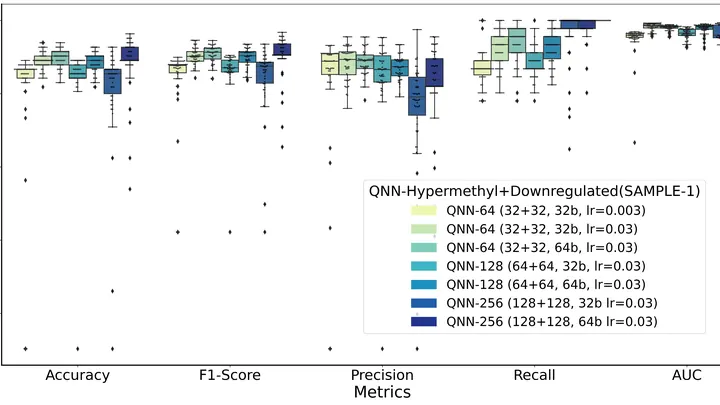
Two nearly identical locks are opened by the same pick. They look alike on the outside, but inside the mechanisms differ. Much the same can be said for the two main types of non-small cell lung cancer — adenocarcinoma and squamous cell carcinoma. Under a microscope, they can be confused, yet they require different treatments. That's where the quantum "magnifier" comes in.
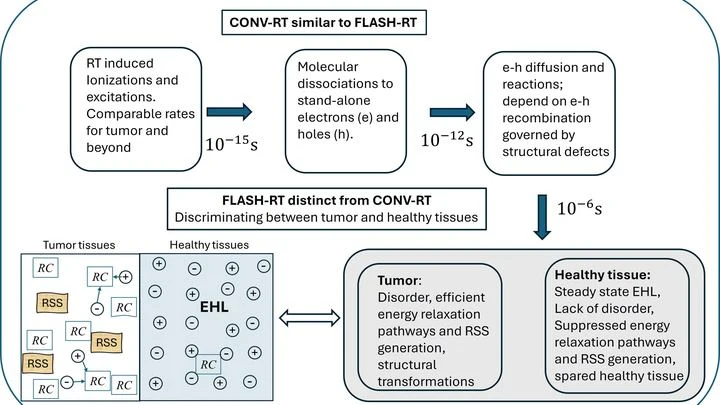
Two cities: one with neat, straight streets, the other with a tangle of alleys. If you send a powerful flood of water through both, in the first the water quickly drains away through channels, while in the second it swamps everything. That's roughly how tissues behave under ultrafast radiation therapy, known as FLASH.
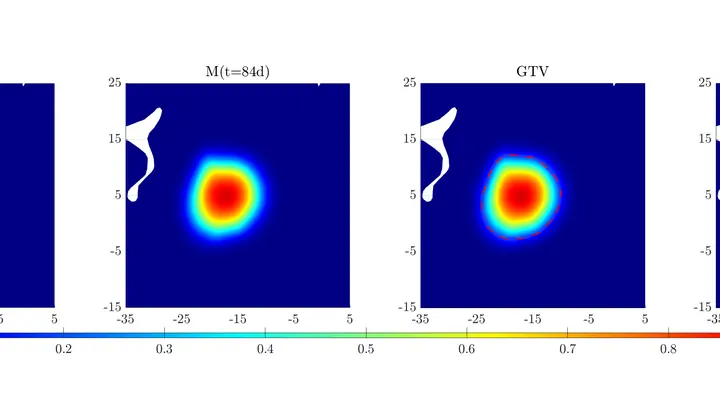
A tumor doesn't stay put. Individual cells or whole groups break off and set off on a journey through the body. Some crawl solo, like scouts; others stick together, like a flock. Scientists built a computer model to understand how these cells pick a direction.
In the model, cells respond to two signals.
A brain tumor is like a traveler trudging through a dense forest: trees and bushes are the different types of brain tissue, some easier to traverse than others. Glioma cells don't move in a straight line; they constantly loop around, bumping into obstacles and going around them.