How to Thin a Network Without Tearing It express
A dense social network: everyone is connected to almost everyone else, and in this web it's hard to see who really matters. Too many threads — computers choke, simulations stall. Scientists have figured out how to prune such networks without losing what's essential.
The idea is to remove connections that don't participate in shortest paths. Imagine a city where you keep only the streets that are actually used, demolishing dead ends and redundant alleys. This 'skeleton' of the network preserves all important routes, as well as community structure and the dynamics of information or disease spread.
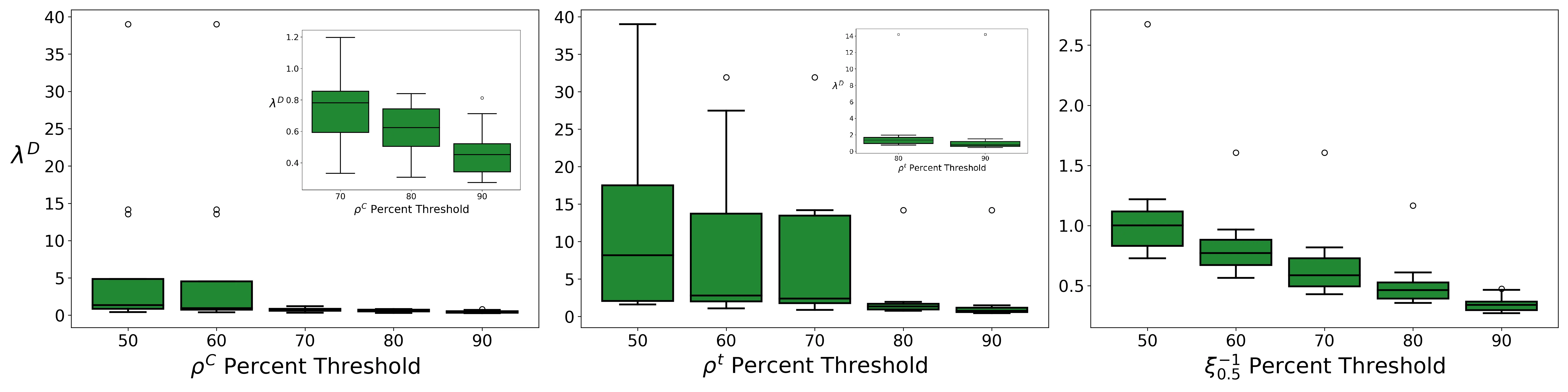
They tested it on real social contact networks — from schools, hospitals, and workplaces. It turned out that the variant that best preserves people's importance rankings and spreading dynamics uses a path measure defined by the formula g(x,y) = (\sqrt[3]{x}+\sqrt[3]{y})^3. This skeleton removes more than half of the links, yet the network keeps functioning as it should.
The result is not just a trimmed copy but an accurate map of the most heavily used pathways. This helps speed up epidemic models, find key players in social graphs, and understand where the network is fragile — where it's thin, it tears.
In some real networks, after thinning, less than half of the links remained, yet the shortest paths between all pairs of nodes were fully preserved.