A Quantum Key in Silicon express
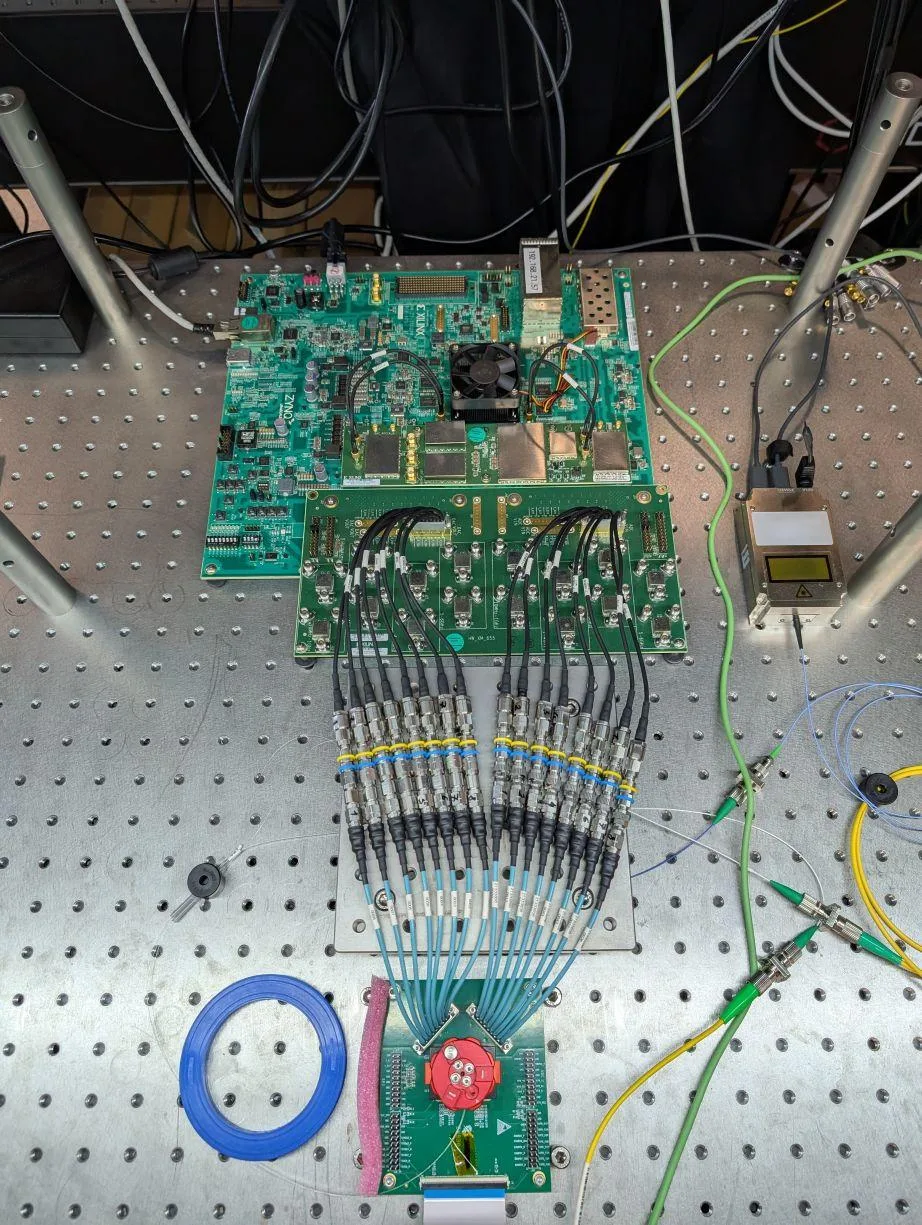
A secret key is like a password that two parties need to know, but no one else can peek at. In quantum communication, it's sent using single photons: any attempt to intercept inevitably disturbs them and exposes the spy. Until now, such systems were assembled from many separate components — bulky and expensive. Now, scientists have squeezed everything needed into a single silicon chip the size of a fingernail.
In the experiment, the chip worked with the PS-64-QAM signal format — a way to pack information into two light polarizations simultaneously, like two independent lanes on a highway. Over a standard optical fiber 25 kilometers long, they managed to transmit a secret key at a rate of 1.9 megabits per second. That pace is enough to protect not just text messages but also real-time voice calls.
The main takeaway isn't a speed record but the very possibility of building quantum security on a single silicon wafer. It's a step toward making quantum encryption as commonplace as Wi-Fi in every phone.
Quantum key distribution uses single photons, and if an eavesdropper tries to measure them, they inevitably alter their state, the receiver immediately notices the eavesdropping.
In the series Star Trek, subspace is used for secure communication, but here it's single photons in ordinary optical fiber, and interception is physically impossible without detection.