Top Quarks Stick Together Like Oil Droplets in Soup express
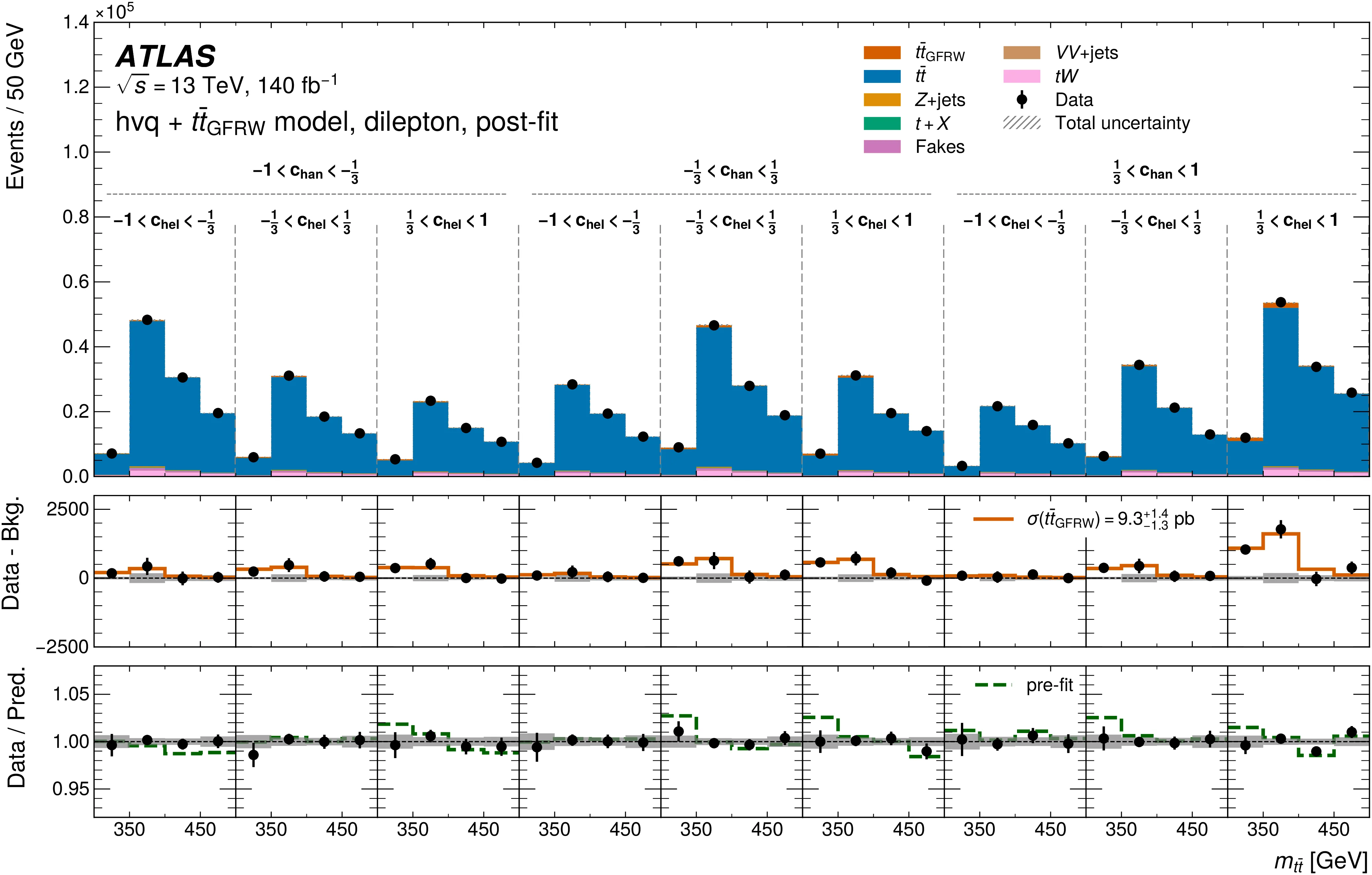
Oil droplets in boiling broth usually scatter apart, but if you bump them together very slowly, they may stick for a moment. Something similar happens with top quarks — the heaviest known building blocks of matter. In data from the second run of the Large Hadron Collider (2015–2018), the ATLAS detector recorded a clear excess of top–antitop quark pairs produced almost at rest relative to each other.
This excess fits precisely a hypothesis put forward in the mid-1980s: if two top quarks are produced very close together with low relative velocity, the strong interaction (via gluon exchange) can hold them together for a time comparable to the time light takes to cross an atomic nucleus. The result is not a true bound atom but an ephemeral "quasi-atom"—top quarkonium. It decays faster than the blink of an eye, but leaves a clear signature in the characteristic energy distribution. The ATLAS physicists saw this signature and now plan to measure its shape more precisely to understand how strong the "glue" between top quarks is at the threshold of production.
Original abstract
as written by the authors arXiv:2604.17138
A significant excess of $$t\bar{t}$$ events near the production threshold was observed in LHC Run-2 data by the ATLAS Collaboration. It is consistent with the formation of $$t\bar{t}$$ quasi-bound states, which were first hypothesised almost 40 years ago. This contribution summarises the experimental results and outlines a path toward further characterisation of the excess.
The top quark lives for only 0.000000000000000000000005 seconds — a hundred billion times shorter than the time light takes to cross a proton.