Scientist

Lise Meitner

1878–1968 · Nuclear physics, Radiochemistry
Austrian physicist of Swedish descent, co-discoverer of nuclear fission of uranium. Together with Otto Hahn, she investigated nuclear reactions, but due to anti-Semitic persecution, she was forced to leave Germany. It was she, together with her nephew Otto Frisch, who gave the physical explanation of the fission process and estimated the energy released. Only Hahn received the Nobel Prize, which is considered a historical injustice.

Biography

Born in Vienna. She studied at the University of Vienna (one of the first women to earn a doctorate). She worked at the University of Berlin with Otto Hahn, then in Sweden (Nobel Institute). She never participated in military developments. The 109th chemical element, meitnerium, is named in her honor.

Key discoveries

💡 Meitner was one of the first women physicists with a doctorate in Germany. Friends called her the "atomic aunt".
"She believed that science makes people selfless by teaching them to seek truth for its own sake."
Concepts
electromagnetismnucleosynthesis
Laws
mass–energy equivalence
Scientists
Ralph AlpherJames Clerk MaxwellShuji NakamuraWilhelm WienLudwig BoltzmannAlbert A. MichelsonRichard FeynmanJ. J. Thomson

Related articles

cs.PL2011-09-053 minarXiv:1109.0786
Properties as a Compass: Precise Programming
Fog thickens over the line "def max(a: Int, b: Int): Int". What does it do? It returns the larger of two numbers, but how can you verify that? You could write a dozen tests with specific pairs: max(2,3)=3, max(5,5)=5, max(-1,0)=0. Still, a nagging doubt remains: what if it breaks for, say, a million and minus a million?
How to Keep a Supercomputer from Gridlock
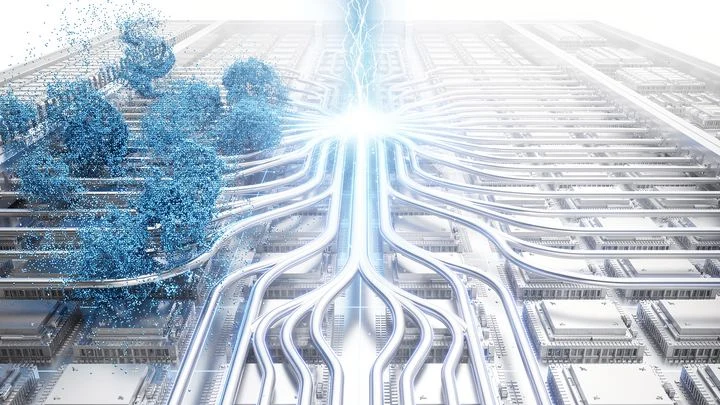
A supercomputer simulating laser plasma is like a kitchen where hundreds of chefs are preparing a single dish. If ten people crowd around one stove while another stands empty, the work grinds to a halt. The same happens in simulations: plasma particles bunch up in certain regions of space, leaving others nearly empty.
Cloud Spices: How a Neural Network Improves Climate
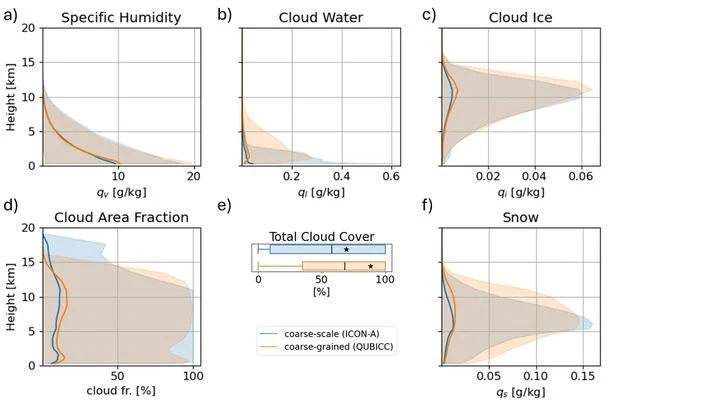
Climate forecasting is like a complex recipe: one wrong pinch and the whole dish is ruined. So it is with clouds — small but decisive. Climate models divide the sky into 50–100 km cells and don't see individual clouds. It's like throwing pepper by the handful when the recipe calls for a pinch.
Physics and Society2025-11-261 minarXiv:2511.20976express
How Artificial Intelligence Becomes a Scientist's Partner
Science is a vast kitchen where scientist-cooks seek new recipes. Once, they sifted ingredients by hand; now artificial intelligence, a seasoned chef, lends a hand. AI memorizes millions of flavors and suggests surprising pairings: through information search, the algorithm uncovers hidden patterns.
Chemical Physics2025-12-081 minarXiv:2512.07530express
The Secret to Accurate Calculations: How Atoms Help Understand Molecules
Electrons — tiny particles in molecules — constantly maneuver, avoiding collisions like passengers during rush hour. To calculate their behavior, scientists set a personal distance rule: a mathematical function that indicates how close one electron can get to its neighbor.
Chemical Physics2026-01-022 minarXiv:2601.00581express
Molecules on a Leash: Fast Drug Discovery
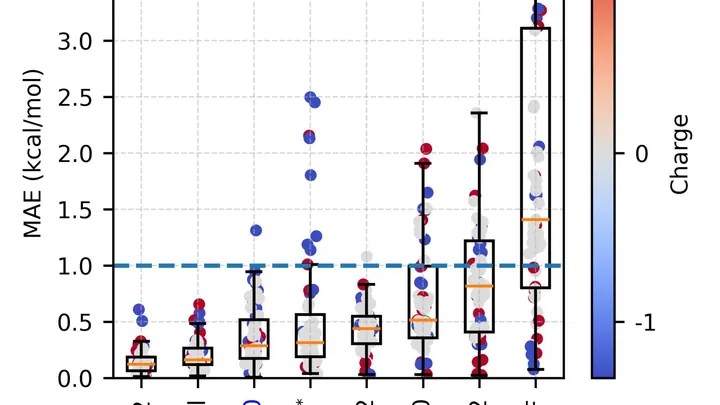
You need to sift through millions of keys to find the one that unlocks the lock of a disease. Each key is a molecule, and the lock is a protein in our body. Checking each key manually is impossible, so chemists use computer models that predict how a molecule will behave in reality. Until recently, accurate calculations took hours or days on powerful computers. The new tool AceFF does it in seconds.
Autopilot for Digital Materials
Computer models that predict material properties at the atomic level usually require long, manual tuning. To work accurately, the model needs to see many examples — how atoms are arranged and how they interact. Scientists spend weeks hand-picking these examples. The new program AutoPot does it all by itself.
Glue and Springs: How to Assemble the Perfect Pattern
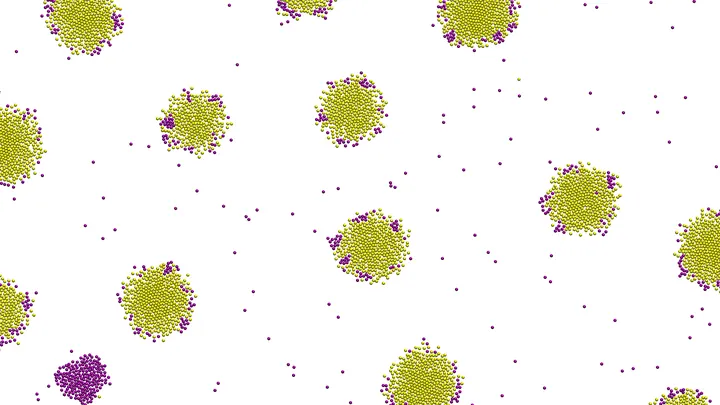
A handful of magnetic beads, when shaken, clump together. But add springs that push the beads apart at a distance, and the clumps break up into neat islands. Roughly this is how the particles in the new study behave: they attract at close range but repel from afar. The authors simulated millions of variants of this 'glue with springs' on a computer.
Chemical Physics2026-01-151 minarXiv:2601.10791express
Particle Physics Accelerates Molecules
In the Large Hadron Collider's detector, each proton collision leaves thousands of points — tracks of flying particles. A neural network learned to spot patterns in this scatter and predict what happened at the moment of impact.
Chemical Physics2026-01-171 minarXiv:2601.11856express
How to Catch an Excited Molecule
When a molecule absorbs light, it doesn't just heat up: it transitions into a special, excited state. Its electrons rearrange, like musicians who, after a loud chord, start playing a new melody.
Biological Physics2026-01-172 minarXiv:2601.11947express
A Drop of Blood Tells Its Story Through a Single Molecule
A drop of blood is a bustling city in miniature. Thousands of different molecules scurry through it, each leaving its own trace. But peering directly into this city is hard: the streets are tangled, and there are so many inhabitants that counting them all individually is out of the question. Scientists have found a way to listen to the whole city at once, without singling out its residents.
Chemical Physics2026-01-181 minarXiv:2601.12268express
How Molecules Recognize Each Other Without Hints
When a guest molecule enters a host molecule, it's like a key going into a lock. But molecules don't have rigid shapes: they bend a little, charges on their surfaces attract or repel, and predicting exactly how they'll fit together has been very hard. DeepHostGuest learns from thousands of known host-guest pairs.
q-bio.QM2026-01-251 minarXiv:2601.17669express
Kidney Cancer: Math Takes on the Tumor
A tumor in the kidney grows like a weed that has learned to hide from the gardener. The immune system, that very gardener, simply doesn't notice it. Doctors try different drugs, but each person's disease behaves differently. The authors made a computer replica of this battle.
Materials2026-01-251 minarXiv:2601.17847express
Batteries Under the Microscope: How AI Learns from Its Mistakes
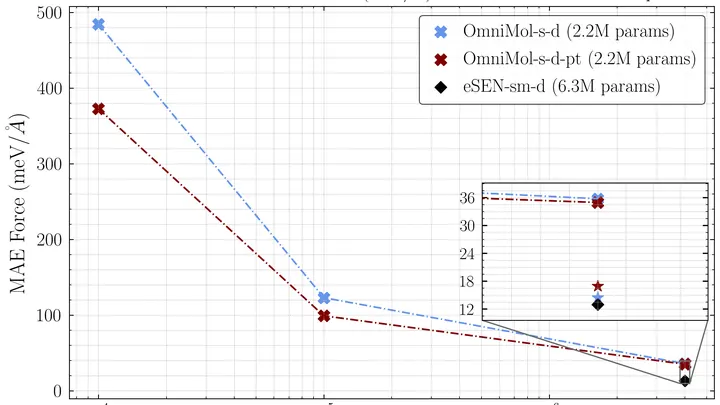
Inside a battery, like a layered cake, different solid layers sit side by side. The meeting point, the interface, behaves capriciously: stresses concentrate there, and over time the battery ages. To understand these processes, we need computer models that see every atom. But accurate calculations are too expensive, and fast ones are too crude.
Fluid Dynamics2026-01-272 minarXiv:2601.19994express
Predicting Blood Damage in Pumps
In a heart-lung machine, blood flows through narrow tubing and past rapidly spinning pump blades. Sometimes red blood cells can't take it: their membranes rupture, and hemoglobin spills into the plasma. For a patient, this is like pouring sand into a car's fuel system — small damages accumulate and wreck the whole mechanism.
Machine Learning2026-01-311 minarXiv:2602.00539express
Drugs That Should Never Meet
A doctor prescribes a pill for the heart and a pill for blood pressure. Individually, each helps, but together they can scramble signals in the blood and cause harm. These unwanted encounters between drugs are called interactions, and testing every pair in the lab is impossible: there are millions of them.
Machine Learning2026-01-311 minarXiv:2602.00547express
Teaching Machines to Identify Molecules by Their Fragments
A mass spectrometer works like a molecular shredder: it breaks a substance into charged fragments and weighs each one. From this 'fingerprint,' chemists can tell what was in the sample. But if the molecule is new and its fragments don't match anything known, the instrument just shows a set of peaks, and what lies behind them is a mystery. The authors of the paper proposed a workaround.
A Molecular Compass for Drug Discovery
A chemist searching for a new drug is like a cook without a recipe: they have a list of desired properties but millions of possible ingredients. Each trial is costly and time-consuming, so you need to experiment wisely. The new program SEISMO acts like a chef who tastes the dish after every step and immediately decides what to add next.
q-bio.BM2026-01-311 minarXiv:2602.00782express
Proteins Without Stuttering
A protein language model is like a chef who learned from thousands of recipes and now invents new dishes. Sometimes he gets carried away and salts every dish because one good cookbook used a lot of salt. In proteins, such repetition isn't just ugly: identical stretches in the chain make the protein fragile, it can't fold into the right shape, and it doesn't work.
Machine Learning2026-02-081 minarXiv:2602.07735express
Protein and Drug: How to Speed Up the Search 26-Fold
Searching for a new drug is like matching a key to a lock. The protein in a cell is the lock, and the candidate molecule is the key. You need to know whether the key fits and how snugly it sits. Previously, the computer would examine every atom in the lock and the key to check this. A single lock could take hours or even days. Checking millions of keys was out of the question.
math.NA2026-02-121 minarXiv:2602.11849express
Chemistry Without Hints: Reconstructing Reaction Mechanisms from Data
When chemists see how concentrations of substances change, they need to figure out which reactions are behind those changes. It's like trying to reconstruct a recipe from photos of plates at different stages of a meal. Previously, this often involved derivatives — instantaneous rates of concentration change.
Materials2026-02-191 minarXiv:2602.17750express
Material Reveals Its Secrets
A material is like a person: if you stretch it for a long time, it remembers and behaves differently. Engineers have spent years fitting formulas to describe such memory. Now a neural network does it on its own. The new architecture, iCKAN, takes test data and converts it into equations.
Materials2026-02-211 minarXiv:2602.18979express
Metal Cocktail: How to Predict Its Heat and Current
A metal alloy is like a cocktail: mix a few elements and you get a material with new properties. But while a bartender tastes the drink, engineers need to know in advance how an alloy will behave in service.
Machine Learning2026-02-211 minarXiv:2602.18982express
How Evolution Teaches Antibodies
An antibody is a protein that catches viruses and bacteria. When an enemy enters the body, immune cells start trying out different antibody variants, as if testing different keys against a lock. Beneficial changes are kept, harmful ones are discarded. Over a few weeks, this process yields an antibody that fits its target perfectly.
Plasma Physics2026-02-221 minarXiv:2602.19110express
Neural Network Reads the Future of Plasma
Before every tokamak startup, a device where superheated gas is held by magnetic fields, operators spend hours calculating how the plasma will behave. Mistakes are too costly: one wrong parameter can ruin the experiment.
Materials2026-02-241 minarXiv:2602.20432express
Robot Chemist Hunts for the Perfect Film
A chef tastes the soup after every pinch of salt and instantly decides what to add next. That's roughly how the new setup for growing thin crystalline films works — except instead of taste, it uses an image from an electron microscope, and instead of a chef, a computer program.
Quantum Physics2026-02-281 minarXiv:2603.00400express
Molecules in a Trap: How to Build the Perfect Array
Ultracold molecules are a promising material for quantum computing, but assembling them into a neat array, like eggs in a carton, is no easy feat. A method has been proposed to load molecules one by one into optical tweezers or lattices directly from a gas. The molecules immediately end up in the calmest state of motion.
Chemical Physics2026-02-281 minarXiv:2603.00614express
Chemical Space as a Construction Set
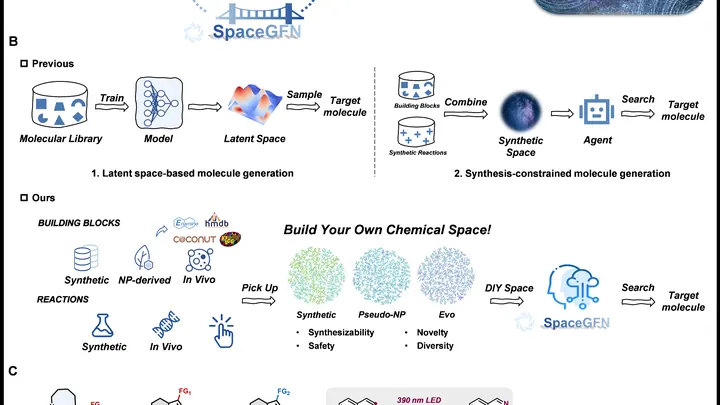
Previously, generative models for drug discovery worked like an artist painting without choosing a canvas. They learned from existing molecules and simply produced similar ones, without considering how the space of possible compounds is organized. SpaceGFN changes the approach: now chemical space is a construction set where the user specifies the parts and the assembly rules.
Machine Learning2026-03-011 minarXiv:2603.01274express
Transparent Chemistry: How AI Explains Its Predictions
A medicinal chemist is like a detective searching for the right compound among millions of suspects. Modern neural networks speed up the search but behave like a witness who says "it's him" and refuses to elaborate. In pharma, such secrecy is dangerous: a spurious correlation could send a toxic compound to the next stage of trials.
Materials2026-03-031 minarXiv:2603.02717express
A Chemist Computer Hunts for the Recipe for a Better Solar Cell
Testing molecules for solar cells is like trying a new sauce in a restaurant where the chef changes every five minutes. Disturbances (humidity, substrate cleanliness, deposition method) hide the true effect. To extract real benefit from noisy data, scientists created a 'smart sieve'—an algorithm that sifts through the results and leaves only reliable improvements.
Mesoscale2026-03-081 minarXiv:2603.07706express
How to See a Molecule's Shape Under a Microscope
A scanning tunneling microscope probes a molecule with an ultra-fine tip and maps its relief. But the image is flat, while the molecule is three-dimensional. How do you guess a person's pose from their shadow on a wall?
Materials2026-03-191 minarXiv:2603.18725express
Magnets That Take Their Time to Demagnetize
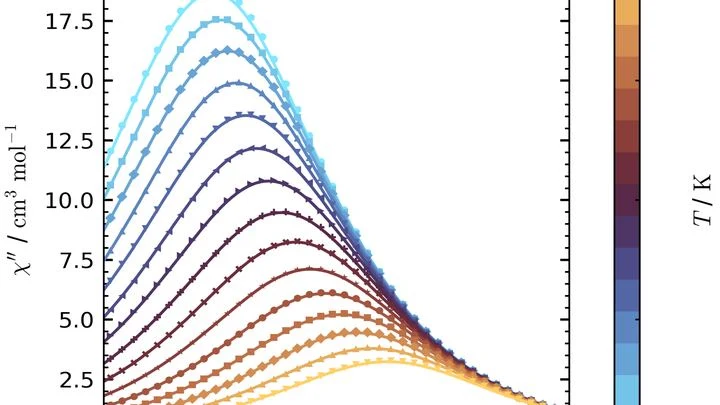
A tiny molecule made of just a few atoms can behave like a permanent magnet. It becomes magnetized and is in no hurry to demagnetize, even when the external field is removed. Such molecules are called single-molecule magnets, and they interest scientists as a possible basis for ultra-dense information storage.
Chemical Physics2026-03-201 minarXiv:2603.20183express
Molecular Lego for Batteries
Inside every battery sloshes a liquid electrolyte, and how ions jostle within it determines how much energy the battery delivers and how long it lasts. Previously, peeking into that crowd meant either running long experiments or launching ultra-precise calculations that devour weeks of computer time.
Materials2026-03-281 minarXiv:2603.27430express
Memory Material: Neural Networks Replace Molecules
Viscoelastic materials — polymers that, like dough, retain a memory of every touch: their response to impact depends on their deformation history. Maxwell and Boltzmann provided the mathematical description long ago.
How a drug chooses its polymer
A drug capsule floats in the bloodstream like a tiny container. Its walls are made of a polymer that can shrink and swell with temperature. To know when the capsule will release its cargo, you need to know how strongly drug molecules cling to those walls.
When Code Isn't Born from the Paper
A translator who has never been in a meeting translates literally, and loses half the meaning. They don't know that the boss's nod means "do it like last time," and the phrase "well, we'll see" is a polite refusal. That's how a language model that writes code from a scientific paper works: it can read the equations, but not the unspoken agreements.
Machine Learning2026-04-051 minarXiv:2604.04239express
Survival Prediction: Accuracy Isn't Confidence
A weather forecaster might correctly predict rain every day, but when he says "70% chance of precipitation," it actually rains only 30% of the time. His forecasts are useful, but the numbers can't be trusted. The same happens with models that predict cancer survival from tissue images and genetic data. Researchers tested 14 such models on data from five cancer types.
Materials2026-04-101 minarXiv:2604.09758express
Smell Is Not a Single Formula
The nose is an amazing instrument. A single coffee molecule entering a nostril can awaken a memory of a morning kitchen. Another, nearly identical in shape, smells like rotten eggs.
A Noise Map for Molecular Motion
A drop of ink in a glass of water spreads evenly, but in a cup with chunks of fruit jelly, the ink will take winding paths — sometimes getting stuck, sometimes slipping through. Similarly, molecules in living cells or porous materials don't move on a smooth field but through a disordered medium: denser in some places, thinner in others.
The Artificial Scientist: Machine Minds That Still Can't Doubt
A lab assistant carefully follows every step of an experiment, but at the end, writes in the report what they wanted to write before they even started. That's how modern language models behave when given scientific research tasks.