The Pulse of a Solar Flare: How Magnetic Knots Snap and Reconnect express
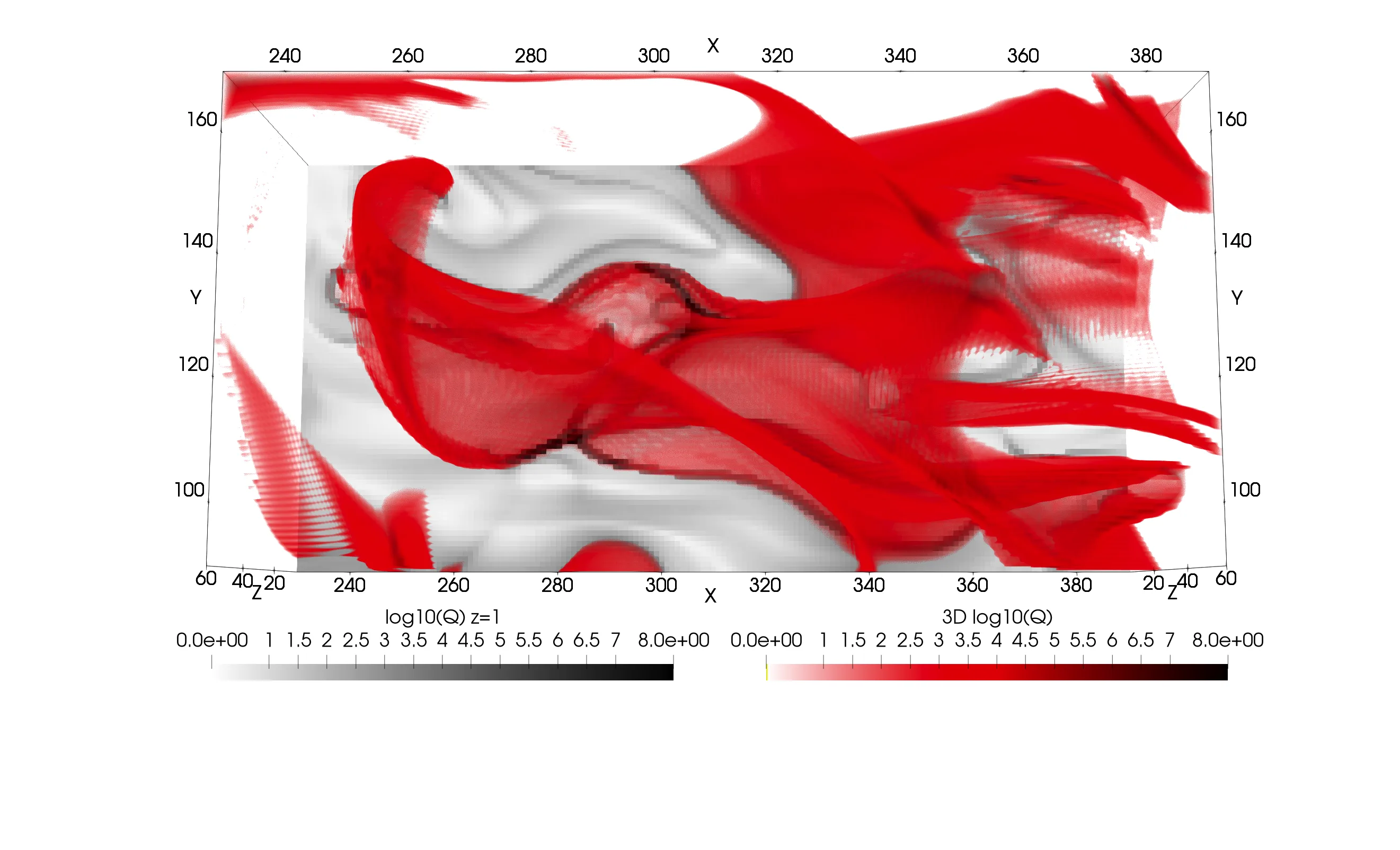
A solar flare is like a giant rubber band that's been twisted and let go. Magnetic field lines on the Sun tangle, snap, and reconnect — a process called magnetic reconnection. At the break point, energy bursts out: particles accelerate, plasma heats up, and we see bright ribbons on the surface.
In March 2022, a moderate flare erupted on the Sun. Two spacecraft watched it simultaneously: one detected X-rays (hard radiation produced when fast particles slam into stuff), the other recorded ultraviolet glow. It turned out both signals pulsed in the same rhythm — roughly every 35 seconds, brightness rose and fell.
The scientists also noticed something else: bright ultraviolet spots slid across the surface like sparks from a campfire. But their motion didn't match the X-ray pulsations. That means the flare's main energy was released not where the spots moved, but in specific loops that stayed put.
This scenario helps explain how the Sun actually unleashes its stored magnetic energy. Flares aren't a single explosion but a series of rapid magnetic 'snaps,' and now we see which parts of that machine are the loudest.
The pulsation period, about 35 seconds, is comparable to the time it takes a person to take 10–12 breaths. The solar flare 'breathed' at the pace of calm breathing.
In Stanislaw Lem's novel 'Solaris,' the planet's ocean pulses with mysterious rhythms — similarly, a solar flare turns out to be not chaos but an ordered pulse of magnetic fields.