Invisible Fire: How Plasma Cools by Emitting Light express
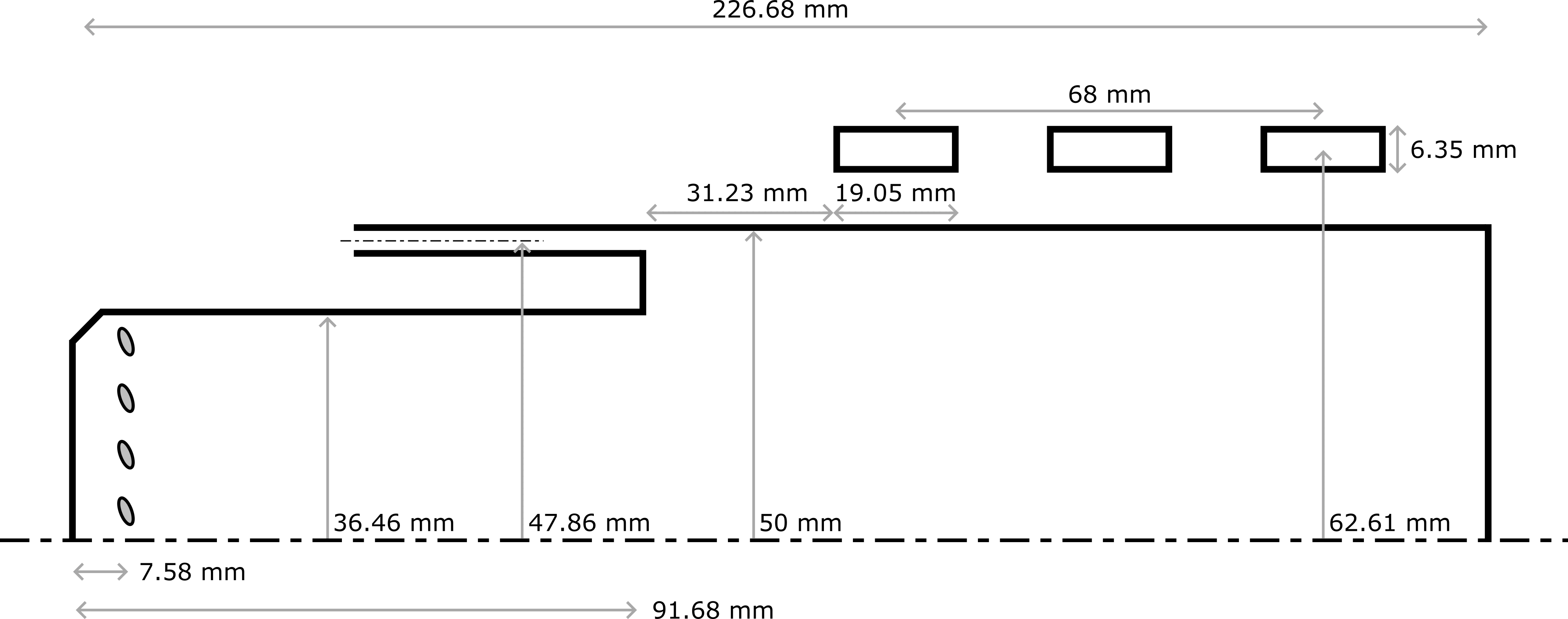
Imagine a powerful hair dryer that blows not warm air but white-hot plasma, such devices are called plasma wind tunnels. They are used to test on Earth how a spacecraft will enter the atmosphere. Inside the tunnel, the gas is heated to thousands of degrees, and part of the energy escapes not with the gas flow or into the walls but simply flies away as light, like from a light bulb.
Previously, it was thought that this glow barely affected the plasma temperature, so it was neglected in calculations. But in the Plasmatron X facility (a 350-kilowatt tunnel at the University of Illinois), detailed simulations were carried out. It turned out that at low pressure, like high in the mountains, radiative cooling is indeed negligible. However, when the pressure rises to normal atmospheric levels, the plasma begins to cool very strongly. For nitrogen, radiation losses reach 32% of the total input power — almost a third of the energy goes nowhere. For air, it's slightly less, about 22%, because air has fewer particles that actively emit light.
The engineers built maps showing how much energy is lost at given power and pressure. These maps are like an operator's manual: you can see where radiation can be ignored and where it dramatically cools the plasma and changes the whole picture. They also checked whether the plasma absorbs its own light. It turned out that it hardly does — the tunnel remains transparent to radiation. So now, when designing heat shields for reentry vehicles, you can more accurately calculate how much heat will reach the surface.
Original abstract
as written by the authors arXiv:2605.25060
High-power inductively coupled plasma (ICP) wind tunnels are widely used to reproduce high-enthalpy environments relevant to atmospheric entry and hypersonic testing. Despite their importance, radiative heat transfer in ICP facilities is commonly neglected or modeled using simplified optically thin assumptions, and the impact of non-equilibrium radiation on plasma dynamics remains poorly quantified. In this work, a loosely coupled, multi-physics framework is developed to systematically investigate radiative cooling effects in the 350 kW Plasmatron X facility at the University of Illinois Urbana-Champaign. The approach self-consistently couples a magnetohydrodynamic plasma framework with a spectral radiative transport solver, eliminating the need for optically thin or empirical models. Simulations are performed for nitrogen and air plasmas over a wide range of operating pressures (1-101 kPa) and powers (100-350 kW). The results reveal a strong pressure dependence of radiative losses, with radiation contributing negligibly at low pressures, but becoming a dominant energy sink at elevated pressures. At atmospheric pressure, radiative losses account for up to approximately 32% and 22% of the input power for nitrogen and air plasmas, respectively, leading to substantial reductions in core plasma temperatures. Nitrogen plasmas consistently exhibit higher radiative losses than air as a result of increased concentrations of radiatively active species and higher electron number densities. Pressure-power maps of radiative heat loss relative to input power are constructed to quantify combined operating effects and to provide guidance for facility operation and modeling fidelity. Finally, an assessment of self-absorption demonstrates that the Plasmatron X torch operates predominantly in an optically thin regime, even at the highest power and pressure conditions considered.
At atmospheric pressure in nitrogen plasma, each cubic centimeter emits as much light as a 100-watt incandescent bulb.
In Stanislaw Lem's novel Solaris, the ocean emits light in response to stimulation; the plasma in the tunnel also 'responds' to heating with radiation, but according to strict physical laws.