Atmospheric pressure is the force per unit area exerted by the weight of the air column above a given point. At sea level, this pressure averages about 101.325 kilopascals (or 1 atmosphere). It decreases exponentially with altitude, roughly halving every 5.6 kilometers. This pressure is not just a static weight—it drives weather systems, affects boiling points, and is essential for life as we know it.
History
Evangelista Torricelli invented the mercury barometer in 1643, providing the first reliable measurement of atmospheric pressure. Blaise Pascal later demonstrated that pressure decreases with altitude, confirming the concept of an air 'ocean'.
How it works
Air molecules are constantly in motion, colliding with surfaces and each other. The cumulative effect of countless molecular collisions on a surface creates pressure. Gravity pulls air molecules toward Earth, creating a gradient: more molecules near the surface, fewer higher up. The pressure at any height is simply the total weight of air above that point. Variations in temperature and humidity cause air to expand or contract, creating high- and low-pressure systems that drive winds and weather.
In practice
Atmospheric pressure is fundamental to meteorology (weather forecasting), aviation (altimeters), and medicine (hyperbaric chambers). It also determines the boiling point of water, which is why cooking times change at high altitudes.
Fun fact
The pressure at the bottom of the Mariana Trench is over 1,000 times greater than at sea level—equivalent to having about 50 jumbo jets stacked on your big toe.
Units by system: SI: pascal · CGS: barye · Planck: planck pressure
Light from quasar J0744+2052 traveled to us for almost 12 billion years. Along the way, it bumped into hydrogen clouds that snatched individual lines from the spectrum — like a comb sifting through delicate frequencies. Astronomers call this pattern the Lyman-alpha forest in spectroscopy.
The cosmological debate is like two craftsmen measuring the same wall but getting different lengths. One uses a tape measure, applying it to nearby landmarks — Cepheids (pulsating beacon stars) and Type Ia supernovae (flashes of dying stars). He finds the wall is stretching at 73.5 arbitrary units.
For decades, global atmospheric models resembled artists forced to paint planetary storms with coarse brushstrokes: a resolution of 25–100 km forced them to 'guess' convection through approximate schemes, introducing systematic errors in rainfall and climate forecasts.
Deep underground, in the thickness of granite, detectors catch rare visitors from space — muons. These particles are born high in the atmosphere when cosmic rays slam into air nuclei. They make it to the underground lab thanks to their enormous speed, close to the speed of light.
Perth residents know: when the daytime heat becomes unbearable, relief arrives from the ocean — a fresh breeze affectionately called the Freo Doctor. The same wind, only on a global scale, decides the fate of cosmic visitors plunging into the atmosphere. A meteorite fall is a two-act spectacle.
Imagine a powerful hair dryer that blows not warm air but white-hot plasma, such devices are called plasma wind tunnels. They are used to test on Earth how a spacecraft will enter the atmosphere.
A ship gliding through water constantly rubs against it, like a palm against a rough surface. This friction eats fuel and slows progress. One way to reduce it is to blow air under the hull: water stops sticking to the hull, and drag drops. But air is finicky: sometimes it helps, sometimes it hurts.
Water deep within the Earth is compressed more than a thousandfold compared to the surface. Even there, it continues to flow, but its internal structure changes. Researchers measured how water resists flow and compression as pressure rises from zero to 1.6 gigapascals — equivalent to placing a 16-ton weight on every square centimeter.
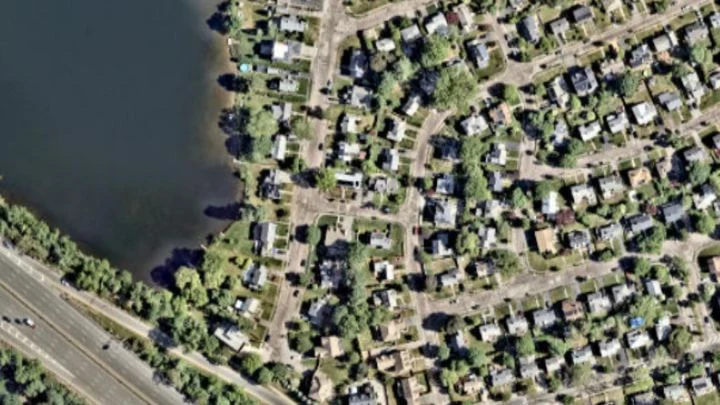
The weather on the next street can differ from yours: cooler by the river, hotter over asphalt, windier between buildings. A regular forecast misses this: its grid cell is the size of a city, not a backyard.
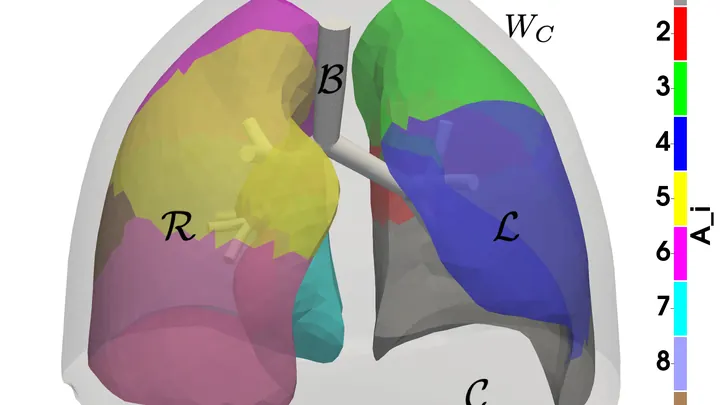
A lung scan reveals a tree: the trunk is the trachea, branches are the bronchi, and leaves are the alveoli. But how does air spread through these branches? Scientists built a computer model that replicates the lung's shape from images obtained via computed tomography.
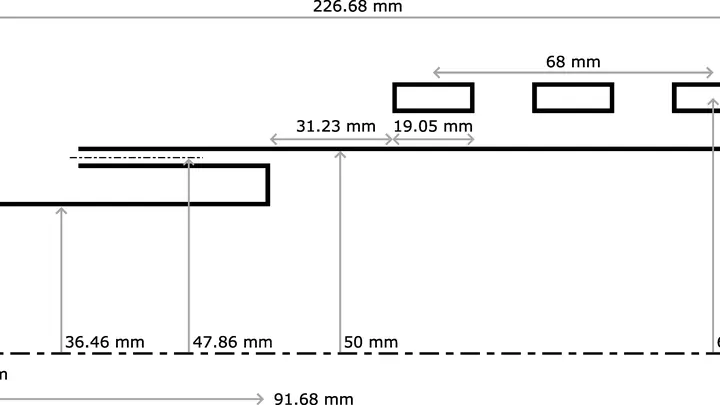
A thin film of silicon nitride is stretched over a frame like the skin of a drum. The slightest nudge from gas molecules makes it tremble. A laser beam delivered through a glass fiber picks up that trembling and turns it into a pressure reading. The whole setup fits in a pocket, not on an optical table.
For 36 days, tropical cyclone Freddy raged over the Indian Ocean, the longest-lived cyclone on record. Meteorologists tracked it from satellites, aircraft, and ground stations. But one detail eluded all instruments: the precise air density deep within the vortex. And that density determines where the cyclone will turn tomorrow.
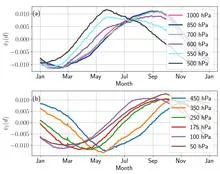
Picture an orchestra where each instrument plays at its own tempo: violins speed up, woodwinds slow down, and percussion keeps losing the beat. That's roughly what Earth's climate looks like, with the ocean, the Sun, volcanoes, and human activity pulling temperature in different directions.
In the vast concert hall of the atmosphere, ozone plays a part that changes from tier to tier. Near the surface, its notes sound alarming, for there it is a pollutant that irritates lungs and leaves. At 25 kilometers up, the same gas becomes a protective shield that absorbs harsh ultraviolet radiation.
The thermometer at a weather station in Delhi doesn't know it's part of a giant ear. Every day it records the temperature, and after forty years of such records, you can hear the breathing of an entire subcontinent. The India Meteorological Department divided the country's land into one-degree squares and took readings from 1970 to 2009.
The planet's winds are not free-flowing currents but rather obedient jets that can be nudged from an unexpected direction. The ocean surface, covered with waves, acts like a tuning knob: change its roughness, and giant air rivers shift by hundreds of kilometers.