Steam from Scorching Rocks: Silicon Gas in the Atmosphere of TWA5B ✦
Original: "The CRIMSON survey I: super-stellar SiO in the directly imaged companion TWA 5 B from high-resolution M-band spectroscopy"
For the first time, silicon monoxide has been reliably detected in the atmosphere of a directly imaged exoplanet—a key to its cloudless past and recipe for birth.
Links in the knowledge graph 1
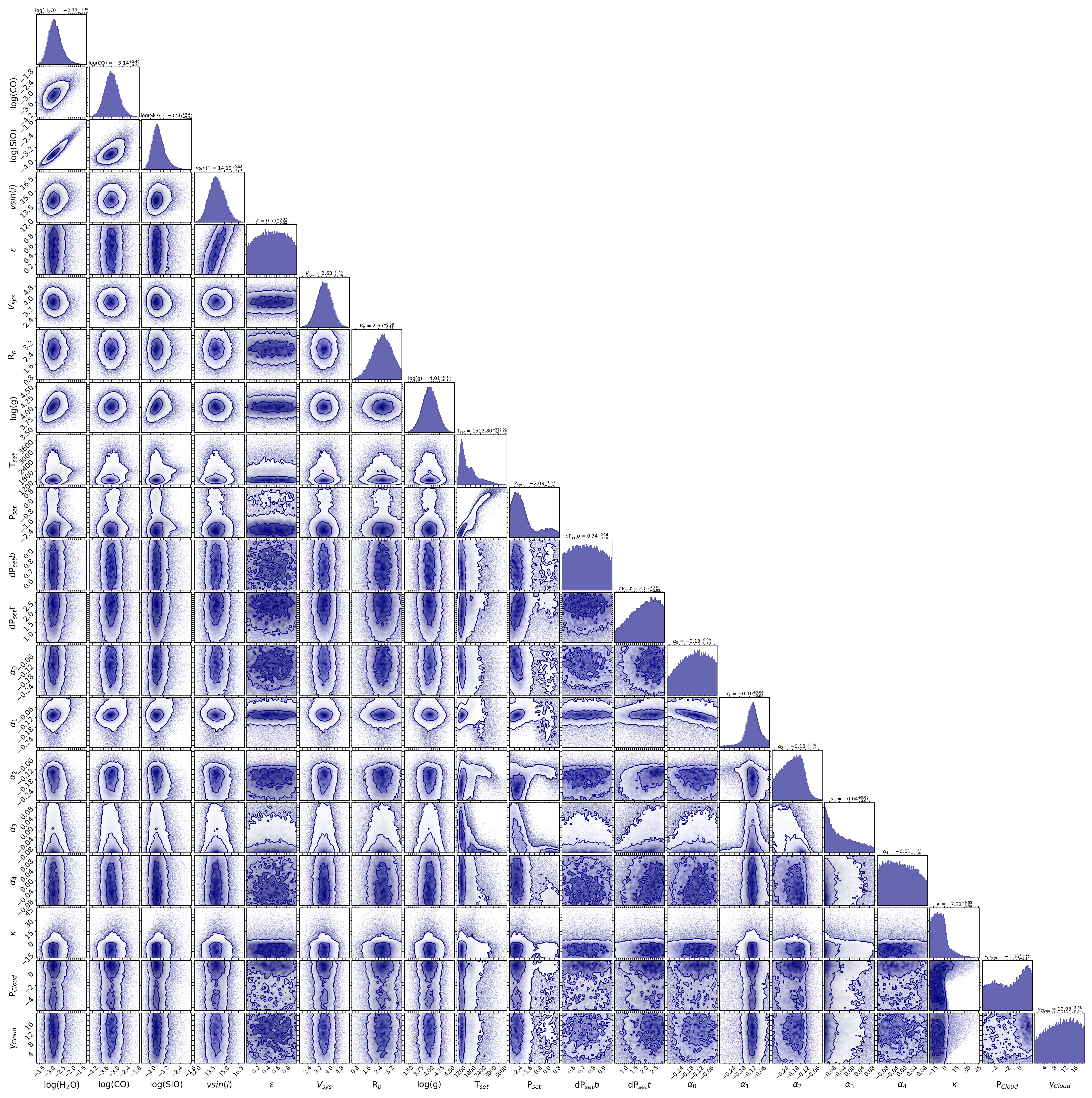
Silicon—the foundation of rocks—is vaporized in the atmosphere of the hot super-Jupiter TWA5B and glows like gas in a neon tube. CRIRES+ caught silicon monoxide—smoke from a cosmic smelter where silicate boulders were forged. The abundance of SiO tells us that clouds have yet to blanket this world. With new telescopes, we'll catch the moment they condense and draw the first cloud map for hundreds of distant planets.
🎯 Silicon monoxide (SiO) is a remarkable molecule: in the gas phase, it appears not only in the atmospheres of hot exoplanets but also in the interstellar medium, born in supernova shock waves. Yet on Earth, SiO instantly polymerizes into solid silicates—the very sand that makes up beaches and concrete.
[\mathrm{Si}/\mathrm{H}] = 1.41 \pm 0.2 \,\mathrm{dex}
Logarithmic measure of silicon enrichment relative to hydrogen compared to the Sun. A value of 1.41 dex means silicon is 26 times the solar level.
\mathrm{C/O} = 0.26 \pm 0.05
The carbon-to-oxygen ratio is a chemical indicator of where in the protoplanetary disk the planet formed. A value below 0.8 is typical of regions beyond the CO snow line, where carbon is locked in solid ices.