Gut Rhythms Without a Clock express
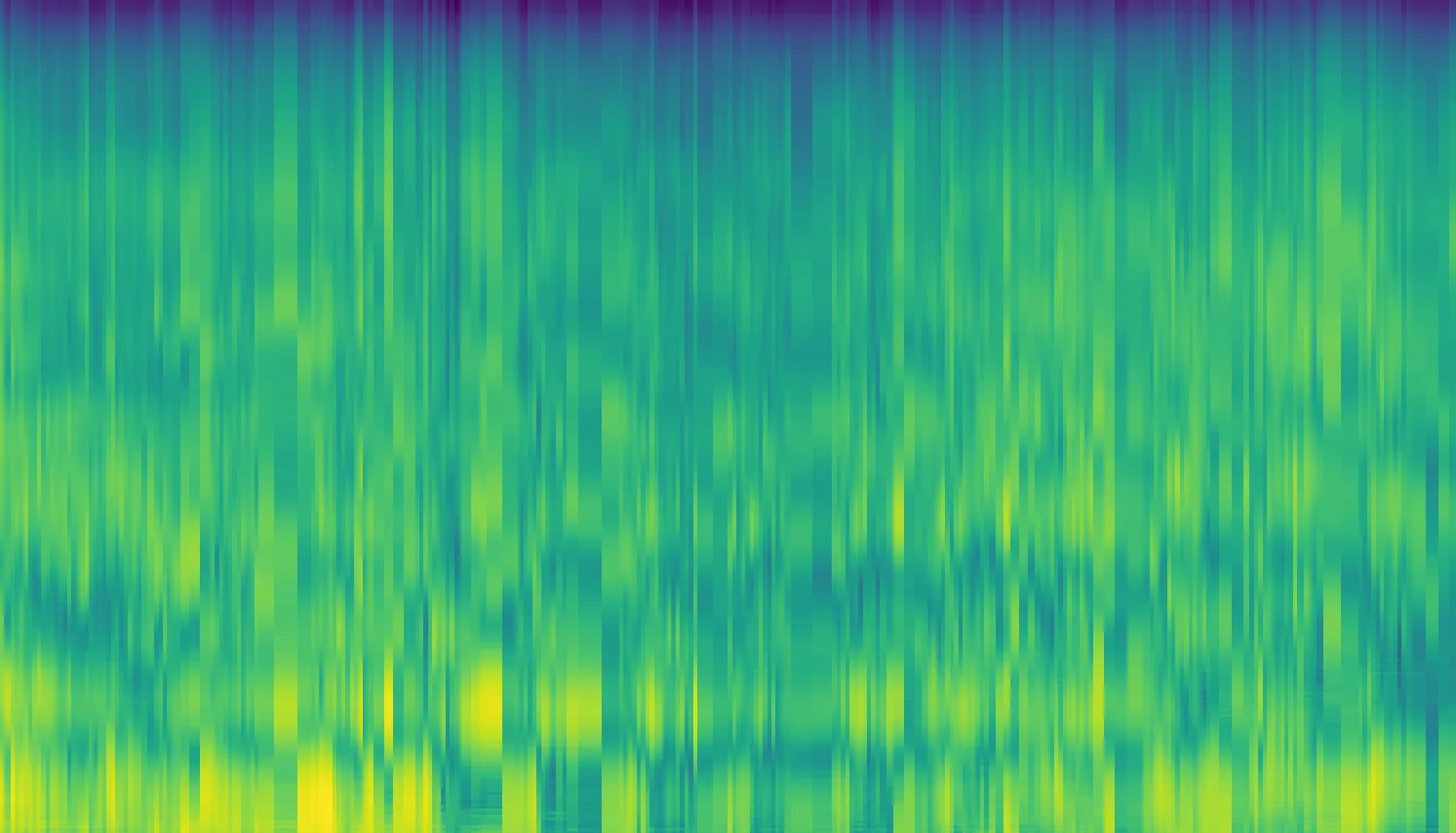
In any complex community, whether an orchestra or a colony of microbes, you can notice a rhythm. In the mouse gut, bacteria change their abundance every day, and for a long time it seemed they were syncing their internal clocks with the host's. But when researchers looked closely at hourly measurements, the familiar picture fell apart.
They found no persistent trace of a 24-hour rhythm — what specialists would call a 'ridge' on a time-frequency map. Instead of a clear beat, the graphs showed something else: an enhancement of slow waves, a dip at intermediate frequencies, and a strange asymmetry in time. If the rhythm were real, the past and future of the oscillations would look similar. Here, the peak of correlation occurred at tens of hours, as if the echo decays unevenly.
Two types of bacteria turned out to be the main characters in this temporal drama. One group, degraders of complex sugars from the phylum Bacteroidota, amplified any disturbances, like a resonator. The other, producers of fatty acids from Bacillota A, served as the source of these disturbances. Their roles were determined not by the phase of oscillations but by how they respond to random jolts. Together, they create what the authors call 'pseudocoherence': the geometry of their interaction is such that random fluctuations (disorderly deviations) briefly align into a semblance of rhythm. This breaks time symmetry and creates the illusion of a clock where there is none.
This regime the authors call a stable but highly non-normal stochastic regime. And they propose a way to test it: if you knock out the genes responsible for internal clocks in mice, but 'pseudocoherence' persists — then the source of the rhythm is indeed not the ticking of biological clocks, but the very structure of the community.
Original abstract
as written by the authors arXiv:2608.00662v1
Diurnal rhythms in the gut microbiome are commonly read as evidence of host-driven entrainment or of microbial oscillators that synchronise to a common clock. We reanalyse hourly genome-resolved (MAG-level) mouse-gut time series with diagnostics tailored to test that interpretation. At this resolution and for both animals in the dataset, the time-frequency representation carries no persistent ridge; the time-averaged spectrum is enhanced at low frequencies and depleted at intermediate frequencies; the lagged covariance is markedly time-asymmetric, with a global imbalance peak near tens of hours; and an amplitude-adjusted Fourier surrogate test identifies a weak time-averaged construction in the candidate circadian band, never as a fixed time-frequency ridge. The two functional guilds that carry the inferred non-normal amplification are identified independently by the rankings of two inferred dynamical modes (the reaction mode, into which fluctuations are transiently amplified, and the non-normal mode, which injects them), and recover the primary polysaccharide degraders of Bacteroidota and the secondary butyrate and propionate fermenters of Bacillota A without invoking any phase information. The conjunction of these signatures matches a stable but strongly non-normal stochastic regime, that is, pseudo-coherence: geometric amplification reshapes stochastic fluctuations onto a low-dimensional reaction subspace, producing intermittent synchronisation-like episodes, broken time-reversal symmetry, and emergent time-averaged characteristic scales without an underlying oscillator. We propose a falsifiable test via high-resolution clock-gene-knockout cohorts.
Even in mice with deleted biological clock genes, daily fluctuations of gut bacteria may persist — simply because they respond to feeding times rather than an internal body signal.
In Adrian Tchaikovsky's novel 'Children of Time', spiders develop a collective intelligence without a central controller — similar to how bacteria without shared clocks create temporal order through random interactions.