Abundance, in a scientific context, refers to the relative amount of a specific molecule or element compared to a reference species in a given sample. It is a measure of 'how much is there' relative to something else, rather than an absolute count. This concept is fundamental to chemistry, astrophysics, and biology, because it allows scientists to characterize the composition of a sample — be it a star, a rock, or a microbial community — and to infer processes that led to that composition.
History
The concept of abundance has roots in early chemistry, but it became a quantitative tool in the 19th century with the development of spectroscopy, which allowed astronomers to measure the abundance of elements in the Sun and stars, as hinted by the title 'Chemical map of a star swarm'.
How it works
Abundance is typically expressed as a ratio, such as parts per million (ppm) or as a fraction relative to a standard. In spectroscopy, for example, the intensity of a spectral line is proportional to the abundance of the emitting species. In genomics, the abundance of a gene sequence in a metagenomic sample reveals which microbes are dominant. The key is that abundance is a relative measure, so it is robust to variations in sample size or total signal, but it requires a well-defined reference.
In practice
Abundance measurements are used in medical diagnostics (e.g., the ratio of specific proteins in blood), in environmental monitoring (e.g., pollutant concentrations), and in astrobiology to search for biosignatures — where the relative abundance of certain molecules could indicate life.
Fun fact
The title 'Why a species thrives where it shouldn't' refers to the 'abundance-occupancy' relationship in ecology, where locally abundant species tend to be more widespread — a pattern that also holds for molecules in a chemical mixture.
Forty light-years away lives a star that went unnoticed for a long time: TRAPPIST-1 emits two thousand times less light than the Sun. But it turned out to have seven Earth-sized planets, three of which orbit in the zone where water could remain liquid. Yet little was known about the star itself, about its chemical kitchen.
Every star is a living archive, and its spectrum a multilayered manuscript. Over billions of years, the history of the galaxy is written into it: the galactic chemical evolution of the Milky Way leaves a smooth trace in elemental abundances.
For years, the Sun teased astrophysicists. In its atmosphere, refractory elements, like spices in a basic recipe, were slightly less abundant than in nearly identical twin stars. Suspicion arose: could our star be modest, skipping the planetary "dessert" that others devour with gusto?
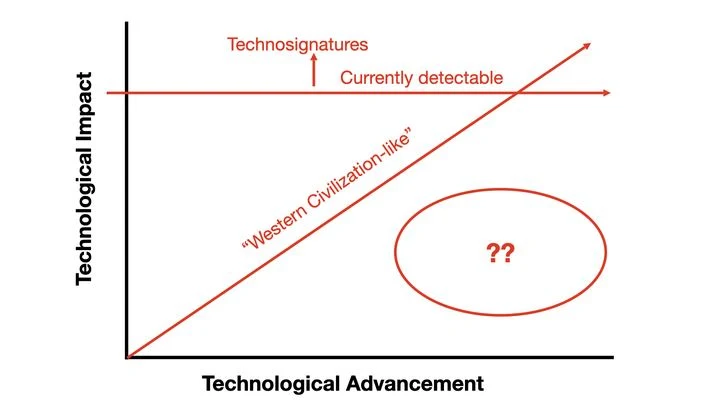
The Drake Equation is an attempt to guess the number of intelligent civilizations in our Galaxy. It’s like counting finished cakes in an unknown bakery: you know the ovens (stars), the baking sheets (planets), and the baking time. But were eggs added to the batter? Western science, relying on a single earthly recipe, considers them a rare ingredient.
When you're planning a renovation, you don't buy paint by eye: you measure the wall area. In science, deciding how many samples to collect is a similar guess, but the stakes are higher. Skimp on samples, and your study becomes a lottery: you might miss a real effect, or you might mistake noise for a discovery. Overshoot, and you're wasting tubes, months, and, in animal experiments, lives.
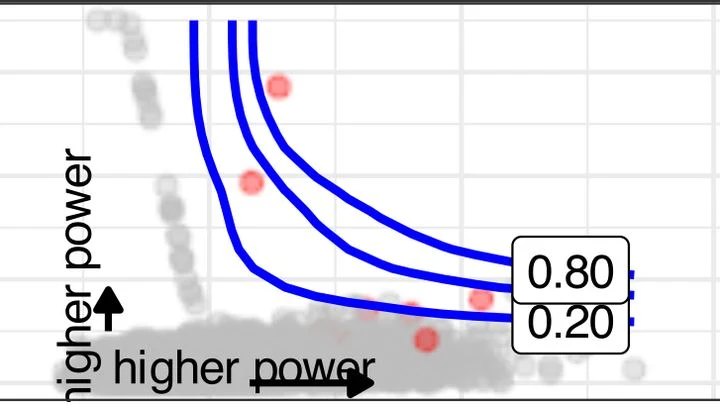
Imagine a flashlight that only lights up when you're near a road sign: that's roughly how drug discovery works when scientists follow genetic clues. A team of researchers examined over 26,000 target-disease pairs: combinations of a protein that a drug acts on and the disease it treats.
Ancient stars, nearly devoid of heavy elements, are like fossilized remnants of the first cosmic flashes. For a long time, the odd ratio of carbon, hydrogen, and helium in three such stars was thought to require a hypernova — an ultra-bright supernova with hundreds of times more energy than a regular one.
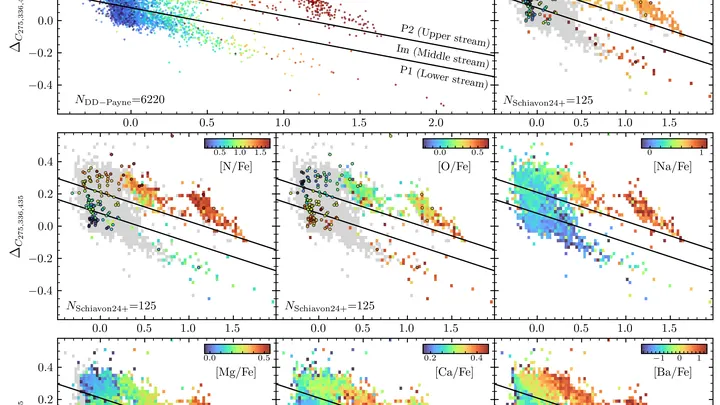
At the heart of Omega Centauri, the most massive globular cluster in our Galaxy, thousands of stars are packed so tightly that their light merges into a single glowing blob when seen from Earth. Separating this swarm into individual stars and determining the composition of each is a task akin to sorting through an overfilled anthill.
Science is like a city where residents pave the streets themselves. Where paths are already worn, new houses go up, while untouched vacant lots go unnoticed — not because building there is impossible, but because no one ever looks.
Light from distant galaxies carries a hidden recipe — a color barcode revealing the elements inside. For decades, astronomers used familiar tricks to decode it, but the James Webb Space Telescope shows these tricks fail for the earliest galaxies.
The chemical composition of a sample is like a soundscape. A living forest sounds polyphonic: chirping, rustles, the hum of insects. A barren desert is just the whistle of the wind.