A Quiet Diamond Film express
Imagine an orchestra where every musician is a tiny magnetic sensor inside a diamond. To play cleanly, they need silence: no extra vibrations, no background noise. But when creating such orchestras, thin diamond films with nitrogen defects, dissonance bursts into the material.
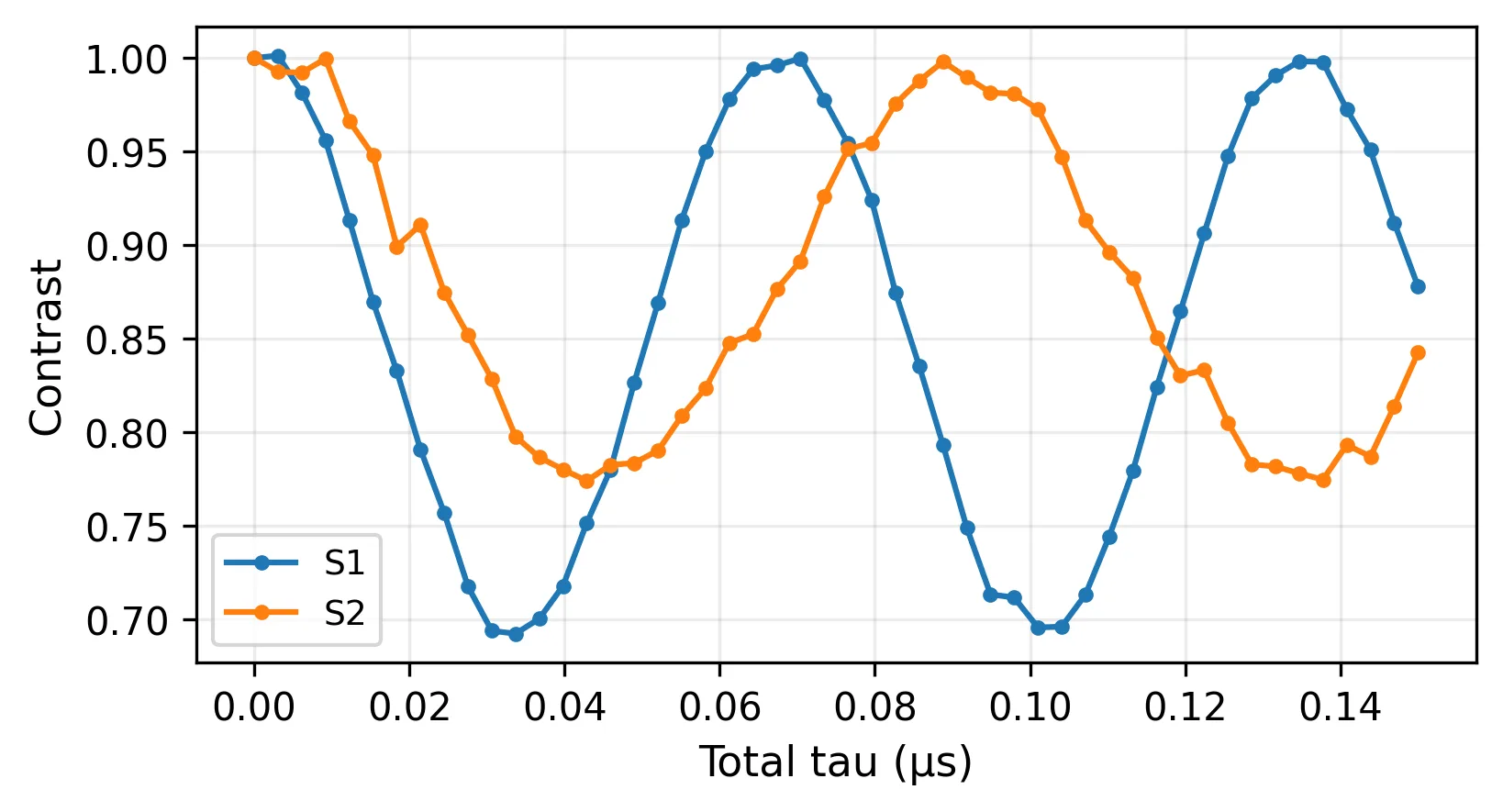
An international team of physicists studied how this disorder arises. They grew films on diamond substrates, adding nitrogen in two ways. The first was pulsed, like a sharp fuel injection: in a thin layer of 60–80 nanometers (thinner than a spider's web), a real nitrogen storm erupted. The second method was smooth delivery through mass flow controllers, like gentle breathing. The result was striking: the smooth method almost completely eliminated extra defects, and the quantum properties of nitrogen-vacancy centers (point defects in the diamond crystal lattice) approached the theoretical limit.
Now scientists have a recipe for a perfectly clean quantum material. Such a diamond orchestra can distinguish individual molecules, monitor chemical reactions, and perhaps look inside living cells without harming them.
A nitrogen-vacancy center in diamond can glow differently depending on the surrounding magnetic field. This allows measuring fields a hundred times weaker than that of a refrigerator magnet.