How Twisted Light Reveals the Secrets of an Insulator express
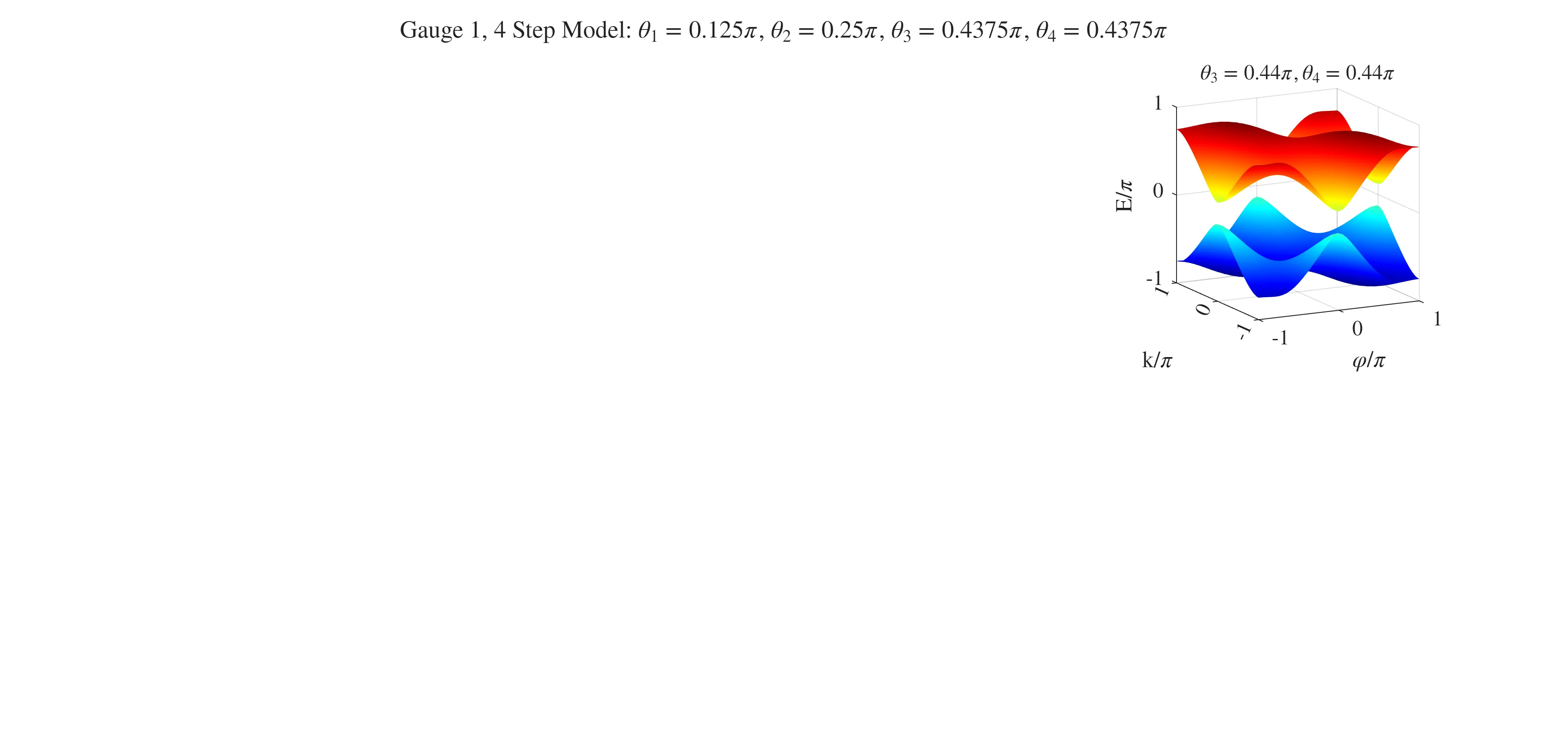
In the world of crystals, there is a hidden geometry. When an electron runs through a two-dimensional insulator, its path is twisted by an invisible force — topology. This twist is described by the Chern number, an integer that cannot be changed by smooth deformation. Previously, it had to be calculated like the area under a complex curve: step by step, reconstructing the Berry curvature across the entire Brillouin zone (the space of all possible electron momenta). The process is lengthy and sensitive to noise.
The authors of the study took a different route. They noticed that the Chern number hides not in the area but in points. Where the wave function vanishes, the phase of the wave makes a full turn, like a compass needle at the North Pole. This is a phase vortex. Simply count such vortices in the structure of eigenvectors, and the Chern number pops out by itself — integer and exact. The method works even under strong noise because vortices are rigid objects: they do not disappear from a slight shake.
The second method is even trickier. In classical wave systems (for example, in a lattice of laser beams) modes do not have to be normalized. The amplitude can vary, and this is not a bug but a key. By comparing phases at different edges of the sample, one can extract the Chern number without a full scan of the Brillouin zone. An experiment on a photonic lattice confirmed that both methods give exactly the same integers as the cumbersome old calculations.
Original abstract
as written by the authors arXiv:2608.04998v1
We propose two methods to extract the Chern numbers of the Bloch bands of a two dimensional insulator, and apply them to a photonic lattice experiment. These two methods require the knowledge of the complex-valued components of the Bloch eigenvectors, or their ratios. Unlike other tomography methods relying on the approximate reconstruction of the Berry curvature and its integration over the Brillouin zone, our methods boil down to the observation of phase vorticities in the eigensates structure. Those measurements, robust to experimental noise, yield exactly quantized values. One of the two methods exploits the non-normalization of the eigenmodes, making it particularly relevant for classical wave systems.
The Chern number is named after the mathematician Shiing-Shen Chern, who studied the curvature of surfaces. It turned out to be the key to understanding the quantum Hall effect, where resistance changes in strict steps.
In Neal Stephenson's novel Anathem, scientists manipulate the topology of space to influence quantum states — much like here, where light is controlled through vortices.