Scientist

Michael Berry

1941 – present · quantum mechanics, optics, mathematical physics
British theoretical physicist, known for discovering the Berry phase (geometric phase) in quantum mechanics. This phase, acquired by the wave function during adiabatic transport along a closed loop in parameter space, has profound implications in condensed matter physics, molecular physics, and even robotics.

Biography

Graduated from the University of Exeter and St Andrews, where he received his PhD. Spent his entire career at the University of Bristol. Awarded the Lorentz Medal, Max Planck Medal, and Wolf Prize. Knight bachelor since 1996. Known for elegant explanations of complex physical phenomena (e.g., rainbows and rogue waves).

Key discoveries

💡 Berry was a scientific consultant for the film "District 9" and helped the director devise physically plausible alien technologies.
"He thought that the most beautiful physics is often hidden behind simple, everyday phenomena, like rainbows or reflections on water."
Concepts
graphenequantum opticssuperpositiontopological insulatoruncertainty principle
Laws
Berry phaseAharonov-Bohm effect
Scientists
Charles TownesAlain AspectDavid DeutschLouis de BroglieShuji NakamuraLeo EsakiAlbert A. MichelsonSerge Haroche

Related articles

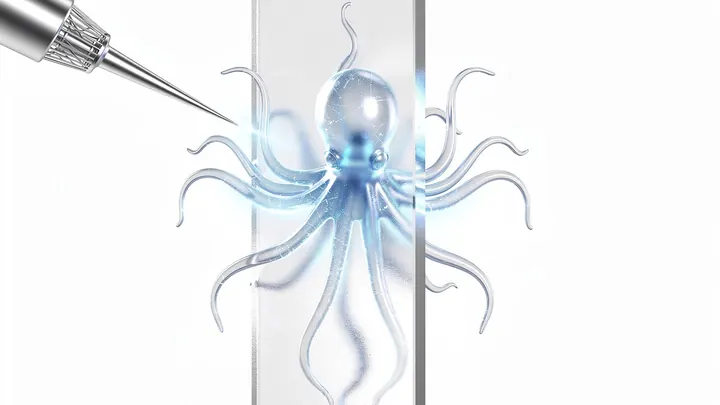
Dance of the Octopus Electron: What Quantum Tunneling Says About the Nature of Reality
A tiny tungsten tip with a radius of less than a hundred nanometers is the perfect stage for watching a quantum performance. Apply an electric field of a few volts per nanometer, and electrons start flying out of the metal: that’s field emission.
Quantum Physics2026-01-201 minarXiv:2601.14381express
Magnetic field turns the void into a motor
Two metal plates in a perfect vacuum attract each other. Even Richard Feynman compared emptiness to a boiling foam: particle pairs are born and immediately vanish, creating the Casimir effect. If the plates are asymmetric, they also start to twist — that's a vacuum motor. But rotation doesn't require oddly shaped parts.
Quantum Physics2026-02-142 minarXiv:2602.13796express
A Cage of Light: How an Ion Gets Stuck in a Lattice
An ordinary magnet makes a compass needle turn, but it doesn't stop the needle from moving forward. But if you twist a magnetic field into a knot, it can trap a particle in place, like a snare. This phenomenon is called an 'Aharonov–Bohm cage': the particle's waves cancel each other out at some points and reinforce at others, leaving only tiny 'islands' where it can exist.
Quantum Physics2026-02-162 minarXiv:2602.14437express
Magnetic Resonance for Electrons
Electrons in a conductor behave like a crowd on an escalator: each one moves on its own, but together they create a flow. If you make them circle around a ring, their angular momentum (a measure of rotation) can couple to a magnetic field, like gears in a clock.
Mesoscale2026-02-211 minarXiv:2602.18973express
Electron Geometry Without Approximations
An electron inside a crystal is like a traveler walking through a city with winding streets. Its direction of motion constantly changes depending on where it is. Physicists call this feature the geometric Berry phase, and it determines how a material conducts electricity or responds to a magnetic field.
Classical Physics2026-03-131 minarXiv:2603.13448express
The Invisible Ocean That Holds the Atom
According to ordinary mechanics, an electron in an atom should spiral into the nucleus and crash into it, like a surfer losing speed and falling off the board. But atoms live for billions of years. Because space isn’t empty. Even in absolute vacuum, an invisible electromagnetic sea ripples — the zero-point field. Its waves continuously nudge the electron.
Quantum Physics2026-05-032 minarXiv:2605.08148express
Echo of the Void: How to Catch the Invisible
A palm hovering over a hot stove feels the heat even when the surrounding air seems cool. Something similar happens to electrons in the Aharonov–Bohm effect: the particle senses an electric voltage even though it enters a region where the field has already been switched off.
Quantum Physics2026-05-152 minarXiv:2605.16559express
A Phase That Knows About Losses
If you carry a cup of coffee slowly and steadily around a room and then return to the same spot, nothing happens to the drink. But in the quantum world, things are different: a particle that makes such a loop comes back not quite the same. It picks up an elusive 'extra'—the geometric phase, which physicists call the Berry phase.
HEP Phenomenology2026-06-061 minarXiv:2606.08329express
Electron and muon magnetic moments search for New Physics
Electrons and muons are tiny magnets. Their magnetism is slightly more than two (in special units), and this 'excess fraction' (anomalous magnetic moment) arises from constant ripples in the vacuum: particle pairs momentarily pop into existence and vanish.
Plasma Physics2026-06-262 minarXiv:2606.27833express
How Magnetic Fields Are Born in a Void
Space is threaded with magnetic fields. They exist around galaxies, stars, and even in nearly empty voids — the vast empty spaces between galaxy clusters. It's usually thought that fields are amplified from weak 'seed' fields by turbulence, much like a dynamo. But the origin of the seed fields themselves has remained a puzzle.
Plasma Physics2026-07-052 minarXiv:2607.04437express
Magnetic Fields from Cosmic Ripples
In the vast clouds of rarefied gas that fill the space between stars, something is always churning. Supernova explosions, colliding streams — all of it shakes the plasma. And in this rippling, as it turns out, hides the mechanism that gives birth to magnetic fields. Plasma is a gas in which electrons are stripped from atoms.
Mesoscale2026-07-192 minarXiv:2607.17049express
Light Fires Up the Valley Compass
A potter tries to measure the thickness of a jug's wall, but every time the gauge also reports the curvature of the vessel.
Mesoscale2026-08-121 minarXiv:2608.12285express
Magnetic Vortex as a Curved Lens for Electrons
A vortex in a magnetic material is like a whirlpool, but instead of water, the directions of magnetization twist. An electron flying through such a vortex feels not just a magnetic field, but a curvature of space: its path bends as if it were rolling down a funnel with a narrow neck.