Lead Instead of Carbon: A Sharper Way to Size Up the Nucleus express
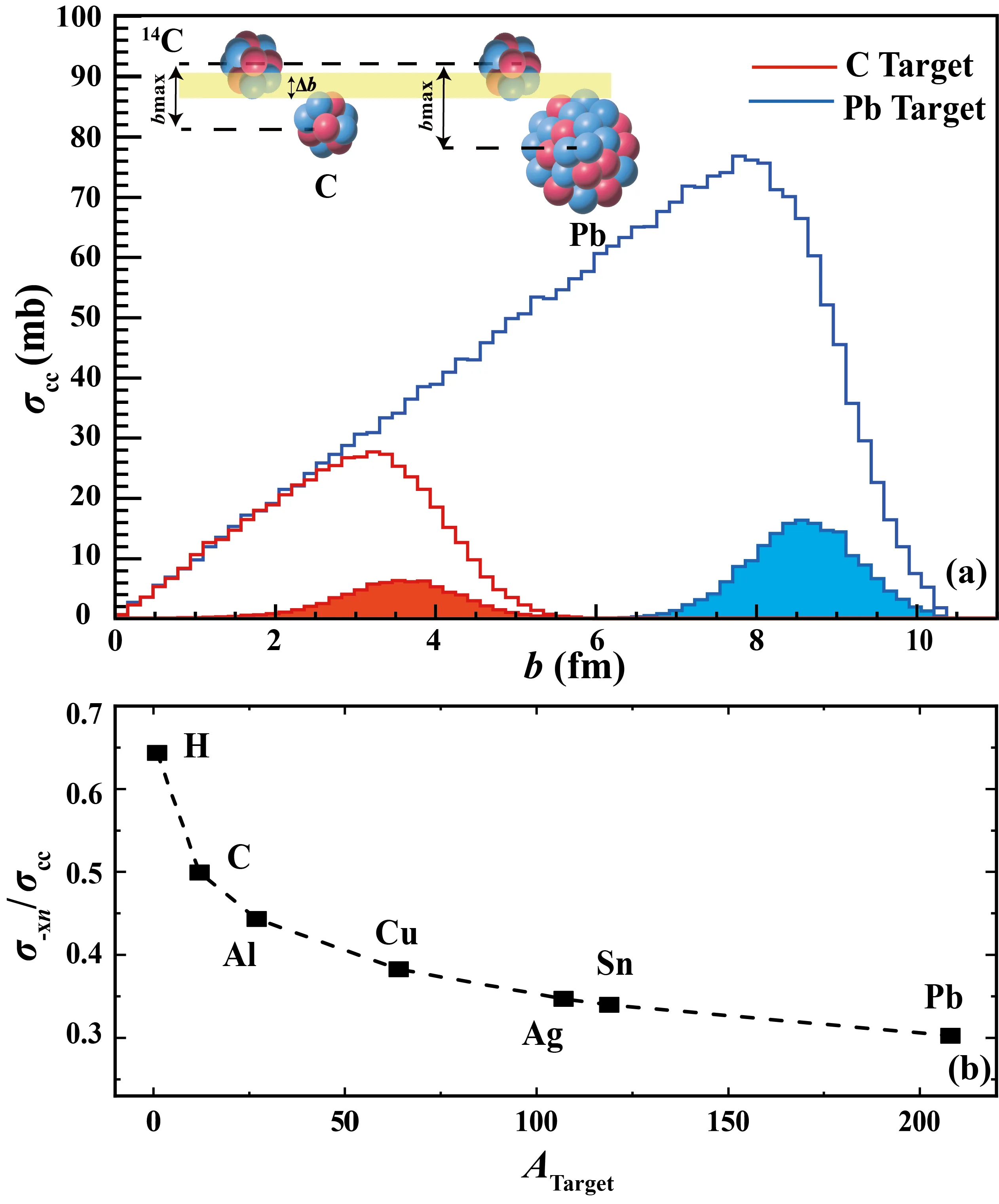
To determine the size of the proton cloud in an atomic nucleus, physicists collide an unstable nucleus with a target and observe how many protons it loses. The larger the projectile nucleus, the more often it grazes target nuclei and loses particles. But when the target is light, such as carbon, calculations require a correction factor — otherwise, the size comes out overestimated.
In the new work, proton loss was measured for 18 nuclei from the p-shell (from boron to neon) on hydrogen, carbon, silver, and lead targets at an energy of about 240 MeV per nucleon. It turned out that the correction factor smoothly decreases with increasing target mass and becomes equal to one for lead. That is, with a lead target, no corrections are needed at all — the measured size directly matches the real one.
This approach opens the door to precise measurement of proton radii for short-lived nuclei that live for milliseconds. Previously, empirical coefficients had to be introduced for them, but now they can be avoided — simply by choosing a heavy target. This is important for understanding how nuclei are structured at the edge of stability and for calculating processes in stars where such nuclei are born and die.
The lead nucleus contains 82 protons, and its radius is about 6 times larger than the proton radius. If a proton were the size of a pea, the lead nucleus would be like a soccer ball.