Why a Droplet Falling at an Angle Splashes Differently ✛
A raindrop gliding on the wind hits a puddle not vertically, but as if striking the water with a slanted palm. At that moment, its motion splits: one part pushes the water forward, the other presses down. If the forward push is stronger, the spray flies only in one direction, like a wake behind a boat. If the downward pressure is stronger, the water throws up a crown that scatters in all directions.
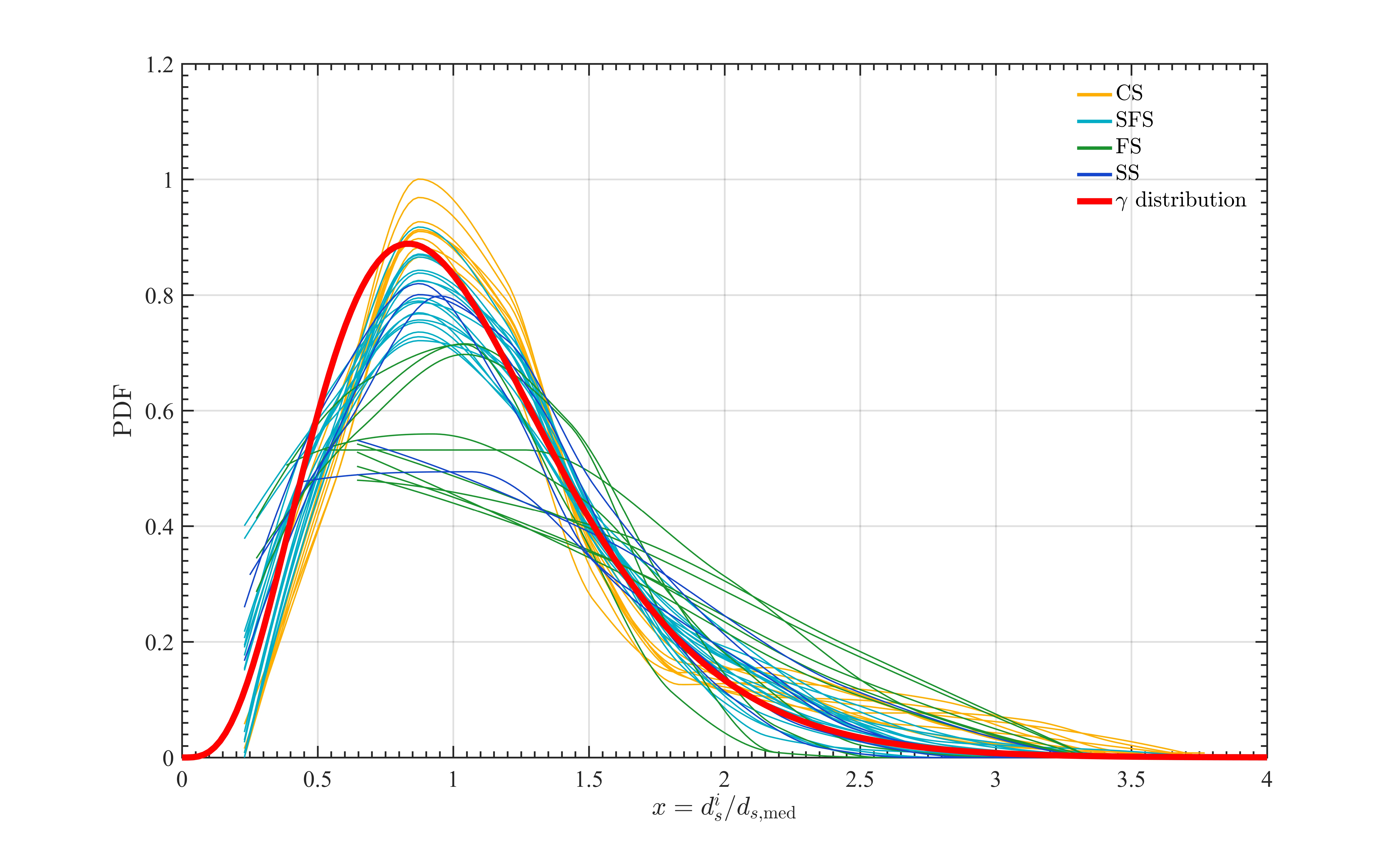
The tiny droplets that break off from the crown are not random either. The stronger the impact, the smaller they are, and this follows a strict pattern: if you increase the impact force by a factor of 100, the droplets become about 16 times smaller, and their number grows by a factor of 400. Previously, this pattern was merely observed in experiments, but now it is clear why it holds: inside the crown, the water speed at neighboring points differs just enough to balance the surface tension on the future droplet. It is as if the liquid measures out its own portions, based on how fast it is moving.
At the most violent impacts (We > 2000), the droplet can create a bubble dome and eject tiny droplets even before the crown forms. In the ocean, such droplets, when evaporating, leave salt particles that become cloud condensation nuclei.