The Wing That Remembers Its Acceleration ✛
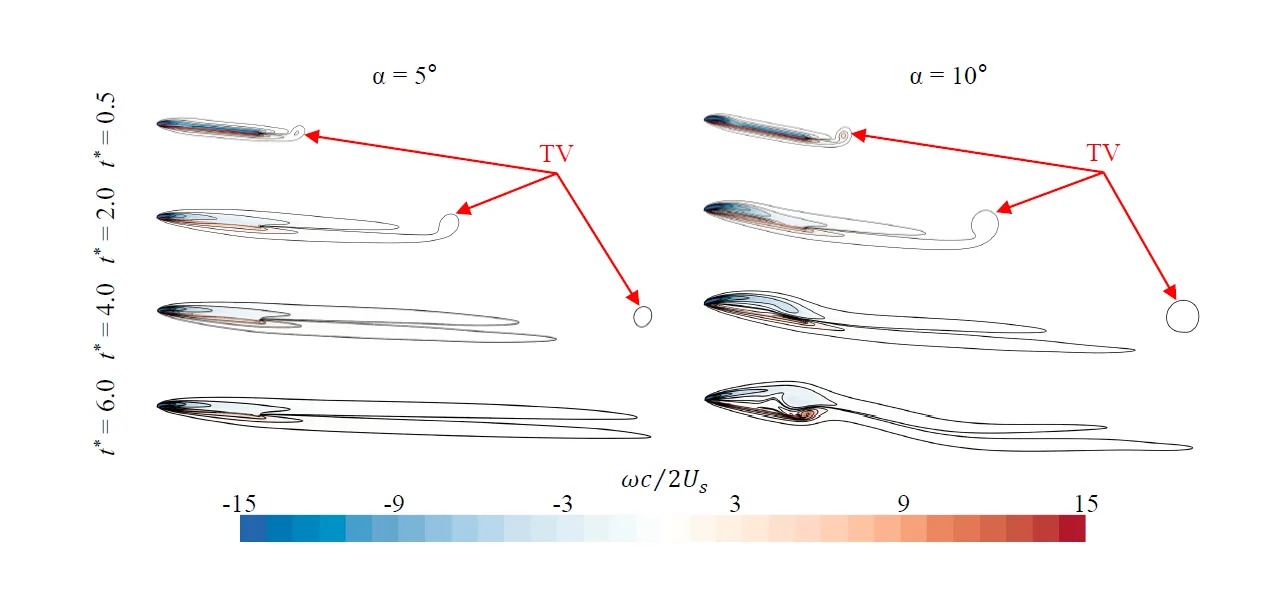
An airplane wing is like a skier building up speed before a jump. If the skier turns sharply, their speed won't change instantly. Same with a wing: after a sudden change in angle of attack, lift builds up gradually, as if the wing 'remembers' its acceleration.
This effect was discovered by engineer Herbert Wagner in 1925. But he didn't have an exact formula, only tables. Now scientists have derived a formula that links the wake behind the wing to the force acting on it.
It turns out that if you rescale the force properly, the curves for different flow speeds collapse onto one another. This means Wagner's law holds even in viscous air, when the flow partially separates from the wing. Such a simple formula will help engineers design flapping wings and helicopter blades.
The Wagner function, which describes the lift buildup after a sudden change in angle of attack, was first published in 1925 as tables because no explicit formula existed for nearly a century.
In Stanisław Lem's novel The Invincible, mechanical 'flies' are described that fly by rapid wing beats in a dense atmosphere. Understanding unsteady aerodynamics of viscous flows, as achieved in this work, brings us closer to describing such hypothetical flying machines.