In the 1840s, French physician Jean Louis Marie Poiseuille studied blood flow in capillaries. He was the first to measure how the volume of fluid flowing through a thin glass tube depends on pressure and diameter. It turned out that in laminar (smooth, layered) flow, the volumetric flow rate is proportional to the fourth power of the tube's radius. Later, this relationship was derived theoretically from the Navier–Stokes equations. Today, Poiseuille's equation is a cornerstone of viscous fluid dynamics, from microfluidics to oil pipelines.
History
Jean Louis Marie Poiseuille, a French physician and physiologist, conducted a series of experiments from 1838 to 1846 with water and alcohol in glass capillaries with diameters from 0.015 to 0.65 mm. He empirically established the dependence of flow rate on pressure and diameter. In 1845, George Gabriel Stokes derived the same result from the equations of motion of a viscous fluid. Later, the equation was generalized for turbulent flows and non-Newtonian fluids, but the classical form remains the foundation of engineering calculations.
How it works
The equation is used to calculate hydraulic resistance in pipes, design cooling systems, analyze blood microcirculation, and develop microfluidic devices. Limitations: it does not work for turbulence, for short pipes (where the velocity profile does not have time to develop), and for fluids with variable viscosity.
In practice
Designing water supply systems, calculating blood flow in vessels, and managing flows in chemical reactors.
Fun fact
If an artery narrows by half due to plaque, blood flow through it drops not by 2, but by 16 times — that's why atherosclerosis is so dangerous.
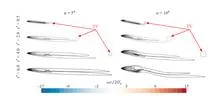
An airplane wing, like a skier on a ski jump, remembers its acceleration. Change the angle of attack sharply, and the lift does not immediately reach its new value. It builds up gradually, as if the wing is not yet sure the maneuver is for real.
This effect was discovered by engineer Herbert Wagner in 1925.
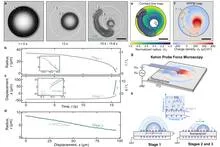
A water droplet on a fluoropolymer film initially behaves as expected: it sits and evaporates. But once it shrinks to a quarter of its initial size, it suddenly takes off and, within fractions of a second, covers a distance several times its own radius. Then it crawls slowly but persistently, leaving behind an invisible trail of electric charges. That trail is what drives the motion.
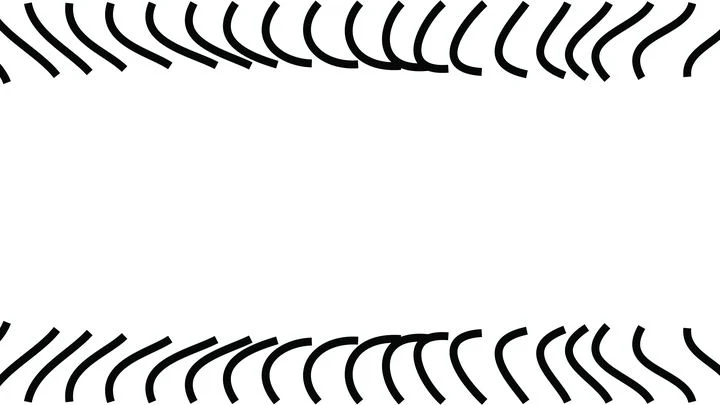
Water confined between two cylinders flows in smooth layers when the inner one rotates. But once the speed crosses a certain threshold, the layers crumple into toroidal rolls, like a stack of bagels. Physicists call these Taylor vortices: the flow loses stability and a regular pattern emerges.
A raindrop falls on glass and flattens into a pancake. Add a bit of polymer to the water, and it becomes elastic, like jelly. You'd think such a jelly would spread differently.
A bacterial biofilm is like a city made of slime. The houses are the microbes themselves. The streets and bridges are long polymer molecules that bacteria secrete outside. This whole construction is not static: the bridges are constantly breaking and re-forming.
The authors built a "toy" computer model of such a city.
In a vast hall, billiard balls are scattered about. At first they lie sparsely, each on its own. Then someone adds more, and suddenly the balls compress into dense clusters. This is a phase transition — the moment when matter abruptly changes its state.
Physicists have long described such a picture with the hard-sphere model: particles are identical balls that cannot overlap.
A subway train races through a tunnel, yet passengers in the last car barely sway. Blood flow in the lungs works much the same way: the heart pumps blood in powerful spurts, but by the time it reaches the veins, the pulsation has almost vanished.
The brain self-cleans its waste: cerebrospinal fluid flows through narrow channels surrounding arteries. The channel walls are soft and ripple with each pulse, and the tissue is porous like a sponge. Every heartbeat turns arteries into tiny pumps, driving fluid through the pores.
Soil is not a solid sponge but a labyrinth of pores of various sizes. After rain, water does not fill them all at once: first the narrowest ones, then the wider ones. Physicists built a theory of this process based on a simple image — a set of communicating vessels.
An ocean current hundreds of kilometers wide lives its own life, fed by energy from tiny eddies. Something similar happens in the atmosphere: small swirls pass their power on to huge air currents. This process, the inverse energy cascade, has been known for a long time.
Table salt is one of the most studied substances in medicine. For decades, students were taught Arthur Guyton's model: eat something salty — blood dilutes, volume temporarily increases, kidneys promptly excrete the extra water, and everything returns to square one. A neat scheme, like a float valve in a toilet tank.
When physicists drive electrons through an ultrapure gallium arsenide channel at helium temperatures, they expect to see a well-behaved, almost ideal fluid.
A stone falls into a pond, and ripples spread evenly in all directions. But some media behave as if the wave knows which way to turn, like water that only swirls clockwise. This asymmetry comes from odd viscosity and odd elasticity — properties of media with broken mirror symmetry.
Millions of cilia, thin hairs, work inside the tiny ducts of our bodies. They beat in synchrony, like the oars of a galley, pushing viscous mucus or fluid along. The authors of a new study propose viewing the ciliary carpet as an active porous medium — something like a sponge that squeezes and releases itself, driving water through.
A drop of honey spreads slowly across a table, while water spreads quickly. The resistance to flow, viscosity, differs from one fluid to another. But what if the viscosity changes on the fly, as the substance compresses or expands?
A drop of thick shampoo falls into water and freezes into a strange rope. A liquid that both flows and springs back is called viscoelastic. In it, tiny particles under ultrasound behave quite differently than in water. Viscoelasticity is a material's ability to both spread like honey and return to shape like rubber.
A boiling pot, a gust of wind, a wisp of smoke from a campfire — all obey equations that mathematicians call 'nonlinear and dissipative.' In plain terms, energy is lost to friction, and parts of the flow influence each other so strongly that predicting the motion ahead of time is a task on the edge of feasibility.
Water flowing through a pipe can become a trap for sound. If the flow speed exceeds the speed of sound in water, then sound waves trying to go against the current can no longer escape: they are swept away, like light beyond a black hole's horizon.
A porous implant filled with a drug works like a sponge that slowly releases the substance into the surrounding fluid. But if the fluid flows quickly, it washes out the drug differently than in a calm environment. The authors computed on a computer how different flow rates and properties of the porous structure affect drug release.
A raindrop falls into a puddle, and the impact sends up a little fountain of fine spray. Each of those droplets is a new, secondary drop. How many there are, how big they are, and how long they live depend on a host of factors: the fall speed, the drop size, the properties of the water. Scientists set out to make sense of this chaos using computer simulations.
In porous materials (soil, rocks, filters) fluids move through tiny, winding channels. When two immiscible fluids, such as water and air, are present simultaneously, their interface constantly shifts: air bubbles push water out of some pores and open paths through others.
Inside the kidneys, liver, and other organs, fluid flows through channels that squeeze and release like a hose underfoot. The walls of these channels are not rigid: they are porous, elastic, and soaked with moisture.
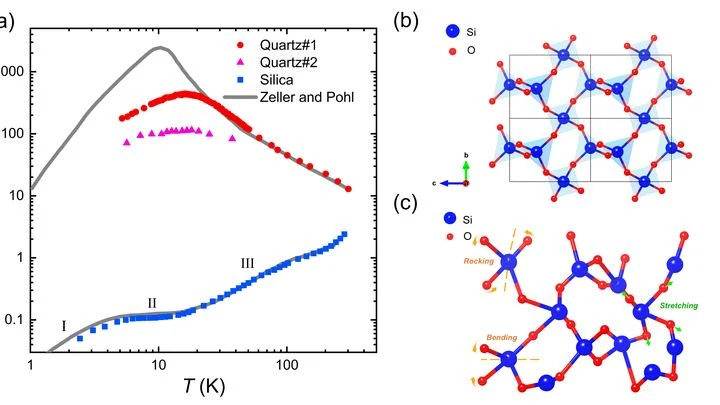
If you push heat through a piece of quartz, it usually goes straight, like water through a pipe. But switch on a magnetic field, and the flow veers slightly sideways, as if the pipe suddenly grew a side branch.
A drop of oil in water, coated with soap molecules, behaves differently from a bare drop. Soap molecules are tiny rods: one end loves water, the other loves oil. In a quiescent fluid, they stand on the surface like a picket fence, lowering the surface tension — the force that pulls the drop into a sphere.
E. coli is a tiny swimmer in a world where water is as thick as jelly. Inside our gut, it doesn't glide freely but fights through mucus — a tangled web of long molecules, like a ball of knotted threads.
The tear film on the eye is an ultrathin layer of fluid that protects the cornea and keeps vision sharp. It’s usually pictured as a perfectly smooth surface, but the real cornea, even a healthy one, is covered in microscopic bumps.
Water deep within the Earth is compressed more than a thousandfold compared to the surface. Even there, it continues to flow, but its internal structure changes. Researchers measured how water resists flow and compression as pressure rises from zero to 1.6 gigapascals — equivalent to placing a 16-ton weight on every square centimeter.
A cell is a city with gates. Each gate is a protein channel in the membrane: through it, ions, sugars, and signaling molecules pass in and out. Some gates are almost always open, while others open and close randomly, like subway doors that let a passenger through one moment and slam shut in their face the next.
The layer of cells lining internal organs is like a crowd in a packed subway: everyone stands shoulder to shoulder, but sometimes the crowd starts to flow, and people slip past each other. Biologists call this behavior a transition from a jammed, solid state to a fluid one.
The lymphatic system is like a city's network of canals, through which water slowly moves, carrying away waste from tissues. But it has no single pump-heart. Instead, along the vessels are placed small station-locks — lymphangions. Each such lock squeezes itself like a fist and pushes fluid onward. How they coordinate their work has long remained a mystery.
Thick honey spreads slowly across a plate. In such a world, where friction suppresses inertia, motion is governed not by force but by viscosity. This is how many soft materials behave: polymer gels, colloidal suspensions, the contents of living cells.
A superfluid flows without friction, like water in a perfectly smooth pipe, but the moment it hits an obstacle, the picture changes. In a new study, researchers looked at how a superfluid stream flows around rectangular walls and pits with sharp corners.
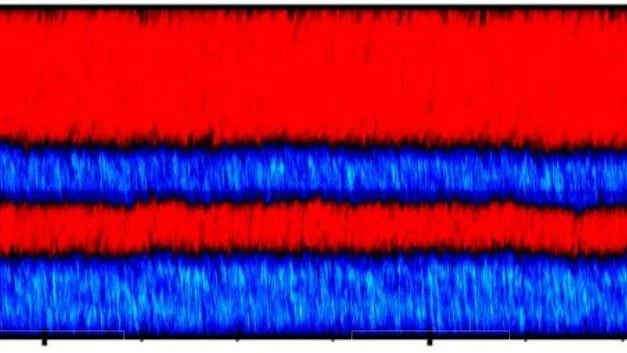
A pot of water heated from below is a simple example of turbulence. Hot fluid rises, cold fluid sinks, and the flow spontaneously breaks into rotating cells that look like horizontal rolls. In a new study, physicists took a wide rectangular container (ten times longer than its height) and tracked how many such rolls appear.
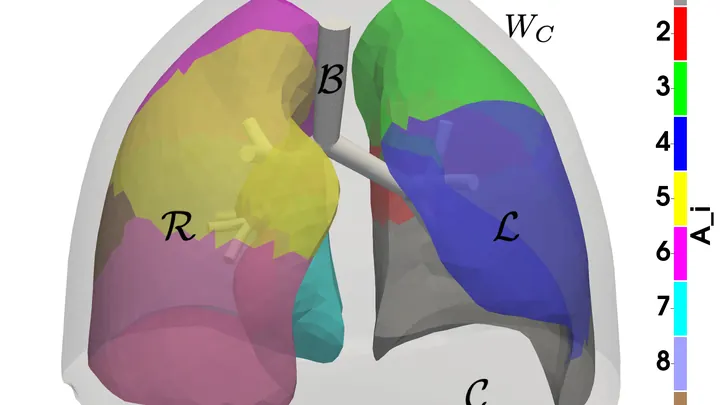
A lung scan reveals a tree: the trunk is the trachea, branches are the bronchi, and leaves are the alveoli. But how does air spread through these branches? Scientists built a computer model that replicates the lung's shape from images obtained via computed tomography.
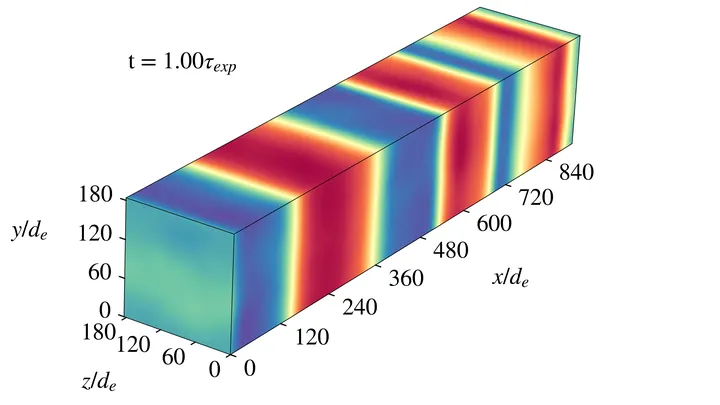
Plasma is a gas in which electrons are stripped from atoms, and it conducts electricity. In space, such gas is often so rarefied that particles rarely collide, and its behavior is described by the equations of motion for each particle. The computer method Particle-in-Cell (PIC) does exactly that: it tracks millions of particles and the electric fields they create.
The atomic nucleus is not a solid ball but a drop of liquid that can be squeezed. To understand how elastic it is, physicists accelerate gold nuclei and smash them into each other. On impact, the matter compresses to densities like those in a neutron star, then flies apart. The shape of this debris tells us about the properties of the matter inside.
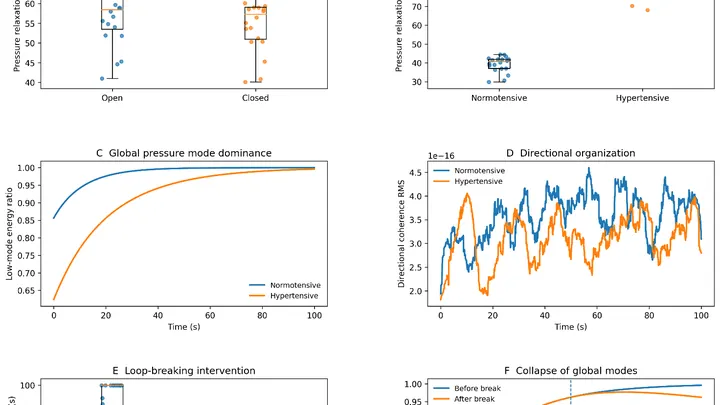
Water in a circular hose, pumped around by a pump, won't stop even if you pinch one section: the flow finds a detour and keeps going around. That's roughly how some parts of our circulatory system are arranged — not as single pipes but as closed loops.
Scientists built a computer model of blood flow and compared two scenarios: an open vessel and a closed loop.
In a heart-lung machine, blood flows through narrow tubing and past rapidly spinning pump blades. Sometimes red blood cells can't take it: their membranes rupture, and hemoglobin spills into the plasma. For a patient, this is like pouring sand into a car's fuel system — small damages accumulate and wreck the whole mechanism.
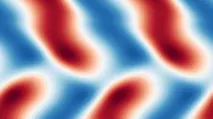
Bacteria in a drop of water jostle and swim: each on its own, but together they create patterns. With weak motion, the fluid churns like soup on a high flame: vortices collide, and the flow direction changes every second. This is called bacterial turbulence.
Salt in a glass of water is a crowd of charged particles. When there's plenty of water, each particle floats on its own, wrapped in a thick fur coat of water molecules. But as you keep adding salt, the water runs out for everyone, and the particles start seeking each other out. First, they stick together in pairs, then in larger clumps.