Forks in the Atomic Road ✛
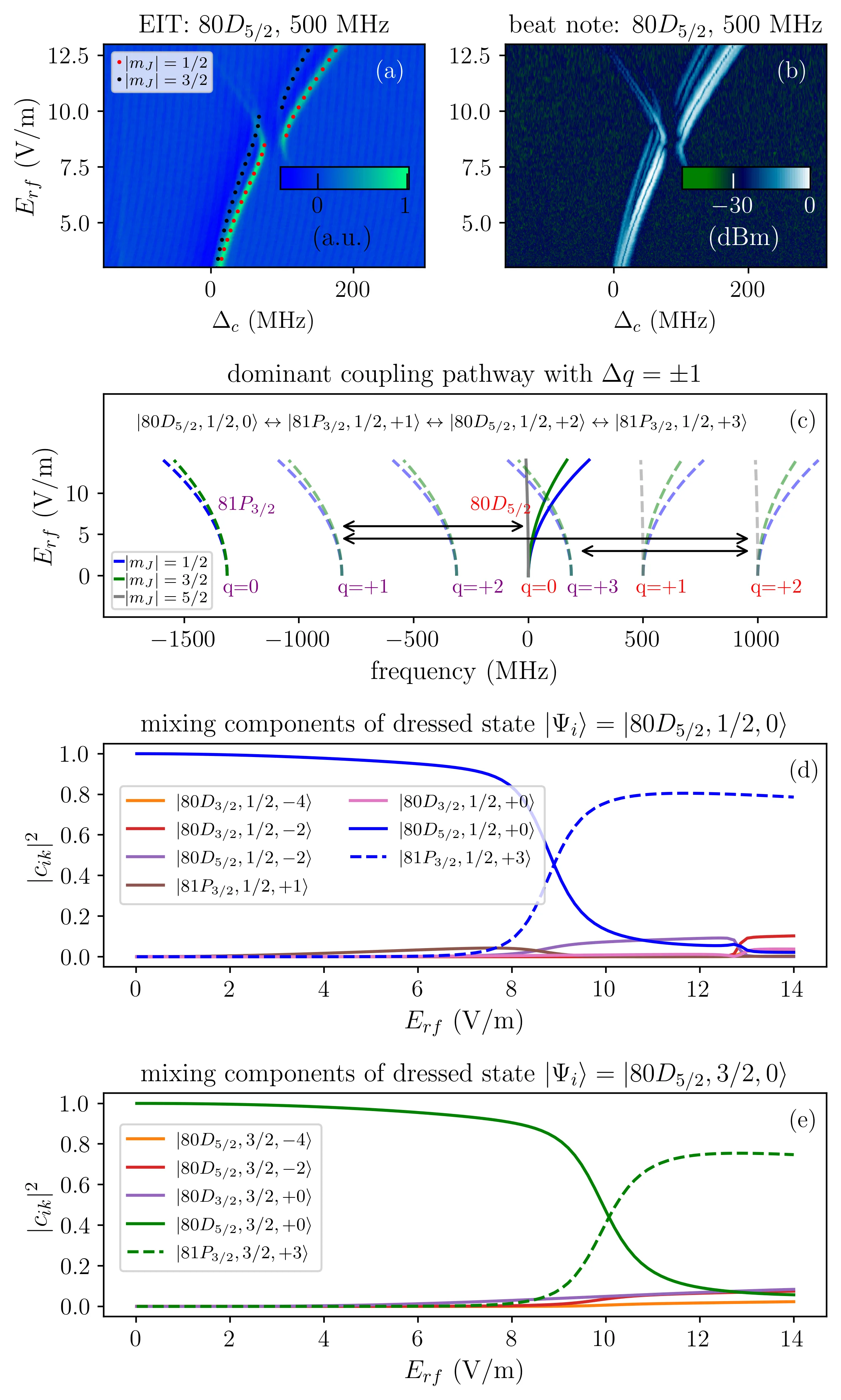
A cesium atom, like any other, has energy levels. An electron can occupy one of them, like a resident on a particular floor of a building. When a varying electric field acts on the atom, the floors begin to approach each other. But instead of merging into one, they repel, like like poles of magnets. In the spectrum, this looks like a fork in the road: two lines come close but do not cross.
Scientists wanted to understand why some forks are wide and others barely visible. It turns out that everything depends on how many steps the electron must take to move from one floor to another. Sometimes a direct transition is forbidden, and the electron has to take a detour through neighboring floors. It's like a transfer in the subway: if there is no direct line, you go through another station. The more transfers, the harder the transition, and the narrower the fork in the spectrum.
Now, knowing at what field strength each fork appears, one can measure unknown electric fields. It's like using a ruler whose markings are drawn not by paint but by nature itself.
Avoided crossings in Rydberg spectra can serve as natural calibration markers: their position on the field-strength scale is known with high precision, allowing them to be used for self-calibration of atomic sensors without external references.