Quiet Galaxies: Where Did the Shock Waves Go? ✛
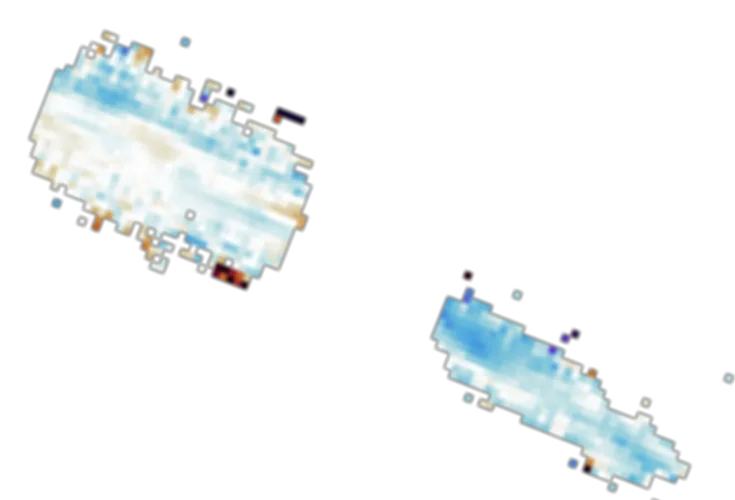
Six distant galaxies, which astronomers examined with the space telescope, turned out to be quieter than expected. Many stars were being born in them, so explosions should have been rumbling and shock waves spreading, like ripples from a stone thrown into water. But no traces of these waves were found.
To see such distant objects, the telescope was helped by a natural lens: a foreground galaxy cluster magnified their light, like a magnifying glass. Astronomers measured the glow of gas at every point in each galaxy and compared it with how gas should shine if it had been shaken by a shock wave. There was no match.
Perhaps the energy from stars goes into the gas in some other way, without sharp jolts. Or the old methods for recognizing shock waves, tested on nearby galaxies, do not work for such distant ones. Now scientists need to come up with new approaches.
The authors thank the construction crew digging a giant pit near the ISSI office in Bern for their 'constantly loud soundtrack, which kept us awake and alert while writing this paper.'