Nikko J. Cleri

5 articles · 30 co-authors · latest: 2026-09-07
3,265 citations · h-index 29 · 125 papersData: Semantic Scholar

We have retold 5 papers by this author. 3 of them with a full read. most often about: JWST, exoplanet atmosphere, redshift. 30 co-authors across our retellings.

Links in the knowledge graph
Galaxies2026-02-051 minarXiv:2602.06024express
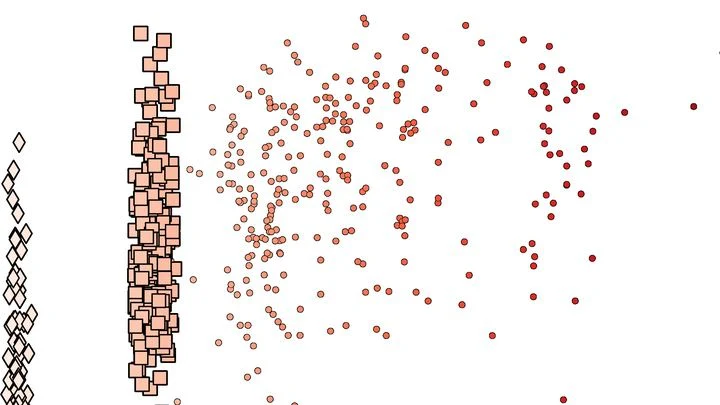
Cold Water Trail in the Red Dots of Space
A distant red object usually means one thing: we're seeing a dust veil over a scorching disk falling into a black hole. But when the James Webb split its light into shades, a shadow appeared inside — just like steam from boiling water intercepts rays.
Galaxies2026-05-282 minarXiv:2605.30410express
How Young Galaxies Ignite Gas
If you turn on a lamp in a room, it illuminates the walls. But if you place the same lamp in a vast hall, the light barely reaches the corners. Similarly, radiation from young stars affects gas in a galaxy: it knocks electrons out of hydrogen atoms, making the gas glow.
Galaxies2026-06-043 minarXiv:2606.06575
Galaxies2026-07-023 minarXiv:2607.02666
Cosmic Cocoons: MEOW's Infrared Hunt Reveals the Secret Growth of Black Holes
The Universe is less than a billion years old, yet at its centers already sit black holes with masses of a billion suns. According to the conventional picture, they grew by voraciously devouring matter, but calculations show that 'feeding' must have been almost continuous, while visible quasar flares last only a few million years. So where does all the accreting fuel go?
Galaxies2026-09-072 minarXiv:2609.07850
Quiet Galaxies: Why Young Stellar Systems Showed No Shock Waves
An orchestra of six distant galaxies should have played loudly, but the percussion section was missing. Astronomers pointed the James Webb Space Telescope at them, expecting to hear the sharp bursts thought to accompany star birth. Instead, they recorded only a steady hum. Each of these galaxies is so far away that its light has traveled for more than ten billion years.