Alternating current (AC) is an electric current that periodically reverses direction, in contrast to direct current (DC) which flows steadily in one direction. In most power systems, the reversal happens many times per second — for example, 50 or 60 times per second in household mains. AC is the standard for electrical power distribution worldwide because it can be easily transformed to higher or lower voltages, which makes long-distance transmission efficient.
History
The first practical AC system was developed in the late 19th century, with key contributions from Nikola Tesla and others. The 'War of the Currents' in the 1880s–1890s saw AC triumph over DC for long-distance power distribution, largely due to the transformer.
How it works
AC is generated by rotating machines (alternators) that induce a sinusoidal voltage in coils of wire. The voltage rises, falls, and reverses polarity in a smooth cycle. Because the direction changes, transformers — devices with two coils linked by a magnetic core — can step the voltage up or down without moving parts, simply by having different numbers of turns on each coil. This property is what makes AC so practical for the power grid.
In practice
AC powers virtually all homes and industries, and it is also used in geophysical surveys where alternating currents are injected into the ground to map subsurface electrical resistivity.
Fun fact
The frequency of AC in most of the world is 50 Hz, but in North America it is 60 Hz — a legacy of early generator designs and standards.
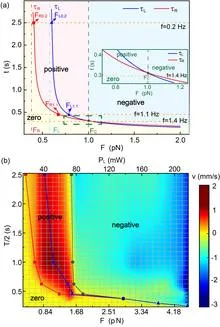
A swing that rocks on a sawtooth hill behaves strangely: without kicks, it gets stuck in the first dip, but with rhythmic pushes it can move uphill, downhill, or stay frozen in place. That is exactly what physicists saw when they placed a single dust grain in a trap with a sawtooth bottom and started pushing it alternately with laser beams.