A Dust Grain on a Sawtooth Hill ✛
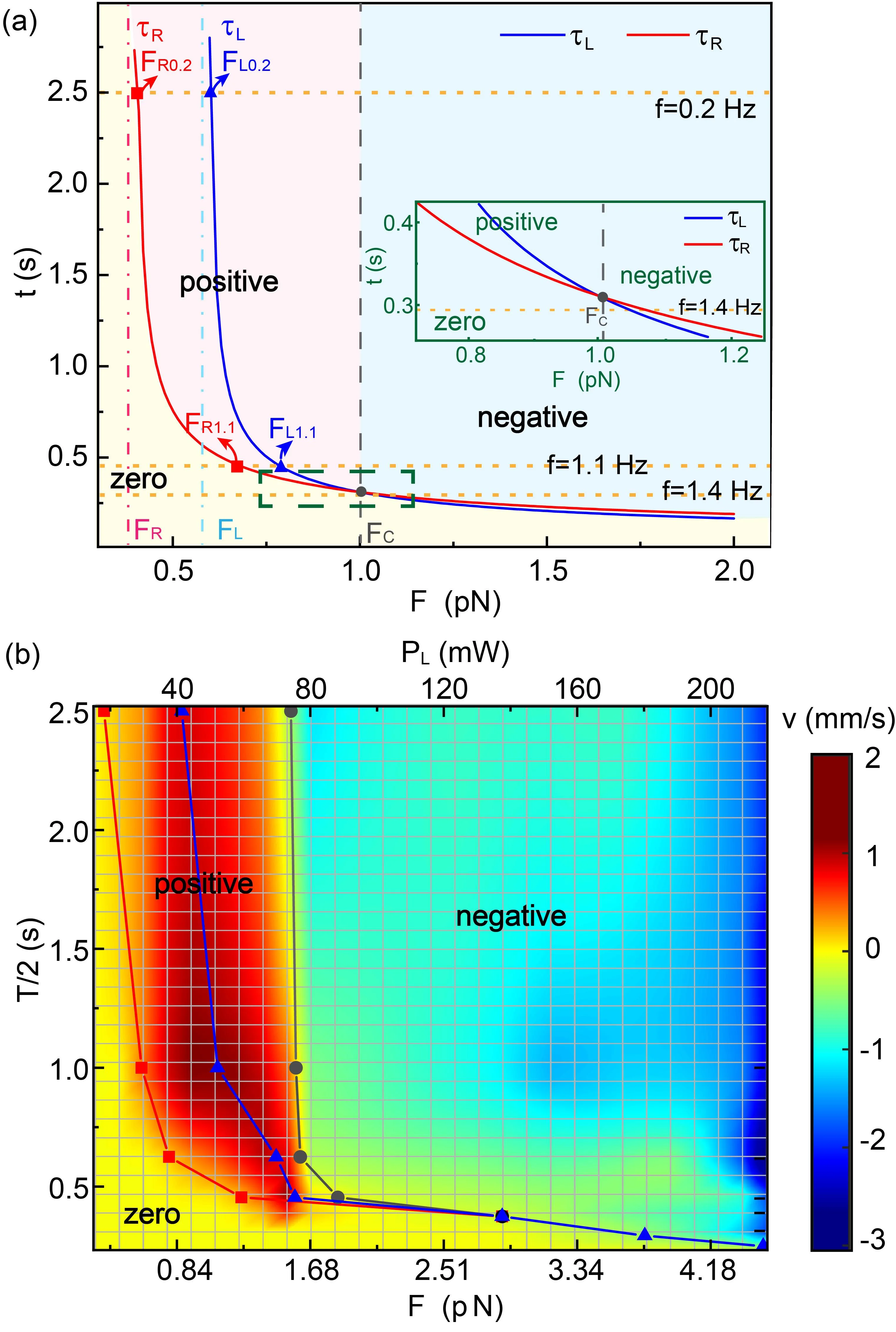
If you put a ball on a sawtooth hill, it will roll into the nearest valley and stay there. But if you start nudging it rhythmically from one side and then the other, it can climb out and move along. Physicists did the same with a single dust grain in a plasma chamber: they placed it on a sawtooth surface and alternately shone two lasers on it.
The valleys on the surface were asymmetric: one slope was steep, the other gentle. So jumping over the gentle edge was easier than over the steep one. When the lasers pushed weakly, the grain jiggled within one pit and did not go anywhere. With medium pushes, it jumped only over the gentle edge and ran in one direction. When the pushes became strong, it began jumping over the steep edge too, and more and more often, eventually running in the opposite direction. If the lasers switched too quickly, the grain did not have time to crest the gentle slope and immediately backed up.
The scientists found a simple rule: for the grain to escape a pit, the push force must exceed a certain threshold, and there must be enough time to climb. These thresholds differ for the steep and gentle slopes, so by varying the strength and frequency, you can make the particle run forward, stay put, or run backward. This way of controlling the motion of a single particle could help separate dust grains by size in plasma setups.
The 13 μm dust grain in the experiment moved at speeds up to 0.95 mm/s, which corresponds to 73 of its own diameters per second. For comparison, a person 1.8 m tall running at such a relative speed would be moving at 475 km/h.