Voltage, formally called electricpotential difference, is the energy per unit charge required to move a charge between two points in an electric field. It is the driving force behind electric current: charges flow from higher to lower potential, much like water flows downhill. In physics and engineering, voltage is fundamental to circuits, from simple batteries to complex quantum control electronics.
History
Alessandro Volta invented the first battery, the voltaic pile, in 1800, providing a steady voltage source. The concept of potential difference was formalized by early 19th-century physicists like André-Marie Ampère and Georg Ohm, whose law (V = IR) remains central.
How it works
Voltage arises from the separation of positive and negative charges, creating an electric field. When a conductive path connects two points at different potentials, the field pushes free charges, producing current. The unit, the volt (V), equals one joule per coulomb. In practice, voltage can be generated by chemical reactions (batteries), electromagnetic induction (generators), or photovoltaic effects (solar cells), and it is controlled using resistors, capacitors, and transistors.
In practice
Voltage is ubiquitous: it powers all electronic devices, from microchips to power grids, and is used in quantum systems to control qubit states via microwave pulses or electrostatic gates.
Fun fact
The voltage across a typical lightning bolt can reach hundreds of millions of volts, yet the current lasts only microseconds—enough to power a city for a fraction of a second.
Units by system: SI: volt · CGS: statvolt · Planck: planck voltage
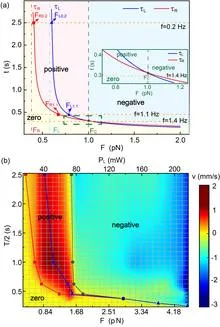
A swing that rocks on a sawtooth hill behaves strangely: without kicks, it gets stuck in the first dip, but with rhythmic pushes it can move uphill, downhill, or stay frozen in place. That is exactly what physicists saw when they placed a single dust grain in a trap with a sawtooth bottom and started pushing it alternately with laser beams.
Electric charge is a slippery thing. You can measure how much there is in the entire universe or in a single particle, but try to point your finger and say, 'Right here, in this cubic centimeter, there is exactly this much charge right now,' and you hit a fundamental wall.
The issue is that total charge, which physicists denote by the letter Q, is nonlocal.
A neuron transmitting a signal is like a tiny battery that quickly discharges and recharges. For nearly 70 years, it was believed that a special "potassium valve," opening with a delay, was responsible for the recharge phase. New work claims this current is a ghost.
Drop by drop from a faucet, or a steady stream without a single splash. That's roughly what the two regimes of current in a superconducting contact look like. Only here, the role of water is played by Cooper pairs — bound electrons that move without resistance.
Crystals glued to the outside and inside of a metal wall act as an invisible channel. One, receiving current, starts to tremble, and these vibrations, like ripples on water, spread out in all directions through the metal. The inner crystal catches this tremor and generates electricity again.
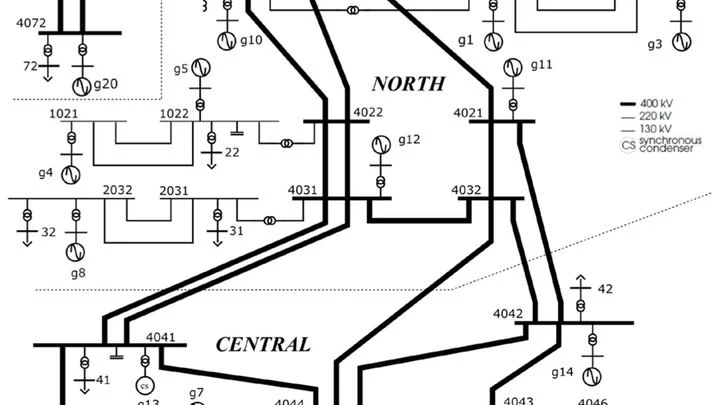
The power grid can be pictured as a water supply system: pipes are the lines, and pumps are the converters. When pressure (voltage) drops in some district, powerful pumps can send extra water (power) there. The trouble is, too strong a flow causes overload, and too weak a flow doesn't help. You need to know exactly how far to open the valve.
Engineers found the answer.
Water is not just a wet substance. On a picosecond scale, it resembles a dance floor where molecules continuously break and form bonds with each other. Usually, this dance is described by one main movement — collective relaxation, as if the whole crowd simultaneously slows down after the music stops.
Two pendulums on a shared string trade motion: push one, and the second starts swinging, and a moment later the first gets a push back. In a thorium-229 atom, energy flows nearly loss-free between the electron shell and the nucleus.
Three guitar strings on the same instrument, but each tuning peg turns with a different resistance: one gives way immediately, another is stiff, and the third is completely stuck.
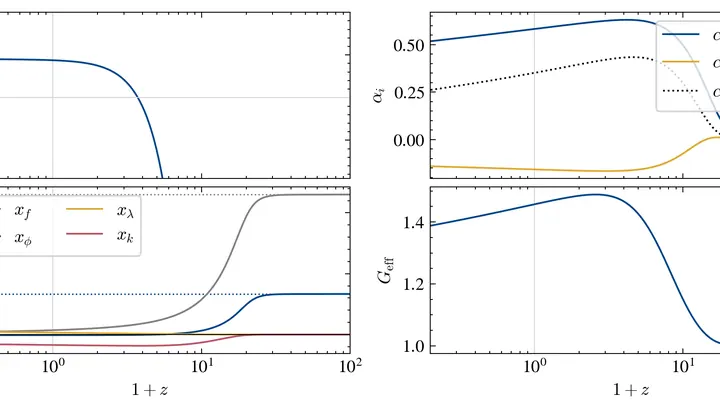
An inflating balloon starts out slowly, then suddenly expands faster and faster, as if someone is pumping it up from inside. That's roughly how our universe behaves: galaxies are receding with acceleration. The culprit behind this acceleration is called dark energy.
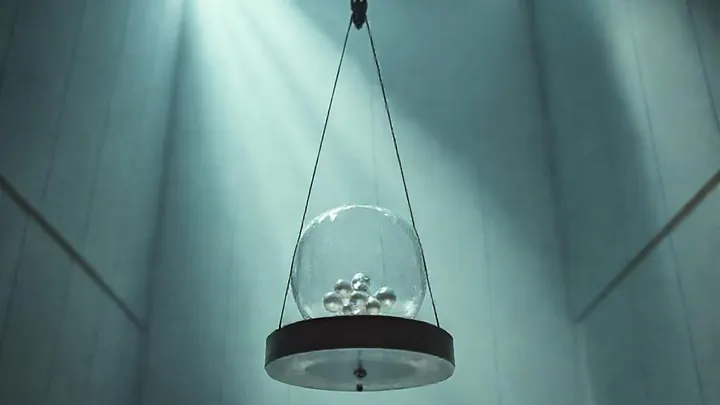
The weak equivalence principle, silently tested since the time of Galileo and laid at the foundation of general relativity, states: all bodies fall equally, regardless of their internal composition.
Splitting water into hydrogen and oxygen with electricity is an age-old dream of clean fuel. But tiny gas bubbles stand in the way: they cling to the electrodes like foam on the side of a soda glass, interfering with the current's work. Each bubble is a tiny plug, blocking part of the surface where the reaction should occur.
A thin semiconductor layer at low temperatures behaves like a pot of honey: electrons flow not as individual particles but as a thick liquid. If you run an alternating current through such a layer, the resistance responds with a smooth curve.
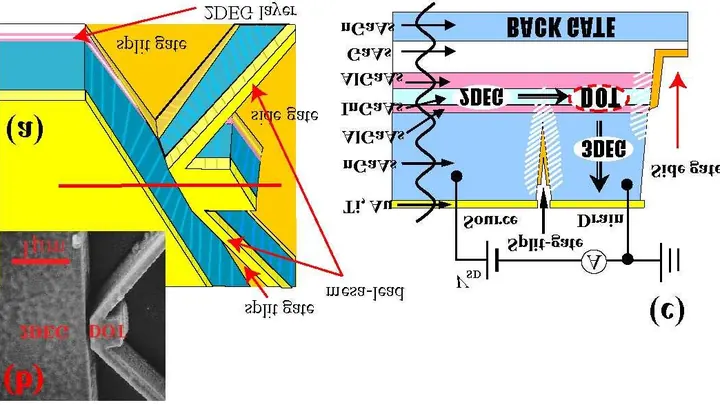
A quantum dot is like a tiny island where one or a few electrons can settle. In this new work, such an island was connected to two 'seas' of electrons: one flat like a pancake, the other bulky like an ocean. Electrons can hop from the island to the seas and back, and this hop depends on the shape of the electron's wave on the island.
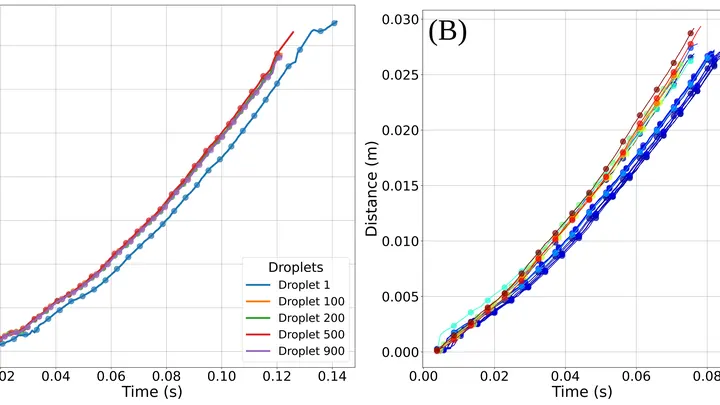
A water droplet races across a taro leaf like a bead on a freshly waxed floor. But it doesn't just glide: it picks up electricity. Thirty years ago, scientists explained why lotus leaves stay dry: their surface is covered with microscopic bumps that trap air. Now it turns out that water on leaves has another, hidden power.
Since the days of Galileo, it was believed that in a vacuum all bodies fall identically. Einstein elevated this to a principle: gravity travels at the speed of light and is the curvature of spacetime.
Diamond is not just a gemstone. This crystal can conduct electricity when free charge carriers, electrons and holes, appear in it. But how fast do they move? In scientific papers, numbers vary by tens of times. One lab reports a mobility of 1000 cm²/(V·s), another 4000.
After an injection under the skin, a drug doesn't just spread out like ink in water. Antibody molecules carry an electric charge, and that charge makes them interact with surrounding tissues — much like a magnet attracts or repels iron filings.