El cometa que quiso encender el Sol exprés
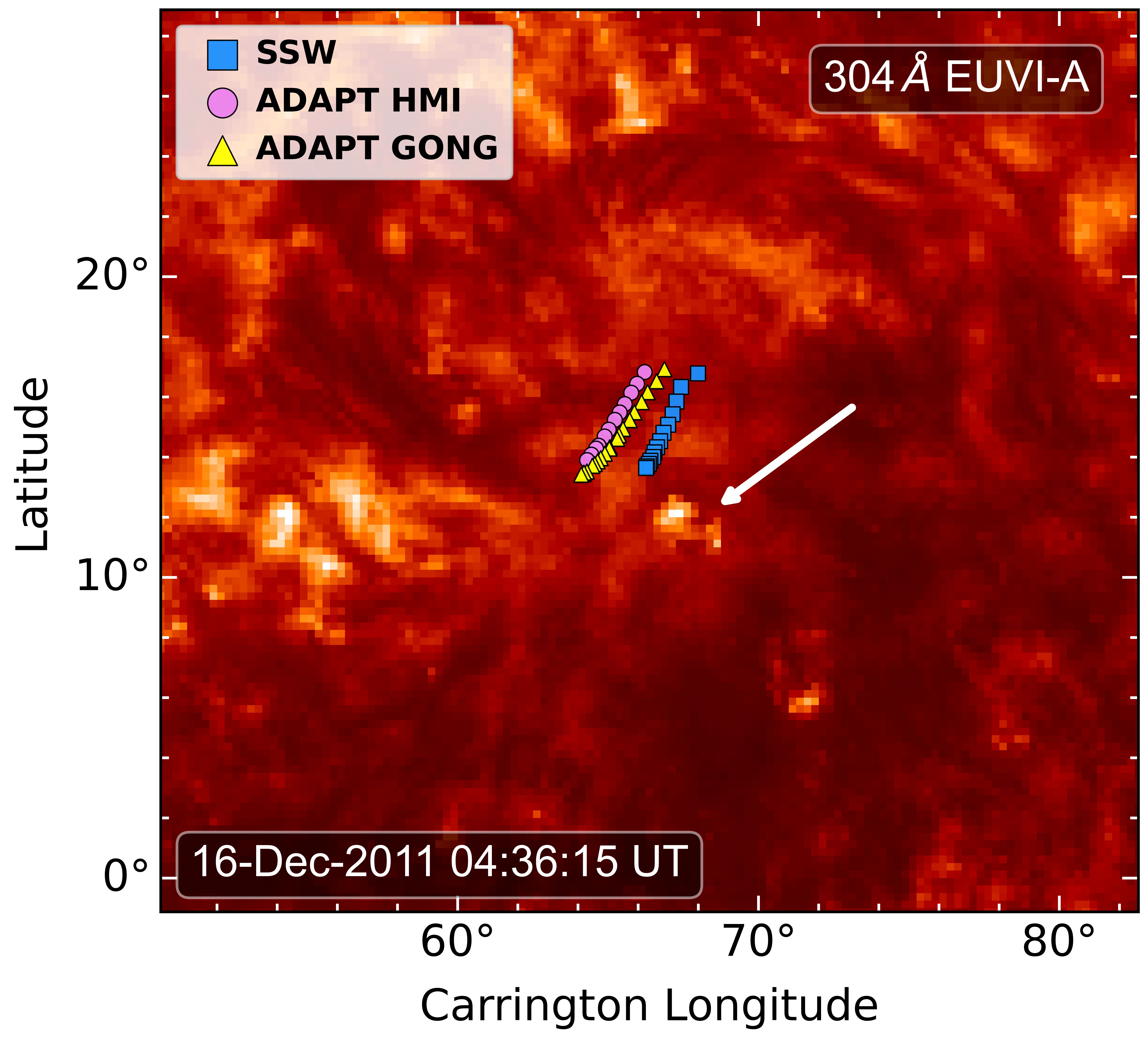
En diciembre de 2011, el cometa Lovejoy se lanzó audazmente a través de la ardiente corona del Sol. Inmediatamente después, una llamarada. Los científicos verificaron si el cometa pudo haberla provocado. La atmósfera del Sol está entretejida con tensos lazos magnéticos, como la cuerda tensa de un arco. Al pasar, el cometa roza ligeramente esa cuerda, y ésta dispara una flecha: una potente liberación de energía. Pero los cálculos sorprendieron: la energía de la bola de nieve sucia (como llamaba a los núcleos cometarios Fred Whipple) solo habría bastado para un arco de juguete. La llamarada real, captada por las cámaras ultravioletas, requería entre 10 y 1000 veces más. Por lo tanto, el cometa no fue la causa, sino que solo soltó la cuerda de un «arco» ya listo para disparar. Comprender estos roces ayudará a desentrañar las tormentas también en otras estrellas con sus planetas. Paradoja: al sumergirse en el infierno solar, el cometa no desapareció, sino que se encendió para los observadores terrestres con una luz brillantísima. No fue él quien encendió el Sol: el Sol lo encendió a él.
Resumen original
tal como lo escribieron los autores, en inglés arXiv:2605.18280
Star-planet magnetic interactions (SPMIs) can transfer energy from an exoplanet to its host star via Alfv\'en waves when the planet orbits within a sub-Alfv\'enic stellar wind. Similar conditions were encountered by the sungrazing comet Lovejoy as it passed through the solar corona in December 2011. The possibility that comets could trigger solar activity via magnetic interactions has never been investigated. The aim of this paper is to quantify the energetics of such interaction and to assess if enough energy could be deposited to either form a hotspot or trigger eruptions on the Sun. We used the magnetohydrodynamic WindPredict-AW model to reconstruct the coronal magnetic field and solar wind conditions along the comet's orbit, and determined the magnetic footpoints that connected the comet to the solar surface. By estimating the travel time of hypothetical Alfv\'en waves, we identified a brightening event observed by EUVI aboard STEREO-A that is spatially and temporally consistent with comet Lovejoy's passage. We then computed the SPMI power for all magnetic field lines anchored within 5 degrees of the brightening using SPMI power scaling laws. The resulting power distribution spans approximately 10$$^{14}$$-10$$^{16}$$ W. In comparison, the estimated radiative power of the brightening event in the STEREO-A/EUVI 195$$\r{A}$$ channel is approximately 10$$^{17}$$ W. We find that comet Lovejoy does not generate sufficient SPMI power to be the energy source of the observed brightening intensity. However, it may still act as a perturbation to existing magnetic structures, and lead to the triggering of solar flares. Confirming this hypothesis would require additional observations that do not exist for this event, which make future passages of sungrazing comets valuable opportunities to study SPMI processes within our solar system.
El núcleo del cometa Lovejoy se redujo de tamaño tras atravesar la corona, pero el cometa sobrevivió y se convirtió en uno de los más brillantes de la década.