Ondas invisibles hacen sonar una placa exprés
Las ondas gravitacionales no son vibraciones de la materia, sino un temblor del propio espacio-tiempo, predicho por Albert Einstein. Se propagan a la velocidad de la luz y atraviesan los cuerpos, estirándolos y comprimiéndolos. En los años 60, Joseph Weber propuso capturar estas ondulaciones con objetos masivos que deberían responder a ellas, como una campana al viento.
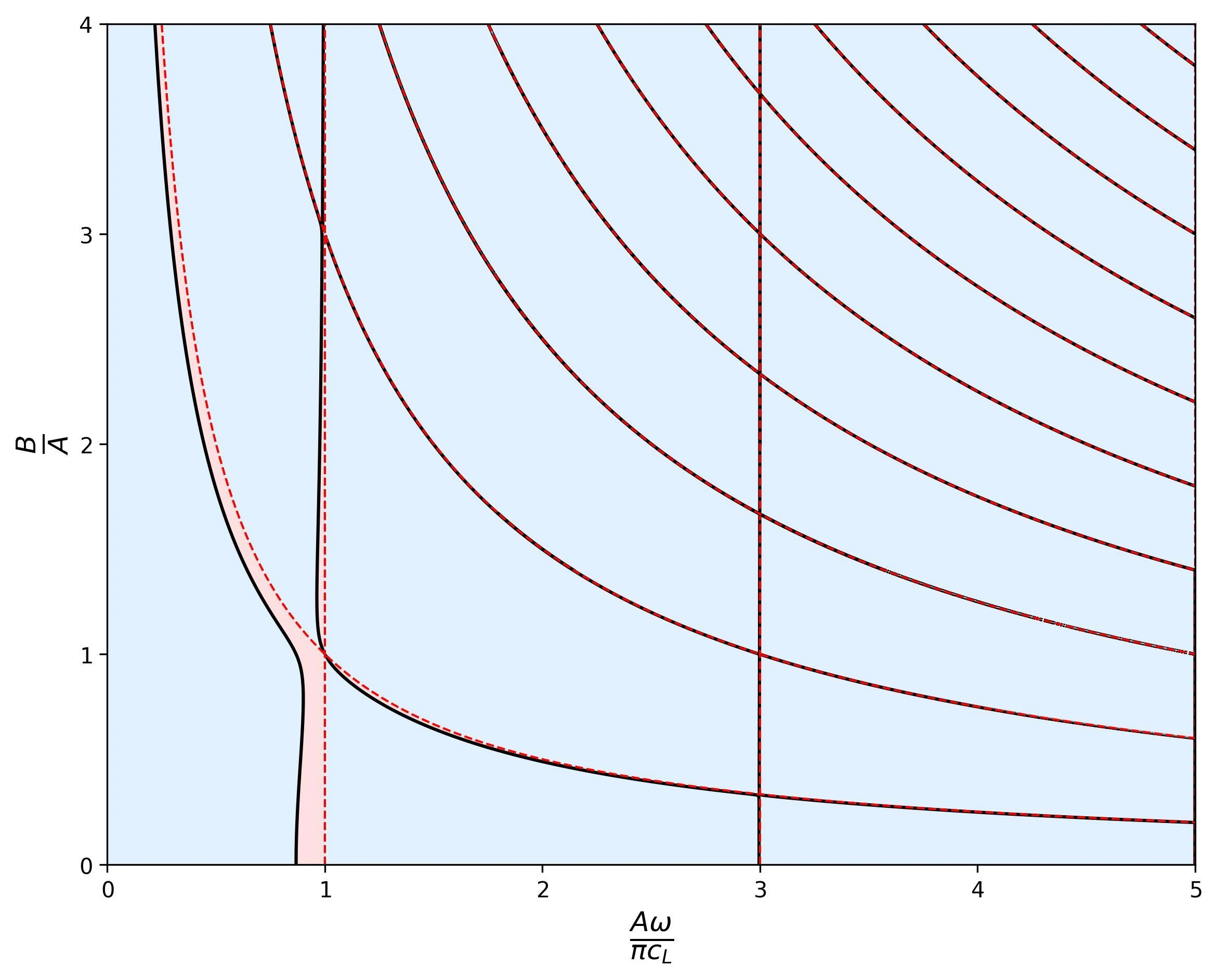
En un nuevo trabajo, los físicos calcularon cómo una placa delgada de un material con coeficiente de Poisson nulo (es decir, que no se expande lateralmente al comprimirse, como el corcho) vibra bajo el efecto de las ondas gravitacionales. Para este caso, las ecuaciones se simplifican enormemente, y se logró obtener fórmulas exactas para los desplazamientos y la energía absorbida.
Pero lo más inesperado es el efecto inverso: la placa temblorosa emite a su vez ondas gravitacionales secundarias, aunque extremadamente débiles. Así, la campana no solo oye el viento, sino que le responde con su propio tañido. Este intercambio bidireccional de energía es fundamental para el funcionamiento preciso de los detectores, incluso cuando los instrumentos modernos hace tiempo dejaron atrás los simples cilindros de aluminio por los interferómetros láser.
Resumen original
tal como lo escribieron los autores, en inglés arXiv:2605.28932
We study the interaction between gravitational waves and elastic bodies within the framework of relativistic elasticity. Starting from the Lagrangian formulation of relativistic elasticity, we derive the linearized equations governing the response of a homogeneous and isotropic solid to a weak gravitational wave by expanding the action to quadratic order in the elastic field derivatives and to linear order in the metric perturbation. In this way, Dyson's interaction term from the effective potential approach emerges naturally from the relativistic theory. We then apply the formalism to a thin rectangular elastic plate aligned with the direction of propagation and polarization of a plus-polarized gravitational wave. For a material with vanishing Poisson ratio, the equations decouple and admit simple explicit solutions. We obtain closed-form expressions for the induced displacements and for the energy deposited on the plate by both short gravitational wave bursts and continuous harmonic waves. Finally, we compute the gravitational wave emission generated by the oscillating plate itself under continuous harmonic excitation. These results provide a fully relativistic derivation of the elastic response to gravitational waves together with explicit solvable examples relevant to resonant gravitational wave detectors.
El corcho es uno de los pocos materiales naturales con un coeficiente de Poisson cercano a cero. Esto lo hace ideal para tapar botellas: al comprimirse, casi no se expande lateralmente.