صدى الثقب الأسود الهامد سريع
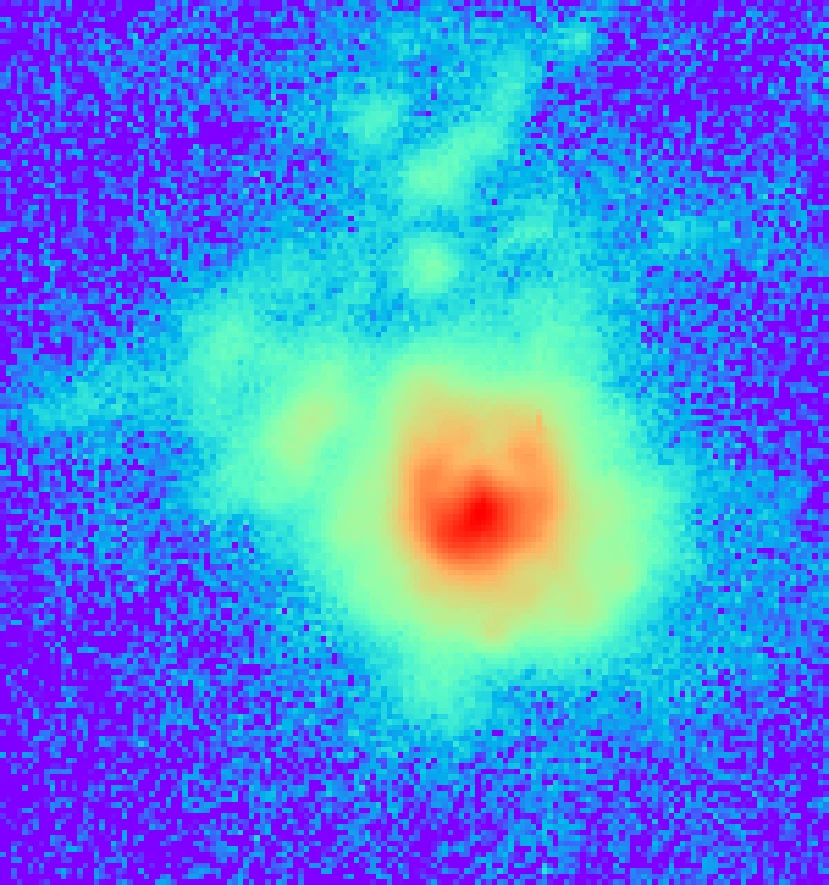
في قلب كل مجرة يسبت ثقب أسود فائق الكتلة. عندما يلتهم المادة، تتوهج المناطق المحيطة به — وهذا هو النواة النشطة. كيف نعرف عن التوهجات الماضية إذا كان الثقب صامتًا؟ الجواب هو الصدى الضوئي.
مثل الصدى في قاعة فارغة، حيث تتردد الأصوات بعد أن يصمت المصدر، يجوب إشعاع النواة الخامدة المجرة. التقطه علماء الفلك بقياس الاستقطاب — أي اتجاه تذبذب الموجات الضوئية. في GSN 069، كان الاستقطاب يزداد كلما ابتعدنا عن المركز، ويكاد ينعدم في النواة. وهذا يعني أن مصدر الضوء قد خمد، لكن الأشعة المنعكسة لا تزال تحمل تاريخه.
أظهر التحليل المشترك لـالتحليل الطيفي وقياس الضوء أن نواة GSN 069 لم تكن تمزق النجوم المارة فحسب، بل كانت تضيء بثبات، محاطة بحلقة غازية توجه الإشعاع. الأمر الأكثر إثارة للدهشة: أن الثقب الأسود سكت في وقت كانت فيه الحضارات القديمة موجودة بالفعل على الأرض. فسباته اليوم ما هو إلا توقف قصير في حياة مضطربة.
الملخص الأصلي
كما كتبه المؤلفون، بالإنجليزية arXiv:2601.08940v1
Context. X-ray quasi-periodic eruptions (QPEs) are repeating, high-amplitude, soft X-ray bursts observed from the nuclei of a dozen nearby low-mass galaxies. Their origin remains a puzzle in the physics of accretion variability. Observational data indicate that X-ray and/or optical tidal disruption events (TDEs) may precede QPE detections. Although both kinds of outburst are driven by supermassive black holes, they are more frequently detected in faded active galactic nuclei (AGNs), when the TDE is not happening in a dormant galaxy. In the case of the QPE discovery source, GSN 069, it remains debated whether its past activity arose from a previous AGN phase or from an enhanced TDE rate. Aims. We investigated the origin of the past nuclear activity in GSN 069. Methods. Past AGN activity imprints detectable polarization in optical light, due to the expected delay between direct and scattered light. On 6 September 2019, we targeted GSN 069 with VLT/FORS2 in both imaging polarimetry and spectropolarimetry modes so that its optical polarization could be investigated while the first detected QPE phase was still active. Results. We measured a rising polarization, from ~0% to ~1.5%, as moving away from the nucleus of GSN 069. This rise is probed to be intrinsic to the central engine, confirming the already detected extended emission line region (EELR) by integral field unit data. Conclusions. The increasing radial polarization demonstrates a switched-off nucleus. The polarization angle traces an axis aligned with elongated [OIII], [NII], and H{\alpha} gas distributions, revealing an EELR that may be consistent with relic polarization cones, therefore suggesting the presence of a torus-like structure in the past. Thus, optical polarization echoes geometrically favor a faded AGN as the origin of the EELR rather than a past elevated TDE rate, although the latter cannot be excluded.
الصدى الضوئي يكشف الأحداث الكونية بتأخير يجعلنا شهودًا على الماضي البعيد — وكأننا نشاهد فيلمًا صُوِّر قبل آلاف السنين.