Trapped Particles on a Quantum Carpet express
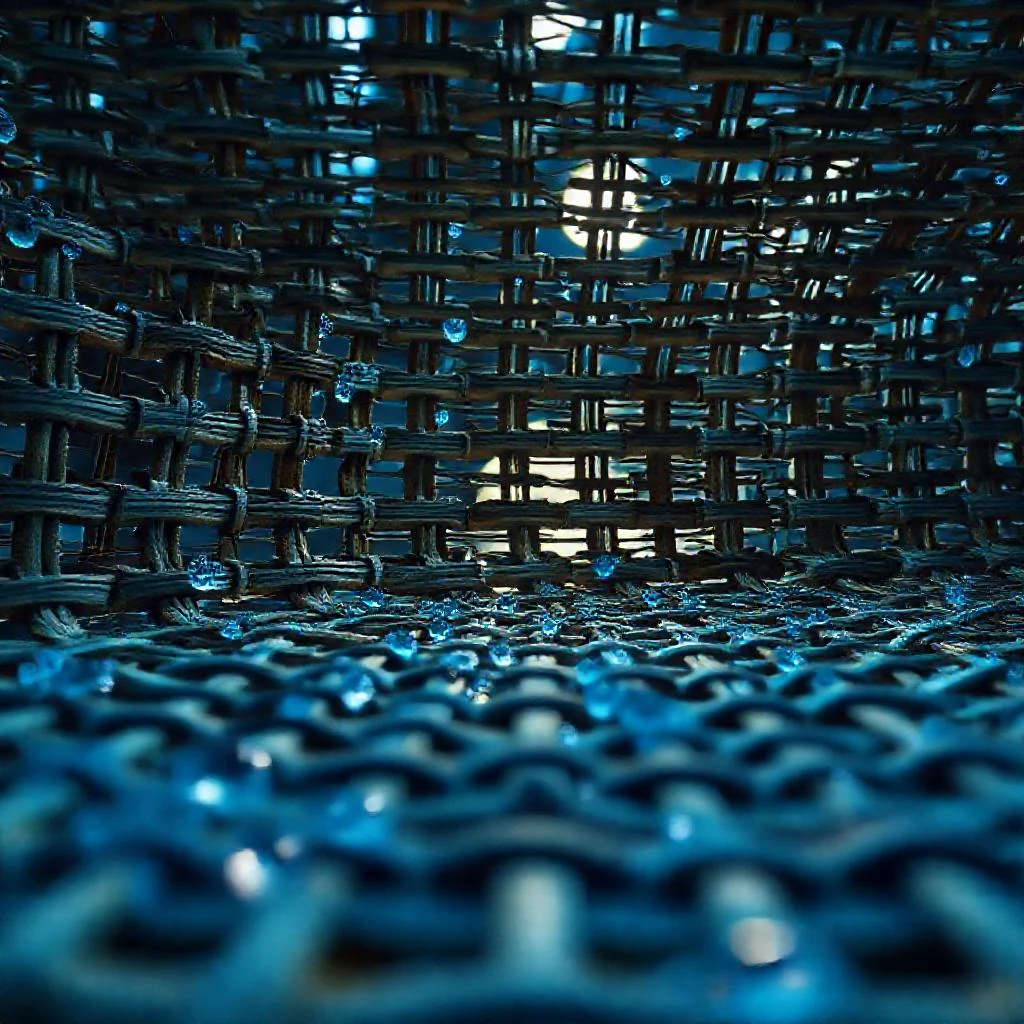
Scientists have discovered that on a special triangular lattice, like a tightly woven carpet, particles freeze in place. They don't bump into neighbors or lose energy. Probability waves cancel out like opposing threads in a loom, locking the particle-knots tight.
These 'locked' states are perfectly flat energy bands where particles ignore everything around them. They could serve as flawless memory cells. Best of all, two such particles can be woven into a quantum braid: loop one around the other and the sequence of moves determines the outcome, just like tying an intricate knot. This non-abelian braiding is the gateway to topological computing that shrugs off noise.
These states are hard to spot, but spectroscopy (light analysis) helps. The crucial factor, surprisingly, is the carpet's geometry, not the material. From the viewpoint of fundamental physics, the discovery deepens our understanding. Frank Wilczek predicted anyons, and Alexei Kitaev crafted a model for them. Now it's clear how to make this real — ushering in the era of error-free quantum computers.
The kagome lattice is named after a Japanese woven pattern found in traditional baskets and mats.
In science fiction, a quantum computer is a machine that cracks any code. Real prototypes are still modest, but stable locked particles are pulling that dream closer.