Perfect Entanglement Defies Infinite Acceleration express
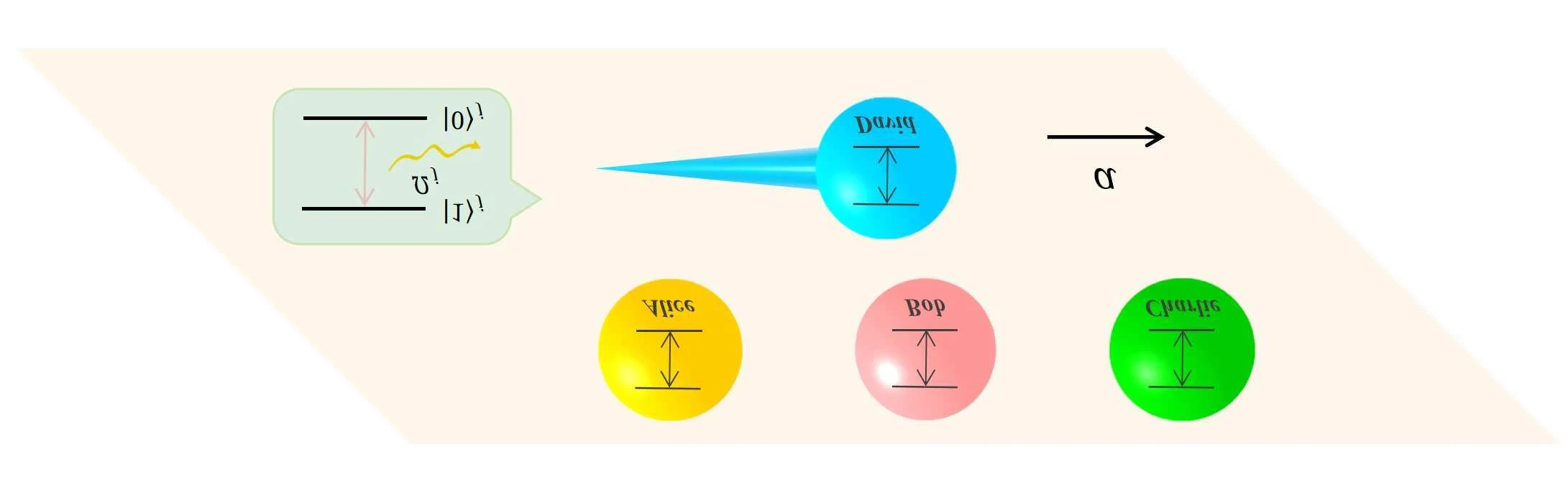
Quantum entanglement is a special connection between particles: they affect each other instantly, even across light-years. For a long time, it was believed that strong acceleration destroys this bond. The reason is the heat born from acceleration (the Unruh effect), predicted by Albert Einstein theory and akin to the radiation of black hole discovered by Stephen Hawking. Like boiling water, it tears apart the fragile threads of entanglement.
But physicists have discovered a state of four particles where the connection freezes rock-solid. It's like a knot of four threads: shake it as you might, it doesn't loosen. One thread is so tightly woven with the other three that no shaking will undo the knot. This is a striking exception to the rule.
This discovery means that in spacetime curvature, near massive bodies or on accelerating satellites, unbreakable quantum channels can be created. A surprising twist: such perfect robustness works only for a quartet of particles, not for two or three. A kind of magic number that promises to protect the quantum internet in space.
The Unruh effect is a quantum 'mirage': for an accelerating observer, empty space appears filled with hot particles, as if surrounded by invisible plasma.
The ansible from Ursula Le Guin’s books, a device for instantaneous interstellar communication, could physically rely on such a 'frozen' entangled state.