Oscillations of a rarefied gas: how to speed up calculations a thousandfold express
Inside a tiny accelerometer, gas behaves nothing like the air in a room. There are so few molecules that they rarely collide with one another, and the familiar laws of viscosity and thermal conductivity stop working. To calculate how such a rarefied gas oscillates under an alternating signal, you have to solve an equation that describes the motion of each group of molecules separately. That is very expensive: computation time grows like an avalanche as device size shrinks.
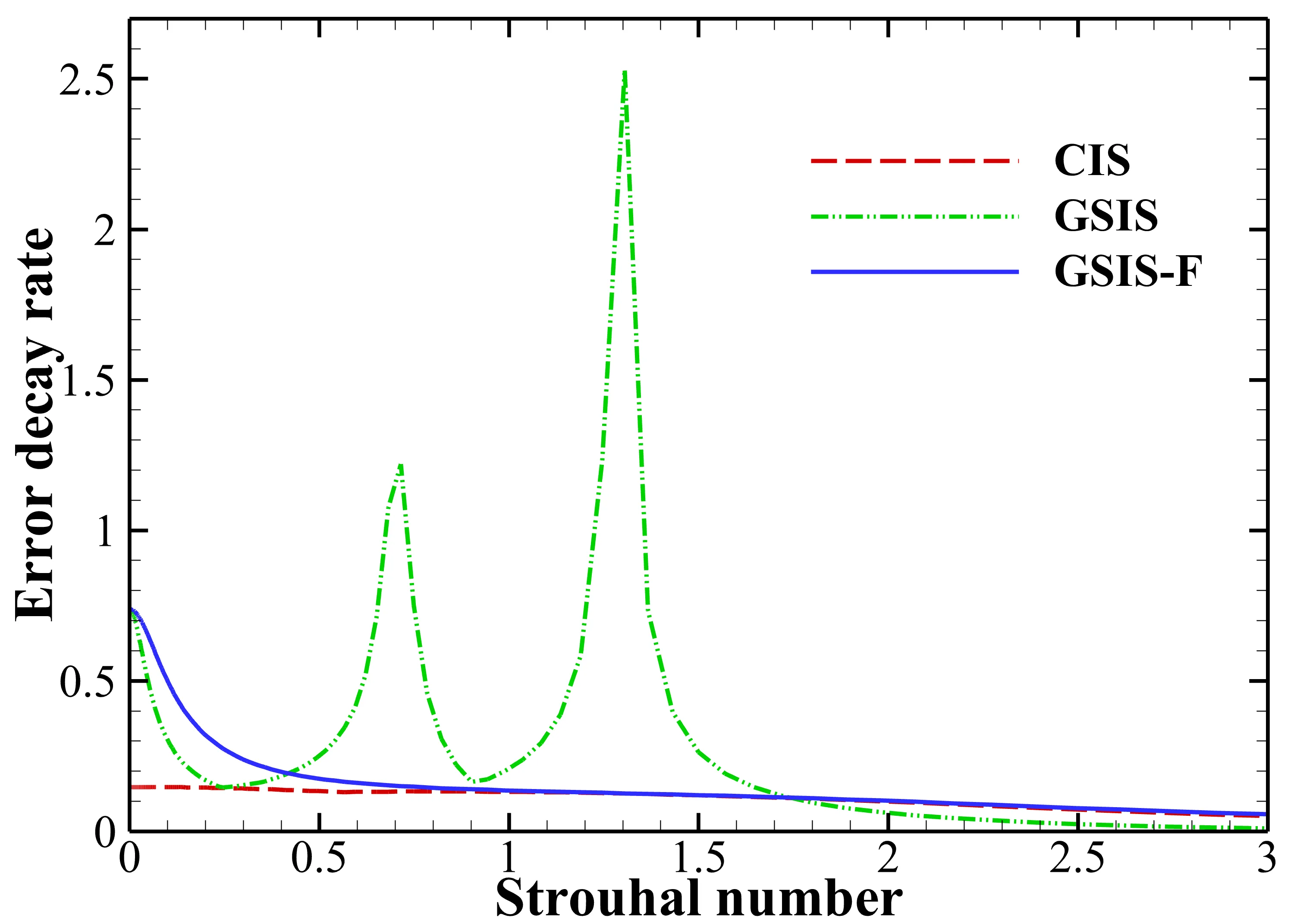
The new approach changes tactics. Instead of tracking oscillations over time, the researchers go straight for the steady periodic regime, like listening to a note that is already sounding rather than recording it from the very beginning. To do this, they solve two equations simultaneously. One is exact, molecular, and it provides corrections to the usual flow laws. The second is coarse, macroscopic, and it quickly finds the overall shape of the oscillations. The coarse equation tells the exact one where to go, and the exact one refines the coarse one. Together they converge to the answer much faster than either could alone.
It is like two interpreters at a negotiation: one quickly conveys the general meaning, the other refines the wording. The pair's smooth teamwork saves hours. Same here: the macroscopic equation charts the route, and the kinetic one checks every step. As a result, calculations that used to take days now take minutes. For engineers designing microphones, gyroscopes, and pressure sensors, this means being able to quickly iterate through design options and find the best one.
A rarefied gas in a microsensor can behave like a crowd in an empty hall: people barely bump into each other, and each goes their own way. The usual laws of 'crowd flow' don't apply there.