Superconductivity in Iron Layers express
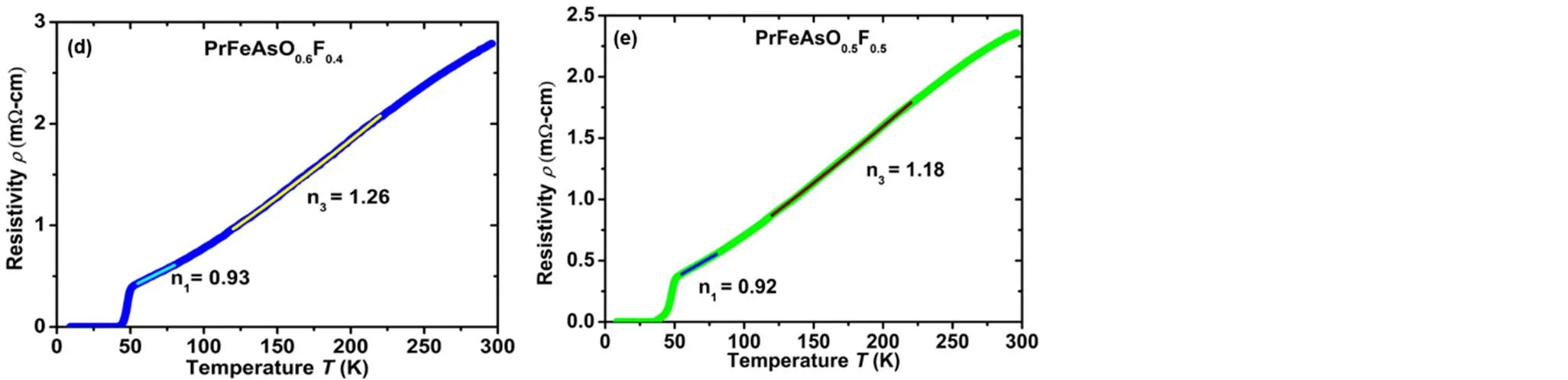
Iron is a magnet, not a resistance-free conductor. But if you add a bit of fluorine to an alloy of iron, arsenic, and oxygen, the picture changes. Scientists took the compound PrFeAsO and gradually replaced oxygen with fluorine. At a certain fluorine concentration, the material lost its electrical resistance: it became superconducting.
This is like tuning an instrument: too little fluorine, no effect; too much, also none. Superconductivity appears in a narrow range, forming a "dome" on the diagram. Inside this dome, the transition temperature reached 52.3 K: that's about −220.85 °C. For comparison, conventional superconductors only work at temperatures below −250 °C.
The scientists also tested how the material behaves in a magnetic field. It turned out that it retains superconductivity even in fields stronger than 100 tesla — millions of times stronger than a refrigerator magnet. The study showed that the material's properties are directly linked to how much fluorine is added to its crystal lattice.
A temperature of 52.3 K (−220.85 °C) is still very cold, but for superconductors it's already the "warm" zone. Ordinary metallic superconductors require temperatures below −250 °C.