unit

tesla

The SI unit of magnetic flux density, representing the strength of a magnetic field.
18 related articles

Description

The tesla (symbol T) is the SI unit of magnetic flux density, quantifying the strength of a magnetic field. One tesla equals one weber per square meter, representing the amount of magnetic flux passing through a unit area perpendicular to the field. For context, Earth's magnetic field at the surface is about 50 microteslas, while a strong MRI magnet operates at 1.5–3 teslas, and the most powerful pulsed magnets can reach hundreds of teslas.

History

The unit was named in 1960 after Nikola Tesla, the Serbian-American inventor and electrical engineer, at the General Conference on Weights and Measures. Tesla's pioneering work in alternating current and electromagnetic fields made him a fitting namesake.

How it works

Magnetic flux density describes the force a magnetic field exerts on moving charges. It is defined through the Lorentz force: a charge moving at velocity v in a field B experiences a force proportional to v × B. The tesla is derived from fundamental SI units: 1 T = 1 kg/(A·s²). In practice, it is measured using Hall effect sensors, magnetometers, or by observing the deflection of charged particles.

In practice

Teslas are used to specify magnetic fields in MRI machines, particle accelerators like the LHC, magnetic levitation trains, and research on superconductors and quantum materials.

Fun fact

A typical refrigerator magnet has a magnetic flux density of about 0.001 tesla, while a neutron star's magnetic field can reach 10^8–10^11 teslas.

Concept graph →

Related articles · 18

Reconnection Layer Thickness: Four Probes versus One
Four witnesses to a single crossing. On November 10, 2017, the four MMS spacecraft flew through an invisible boundary in the solar wind where magnetic field lines reconfigure and release energy.
Atomic Physics2026-08-112 minarXiv:2608.11439express
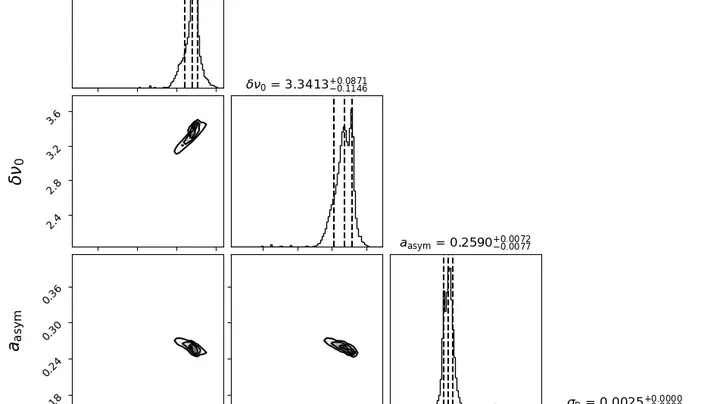
A Magnetic Shield for Hunting the Electron's Asymmetry
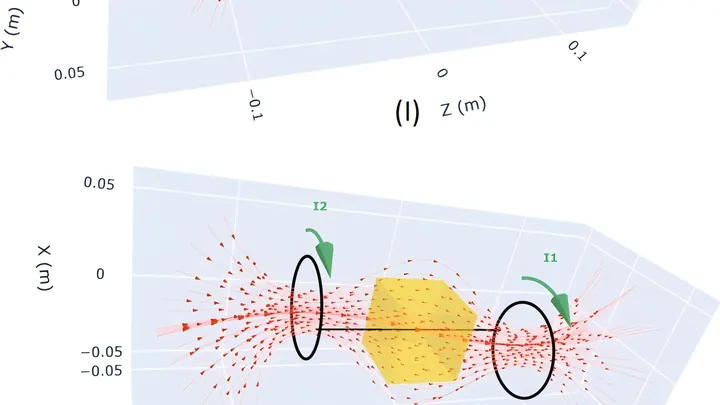
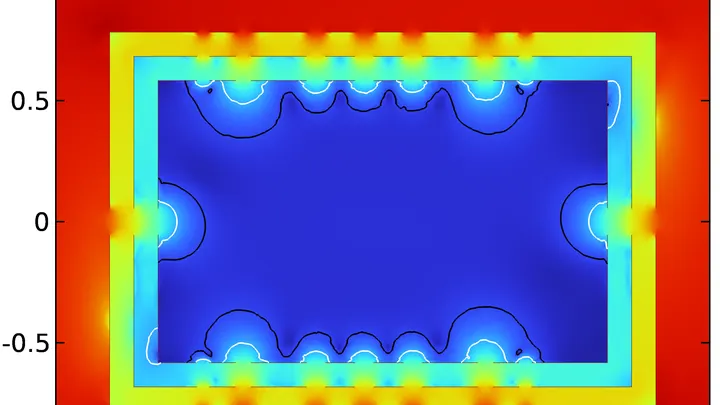
The magnetic field in this setup must be as smooth as glass: the slightest ripple would blur the signal. The engineers built two coils that cancel each other's field externally and packed them in three layers of ferromagnetic plates.
Stellar2026-07-224 minarXiv:2607.19642
Methane Dwarf Beacon: Cutoff Frequency Reveals Magnetic Field
Radio astronomy began with the mysterious noise caught by the antenna of Karl Jansky and the rhythmic pulses that Jocelyn Bell Burnell playfully called 'little green men'.
Materials2026-07-121 minarXiv:2607.10584express
When a Medium Loses Stability
A Tesla coil crackles, and a beam of light begins to rotate around it. The medium it passes through is still stable, but the field grows, and the rotation intensifies. This is not a trick but the behavior of special materials that couple electricity and magnetism. For such coupling, there is a fundamental limit — the Tellegen limit.
HEP Phenomenology2026-06-242 minarXiv:2606.26229express
Magnetic Monopoles Straighten the Path of Gamma Rays
Light from a distant blazar, an active galactic nucleus whose jet points our way, travels for billions of years. Along the way, it triggers cascades of charged particles that the intergalactic magnetic field deflects sideways. This creates a blurred gamma-ray glow around the blazar: a secondary halo.
Mesoscale2026-06-132 minarXiv:2606.15371express
Light Spots What Wires Can't See
A neat stack of atomic layers lies on a substrate. An invisible beam of terahertz light shines down on it, with a magnetic field applied from the side. After reflection, the beam's polarization rotates slightly.
Strongly Correlated2026-05-142 minarXiv:2605.15274express
How Magnetic Frustration Sounds
If you squeeze an ordinary piece of metal, it heats up — even those who have pumped a bicycle tire know that. But what happens if you squeeze a magnet in which atomic arrows refuse to freeze even at absolute zero?
Instrumentation2026-04-262 minarXiv:2604.23510express
Mesoscale2026-04-231 minarXiv:2604.21500express
A Magnetic Compass the Size of a Dust Speck
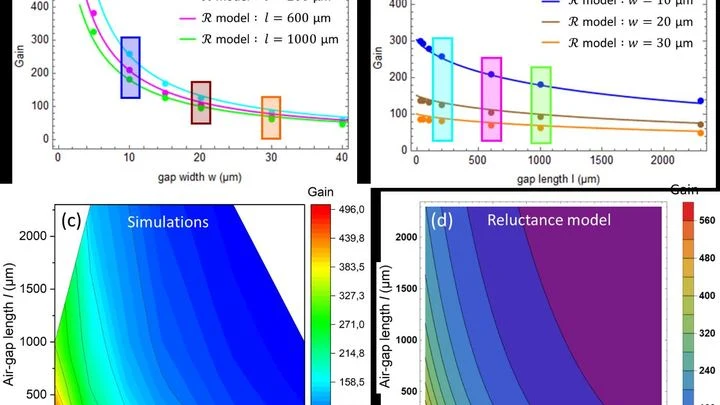
Magnetic sensors smaller than a match head can already detect weak fields — from a beating heart or a distant planet. But making them even more sensitive involves a trade-off: improve one part, and you lose performance in another.
Stellar2026-04-101 minarXiv:2604.09901express
Magnetic Fields in the Cores of Red Giants
Eight red giants — bloated old stars like the future Sun — are not behaving by the book. Their surfaces oscillate steadily, like a bell, but within this chime there are glitches: some tones are missing, and the rhythm breaks. Scientists suspected an invisible hand inside — a magnetic field — and tried to calculate its strength.
Superconductivity2026-03-261 minarXiv:2603.25807express
Superconductivity in Graphene: Magnetic Field Reveals the Secret
A thin sheet of graphene, just a few micrometers thick, was placed in a weak magnetic field, and it began to push the field out of itself, like a sponge squeezing out water. This effect, known as the Meissner effect, is the hallmark of a superconductor: a material that conducts electricity without loss.
Galaxies2026-03-172 minarXiv:2603.16425express
An Hourglass in a Dark Cloud
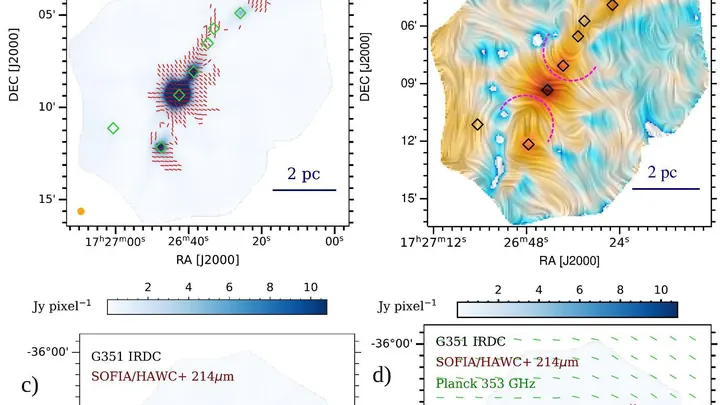
In the dark cloud G351, where new stars are about to emerge from gas and dust, the magnetic field has bent into an hourglass shape. Such a shape is a sign that the field is not just watching star birth from the sidelines but is actively taking part. Scientists used the SOFIA telescope, mounted on an airplane, to see the dust in the cloud.
Stellar2026-03-122 minarXiv:2603.11945express
The Hidden Magnets of White Dwarfs
A white dwarf is what remains of a star like the Sun after it sheds its outer layers. What's left is a hot core the size of Earth but with a mass close to that of the Sun. A teaspoon of this material would weigh as much as a truck. Some of these stars have extremely strong magnetic fields — a billion times stronger than Earth's.
Superconductivity2026-03-092 minarXiv:2603.08891express
A Superconducting Ring That Becomes a Magnet
An ordinary superconductor expels magnetic fields, but this ring does the opposite: it creates a magnetic field inside itself. The ring is made of Fe(Te,Se) — a compound of iron, tellurium, and selenium that loses its electrical resistance at very low temperatures.
High Energy2026-02-231 minarXiv:2602.20230express
A Magnetic Carousel Around a Dead Star
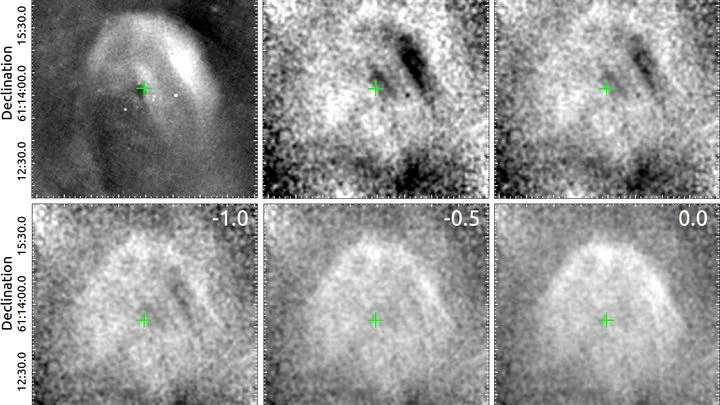
The VLA radio telescope peered into the Boomerang Nebula — a cloud inflated by the wind from a rapidly spinning neutron star. The new images reveal details as small as a lunar disk on the sky: an elongated core around the pulsar and a long arc curving around it from the north.
Stellar2026-01-182 minarXiv:2601.12546express
Magnetic Fields Are Born in the Dance of Stars
Two stars orbit so closely that their outer layers merge into a shared envelope. Matter flows from one to the other, like water spilling from an overfull cup into its neighbor. In this cosmic dance, where stars literally touch each other, astronomers have for the first time detected magnetic fields in large numbers.
Mesoscale2026-01-032 minarXiv:2601.01030express
Laser, Magnet, and Wireless Current
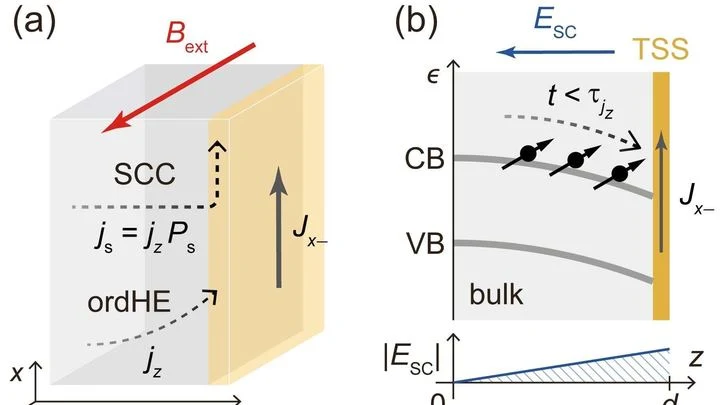
A thin film of a bismuth-selenium compound sits on a substrate. A laser pulse lasting a millionth of a billionth of a second strikes it. Nearby, a magnet is switched on, with a field weaker than that of a fridge magnet.
Materials2025-10-161 minarXiv:2510.15091express
Resistance Paints the Secret Angles of a Magnetic Dance
Using a method similar to spectroscopy (magnetic sensing), scientists pass a current through a multilayer film and observe the orientation of the microscopic magnetic arrows inside. Previously, everything was predictable: in some materials, the arrows aligned only along the current, in others — strictly across it. But in bismuth ferrite with a platinum coating, a glitch occurred.