Protein and Drug: How to Speed Up the Search 26-Fold express
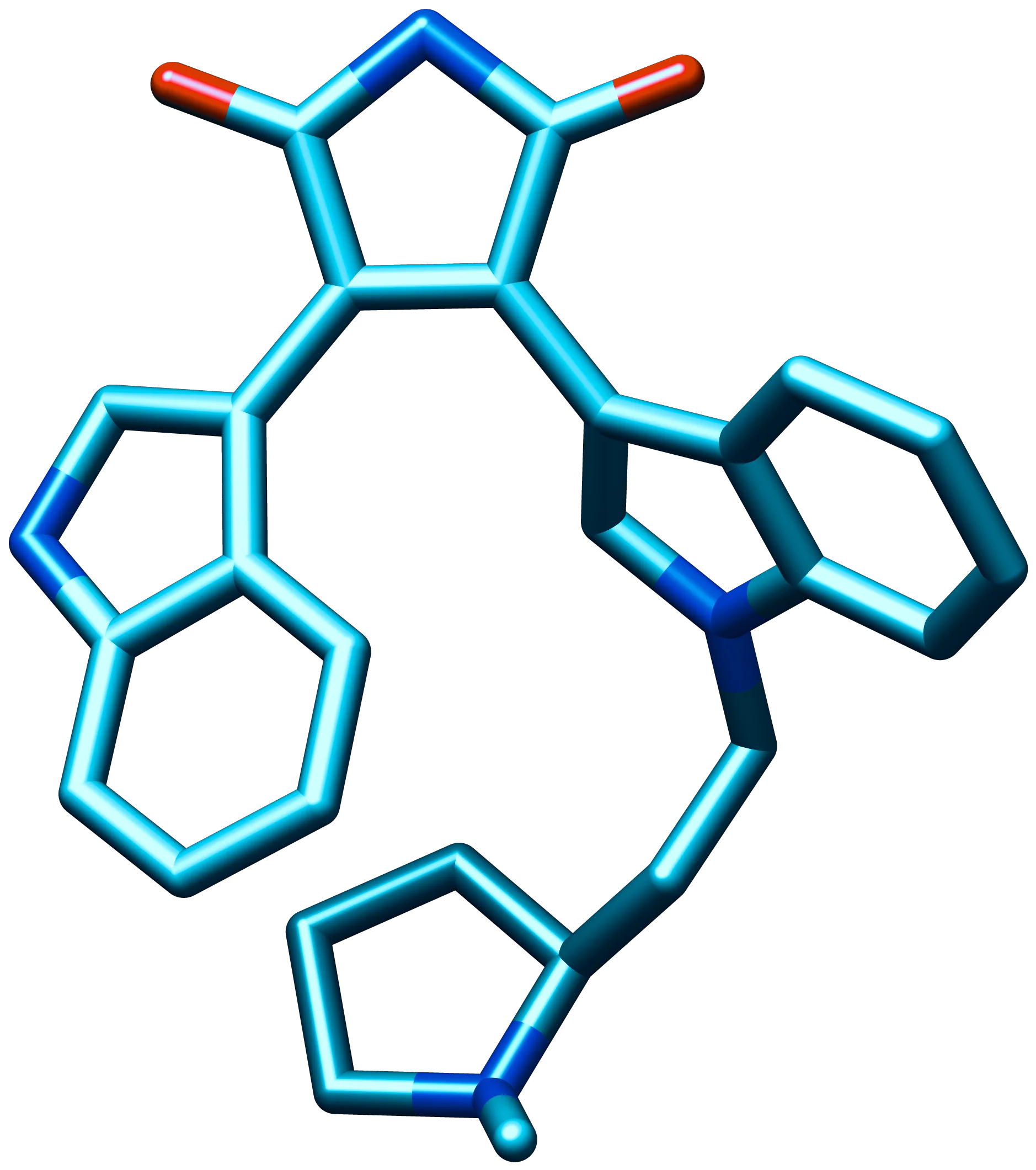
Searching for a new drug is like matching a key to a lock. The protein in a cell is the lock, and the candidate molecule is the key. You need to know whether the key fits and how snugly it sits. Previously, the computer would examine every atom in the lock and the key to check this. A single lock could take hours or even days. Checking millions of keys was out of the question.
TerraBind changes the approach. Instead of all atoms, it looks only at anchor points: for the protein, at alpha carbons (like the stiffening ribs in a frame), and for the molecule, at heavy atoms (excluding hydrogen). This coarse "skeleton" preserves the shape but drastically cuts the computational load. As a result, speed increases 26-fold, and accuracy is even slightly better—20 percent higher than previous leaders.
Fast and accurate binding affinity assessment is key in drug selection. Now, for the same money and time, you can screen many more compounds. The program also reports how confident it is in its prediction. This helps avoid wasting resources on dubious candidates and find truly effective molecules faster.
Original abstract
as written by the authors arXiv:2602.07735
We present TerraBind, a foundation model for protein-ligand structure and binding affinity prediction that achieves 26-fold faster inference than state-of-the-art methods while improving affinity prediction accuracy by $$\sim$$20\%. Current deep learning approaches to structure-based drug design rely on expensive all-atom diffusion to generate 3D coordinates, creating inference bottlenecks that render large-scale compound screening computationally intractable. We challenge this paradigm with a critical hypothesis: full all-atom resolution is unnecessary for accurate small molecule pose and binding affinity prediction. TerraBind tests this hypothesis through a coarse pocket-level representation (protein C$$_\beta$$ atoms and ligand heavy atoms only) within a multimodal architecture combining COATI-3 molecular encodings and ESM-2 protein embeddings that learns rich structural representations, which are used in a diffusion-free optimization module for pose generation and a binding affinity likelihood prediction module. On structure prediction benchmarks (FoldBench, PoseBusters, Runs N' Poses), TerraBind matches diffusion-based baselines in ligand pose accuracy. Crucially, TerraBind outperforms Boltz-2 by $$\sim$$20\% in Pearson correlation for binding affinity prediction on both a public benchmark (CASP16) and a diverse proprietary dataset (18 biochemical/cell assays). We show that the affinity prediction module also provides well-calibrated affinity uncertainty estimates, addressing a critical gap in reliable compound prioritization for drug discovery. Furthermore, this module enables a continual learning framework and a hedged batch selection strategy that, in simulated drug discovery cycles, achieves 6$$\times$$ greater affinity improvement of selected molecules over greedy-based approaches.
TerraBind uses only 4 anchor points per amino acid of the protein instead of 10–20 atoms, like an artist drawing a portrait with just the eyes and nose, yet capturing the whole face.