In materials science, a 'candidate' is a substance that shows promising properties for a specific application but has not yet been fully verified. In the context of superconductivity, a candidate might be a new compound that exhibits a drop in electrical resistance at low temperatures, but where the effect is not yet confirmed to be true superconductivity. The screening process involves computational and experimental methods to identify such candidates from a large pool of possibilities.
History
The concept of a 'candidate' in this sense is as old as materials discovery itself, but the systematic high-throughput screening of materials for superconductivity gained momentum in the 2000s with the advent of computational databases and machine learning.
How it works
The screening process typically starts with computational predictions — using density functional theory or machine learning to estimate a material's electronic structure and potential for superconductivity. Promising candidates are then synthesized and tested experimentally. Measurements of resistivity, magnetic susceptibility, and heat capacity are used to confirm whether the material truly enters a superconducting state, characterized by zero resistance and the Meissner effect.
In practice
Candidate screening is used in the search for room-temperature superconductors, better battery materials, and more efficient catalysts.
Fun fact
The first cuprate superconductor, discovered in 1986, was initially a candidate that took several years to be fully confirmed as a true superconductor.
Some crystals behave like a switch: nudge the temperature or pressure, and they turn from a conductor into an insulator. This is called a metal–insulator transition (a change in the ability to conduct electricity).
Imagine an audition for a symphony orchestra, where out of hundreds of hopefuls, only those whose instruments sound pure and withstand the furious crescendo remain. In the world of materials, computers have learned to generate 'atomic scores'—thousands of virtual crystals that promise to become the foundation for quantum chips or superconductors.
An atomic nucleus is like a crowded bus. To free up space, a group of two protons and two neutrons — a helium nucleus, an alpha particle — exits through the front door: this is alpha decay, described by George Gamow as tunneling under an energy barrier.
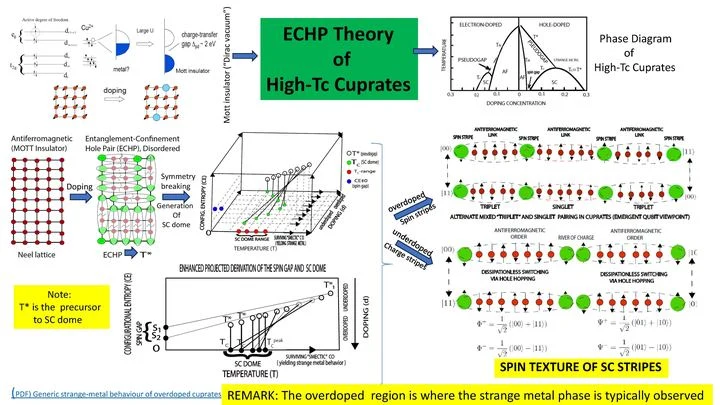
In some materials, electric current can flow without any loss: this is superconductivity. But before becoming a superconductor, a substance often passes through a strange state: electrons already sense each other and form pairs, yet they cannot move in unison.
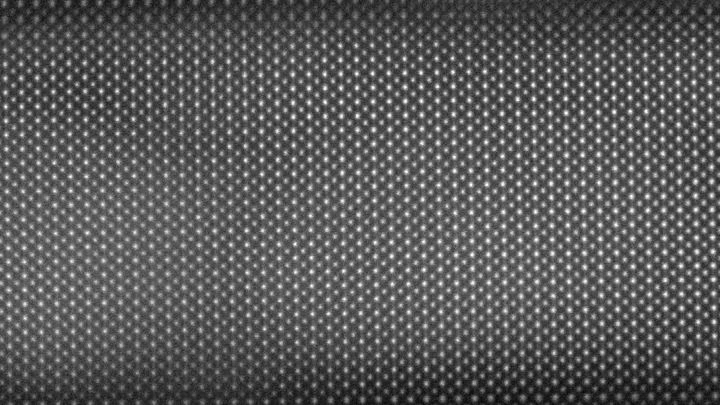
Imagine a sandwich where the bread is made of copper oxide layers and the filling is a thin layer of strontium ions. That's the infinite-layer cuprate, the simplest version of superconducting ceramics, conceived nearly 40 years ago.
Astronomers occasionally spot interstellar objects — rocky chunks or comets from other star systems. Most look ordinary, but some puzzle us with their shape, speed, or shine. To stop guessing, scientists applied the Loeb scale: from 0 (plain rock) to 5 (technosignature — an artificial signal from space).
A superconductor is a material through which current flows without loss, like water through a perfectly smooth pipe. But to make the pipe perfect, you have to cool it to very low temperatures. Physicists have long been looking for ways to make such a pipe at warmer temperatures, and one clue is the quantum critical point.
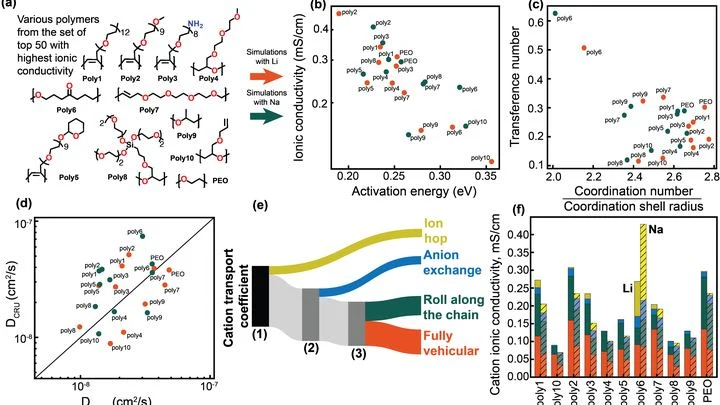
Modern batteries with liquid electrolytes can leak or catch fire. Polymer electrolytes (solid, plastic-like materials) solve that problem, but ions move through them more slowly, so the battery loses power.
Researchers set up a virtual assembly line: a computer program generated new polymer structures the way a chef experiments with new dough recipes.
Around the star HD 163296, 330 light-years away, a dense ring of gas and dust is swirling. Astronomers have spotted a small but bright patch of hydrogen cyanide and ethynyl molecules within it. It hangs at a distance of 88 astronomical units from the star — farther than Pluto is from the Sun.
The heat from a forming planet hidden in that patch melts the icy dust.
Deep inside an underground laboratory, a room-sized detector waits for an event that might happen once in a hundred million billion years. That event is neutrinoless double beta decay — a process that would break one of physics' fundamental laws. To catch it, you need perfect silence: not a single stray radioactive atom in the detector's materials.