Optics That Fix Themselves
An orchestra of a hundred musicians plays without a conductor. Every instrument is tuned perfectly, but one violin goes slightly off, and the harmony falls apart.
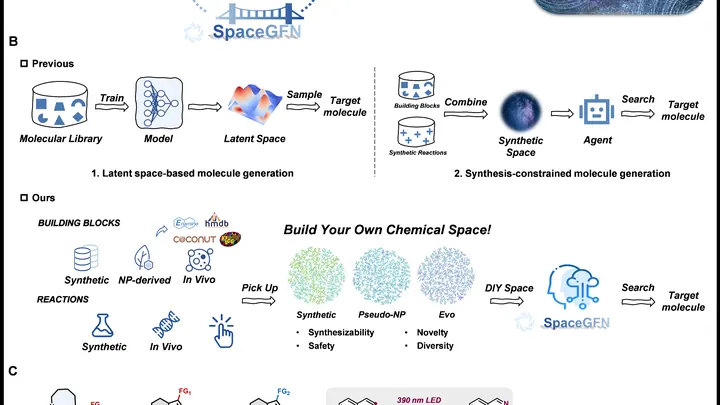
AI algorithms autonomously design and optimize pharmaceutical compounds without human intervention.AI drug discovery uses machine learning algorithms to design, optimize, and screen pharmaceutical compounds, dramatically accelerating the early stages of drug development. These algorithms can generate novel molecular structures, predict their biological activity, and assess their safety profiles, all without requiring explicit human programming for each step. The field aims to reduce the time and cost of bringing new medicines to market, which traditionally takes over a decade and billions of dollars.
The application of AI to drug discovery gained momentum in the 2010s with the rise of deep learning and the availability of large chemical databases. Notable milestones include the use of generative models to design novel drug-like molecules and the first AI-discovered drugs entering clinical trials in the late 2010s and early 2020s.
AI models, particularly deep neural networks and generative models, are trained on vast datasets of known drug molecules, their properties, and biological targets. Generative models learn the 'language' of chemistry and can propose new molecules that are likely to bind to a specific protein. Reinforcement learning and optimization algorithms then refine these candidates based on predicted efficacy, toxicity, and synthesizability, iteratively improving the designs.
AI drug discovery is used by pharmaceutical companies and biotech startups to identify lead compounds for diseases like cancer, Alzheimer's, and infectious diseases, as well as to repurpose existing drugs for new indications.
In 2020, the AI-designed drug candidate DSP-1181, developed by Exscientia and Sumitomo Dainippon Pharma, entered Phase I clinical trials for obsessive-compulsive disorder, marking a milestone for AI-generated molecules reaching human testing.