Friction in Faults: How Sand Turns into an Earthquake express
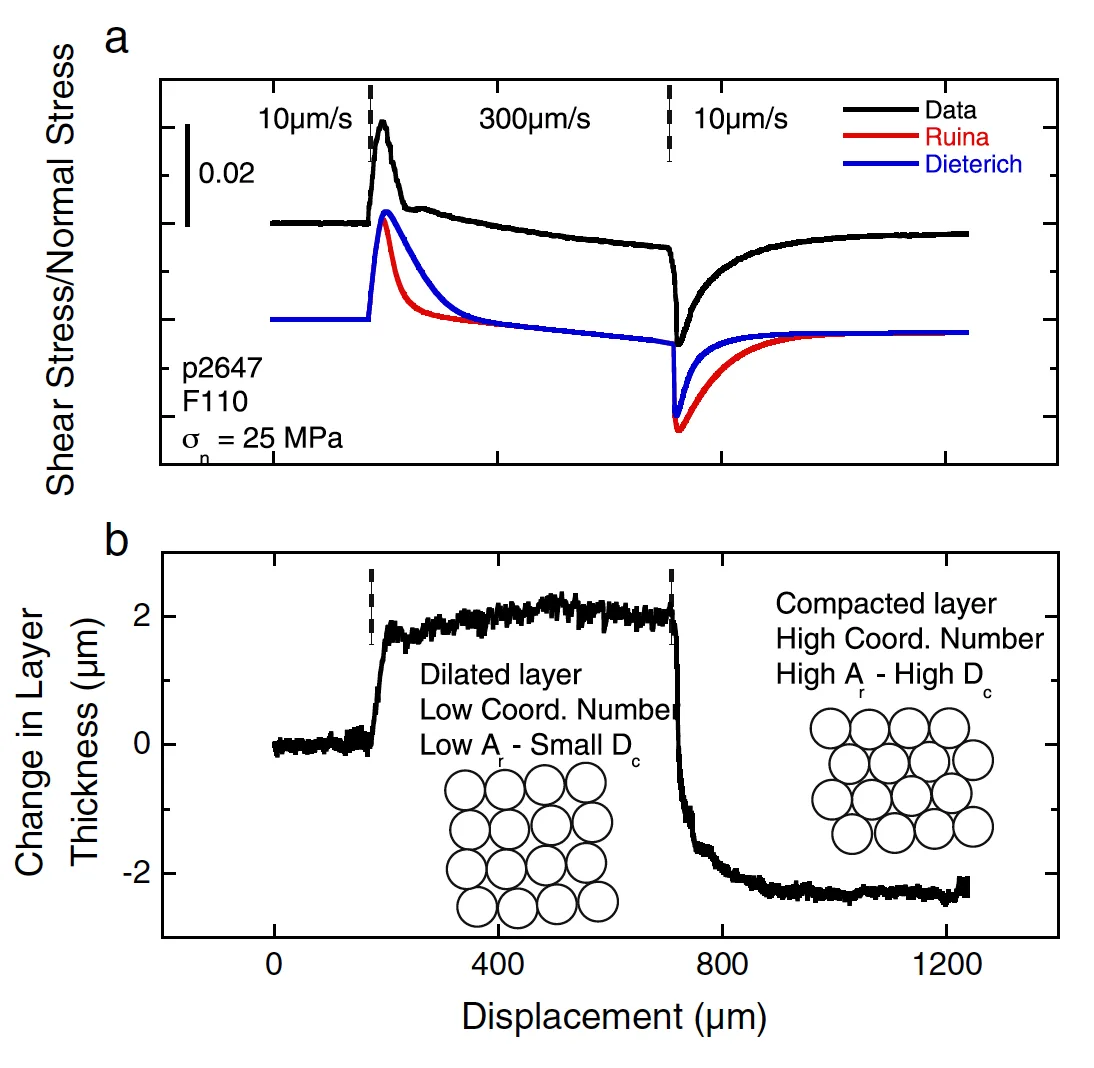
When two tectonic plates grind against each other, a layer of pulverized rock ends up between them, like sand between your palms. This layer, which geologists call fault gouge, behaves not like solid rock but like a thick paste: it can compact, dilate, and slide. Whether a fault ruptures in a devastating earthquake or creeps slowly and safely depends on its whims.
The authors of the new study built a mathematical model of this layer. They described it as a material that is simultaneously viscous (flows under load) and plastic (does not return to its original shape). The model incorporates a key property: such a material changes volume under shear, like wet sand on a beach, which becomes denser when you stomp on it but loosens if you dig into it. This property is critical for faults: compaction or dilation of the gouge directly affects the friction force and how fast the plates slide past each other.
The model was validated against standard experiments: numerical calculations matched the laboratory data. This means we can now more accurately assess when and how a fault will accumulate enough stress for a sudden slip. In the long run, such models could improve earthquake forecasting — at least at the level of the physics of the process, not just statistics.
The thickness of the fault gouge layer in an earthquake zone can be just a few millimeters, yet this thin layer controls the movement of entire tectonic plates.