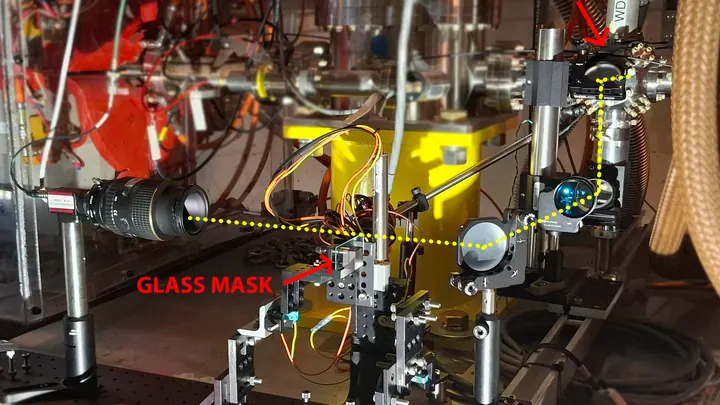
A laboratory experiment is a controlled scientific test conducted in a dedicated facility to study a phenomenon under specific, reproducible conditions. It is the cornerstone of empirical science, allowing researchers to isolate variables, manipulate parameters, and observe outcomes with precision. Unlike field observations, laboratory experiments offer the ability to control environmental factors such as temperature, pressure, and electromagnetic interference, enabling the establishment of causal relationships.
How it works
The process typically involves formulating a hypothesis, designing a setup with controlled variables, and systematically varying the independent variable while measuring the dependent variable. Instruments and sensors collect data, which is then analyzed statistically to determine significance. The key is reproducibility: another researcher should be able to replicate the experiment and obtain similar results.
In practice
Laboratory experiments are used across all scientific disciplines, from testing new materials and drugs to validating physical theories under controlled conditions.
The quantum world plays a strange game with causality. If in everyday life salt is always added to soup before serving, here the ingredients end up in the bowl at the same time, and the chef doesn't remember the order. Physicists asked: can we measure this 'recipe'? The answer is no.
An AI has learned to conduct the quantum orchestra. Its instruments: superconducting circuits — artificial atoms kept colder than interstellar space. This AI-conductor designs and runs entire experimental scores, not just playing notes but creating them on the fly.
Science is like a city where residents pave the streets themselves. Where paths are already worn, new houses go up, while untouched vacant lots go unnoticed — not because building there is impossible, but because no one ever looks.
A magnesium oxide crystal is like a row of soldiers: atoms stand in neat lines, and an electron runs along them. But if the electron lingers, the nearest atoms shift slightly from their positions, like neighbors in a rank turning their heads. The electron finds itself in a dip made of displaced atoms and can no longer move freely.
In giant particle accelerators, particles fly at nearly the speed of light and smash head-on. But sometimes one beam is slightly denser than the other, like someone stepping onto a packed escalator the wrong way. Then collisions become uneven, and detectors start 'flickering,' throwing off measurements.
In the lab, time usually ticks on the wall: hands, digits, a frequency standard. But for the Universe, there are no external clocks. The Wheeler–DeWitt equation, the main law of quantum gravity, contains no time at all, and all fundamental theories lack an inbuilt arrow of time.