Invisible Solar Flares: How a Sunspot's Magnetic Field Trembles express
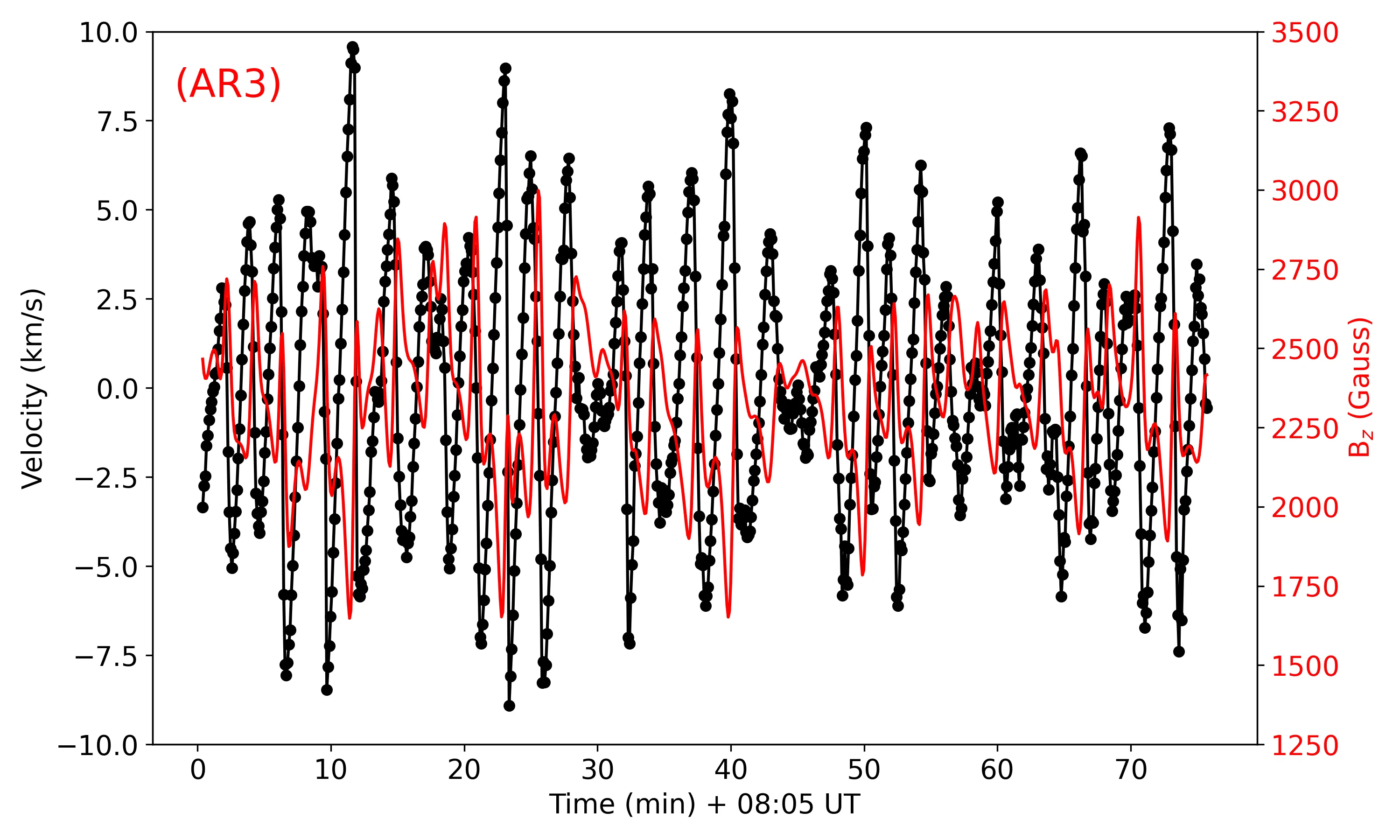
The Sun's surface is dotted with dark spots — regions of extremely strong magnetic fields that restrain the boiling of hot gas. From time to time, shock waves race through a spot's atmosphere, like a gust of wind compressing the air ahead of it. The gas briefly flares brightly, and astronomers call these events umbral flashes.
Scientists observed five different sunspots using the GREGOR telescope and the GRIS instrument. They measured how the gas moves and how the magnetic field changes at the moment of the flash. It turned out that in three spots the field sharply intensified upon impact, while in the other two it weakened. That seemed odd: why would the same wave act differently?
But there's another explanation. When a shock wave passes through gas, it may simply push the gas back and forth rapidly. Then the instrument sees not a change in the magnetic field, but merely a play of velocities. The researchers tested this idea: they allowed the model to assume the field stays constant while only the gas velocity changes. And the model matched the observations perfectly.
So the truth might be that the spot's magnetic field barely changes during a flash: it only appears to change because of the fast gas motion. But the first version, with strong field jumps, hasn't been ruled out either. Now new observations are needed to understand what really happens in the heart of a sunspot.
Shock waves in the Sun's atmosphere heat gas to tens of thousands of degrees — hotter than the Sun's surface itself.