The spectral index is a number that describes how the intensity of radiation or particles changes with energy or frequency. In many astrophysical and cosmological contexts, spectra follow a power law, meaning that the intensity I is proportional to E^α, where E is energy and α is the spectral index. A negative spectral index indicates that intensity decreases with energy, which is common for synchrotron radiation or cosmic ray spectra; a positive index means intensity increases with energy, as seen in some gamma-ray backgrounds. The value of the spectral index encodes physical information about the emission mechanism, the energy distribution of particles, and the environment where the radiation is produced.
History
The concept of a power-law spectrum and its exponent has been used since the early 20th century in studies of cosmic rays and radio astronomy, though the specific term 'spectral index' became standard in the mid-20th century as observations of synchrotron radiation from supernova remnants and galaxies multiplied.
How it works
To measure a spectral index, scientists collect data across a range of energies or frequencies and plot the logarithm of intensity against the logarithm of energy. If the relationship is linear, the slope of that line is the spectral index. A steeper slope means a faster drop-off with energy, while a flatter slope indicates a more uniform distribution. The index can vary with energy range, revealing breaks or turnovers that signal changes in the underlying physics, such as cooling of particles or the onset of a new emission process.
In practice
Spectral indices are used to classify astronomical sources, infer magnetic field strengths, and model cosmic ray propagation, as well as in plasma physics to characterize turbulence and in cosmology to analyze the cosmic microwave background.
Fun fact
The cosmic ray spectral index for protons is about -2.7, but recent observations of heavy nuclei like iron show a surprising flattening at high energies, hinting at a different acceleration mechanism.
The heart of a black hole beats unevenly. One thump is brighter, another dimmer, and this rhythm encodes the temperature of the electrons swirling right at the horizon. Astronomers call this rhythm the spectral index: a number that shows how much brightness changes as you move from one radio frequency to another.
Radio astronomy began with the mysterious noise caught by the antenna of Karl Jansky and the rhythmic pulses that Jocelyn Bell Burnell playfully called 'little green men'.
Imagine a smart antenna panel, a phased array, that steers radio waves traveling at the speed of light. It works like an orchestra: hundreds of tiny emitters, like musical instruments, shift their phase (the moment they 'join' the overall sound) on command via a variable voltage.
Baking bread starts with nearly homogeneous dough, in which tiny gas bubbles are already hidden. They grow, and the rate of their growth determines the future structure of the crumb. In cosmology, the role of such bubbles is played by the seeds of galaxies — barely noticeable density enhancements in the hot 'soup' of the early universe.
A gamma-ray burst is like a shot from a cosmic cannon. First a brief flash of light, then a fading afterglow. But inside that flash, things aren't so simple: its color and brightness don't change at the same time.
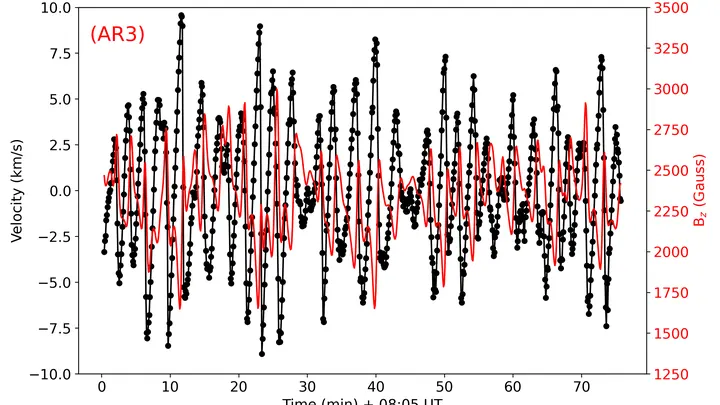
The Sun's surface is dotted with dark spots — regions of extremely strong magnetic fields that restrain the boiling of hot gas. From time to time, shock waves race through a spot's atmosphere, like a gust of wind compressing the air ahead of it. The gas briefly flares brightly, and astronomers call these events umbral flashes.
Cosmic rays are charged particles that constantly bombard Earth from deep space. When one of these particles enters the atmosphere, it collides with air nuclei and spawns a whole cascade of secondary particles: electrons, muons, photons.
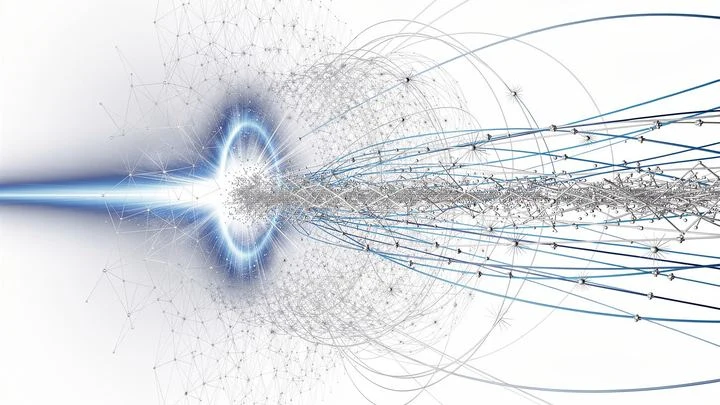
A charged particle spiraling in a magnetic field doesn't stay silent: it emits light. This light is called synchrotron radiation, and it shows up everywhere — from distant galaxies to laboratory accelerators.
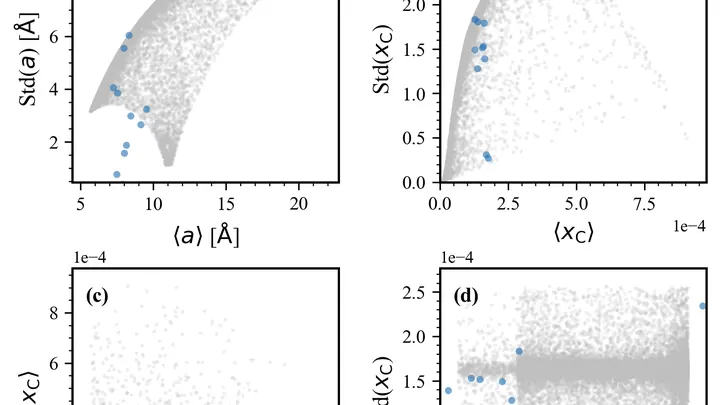
Cosmic dust isn't dirt: it's tiny grains, like soot from a campfire, scattered between the stars. Some of them spin at breakneck speeds, millions of times per second, emitting faint radio waves. Astronomers call this anomalous microwave emission: it interferes with studies of the early universe, but it's also a mystery in its own right.
Cosmic rays are atomic nuclei accelerated to near-light speeds. They arrive at Earth from all directions, and their composition tells us what's happening in the far reaches of the Galaxy.
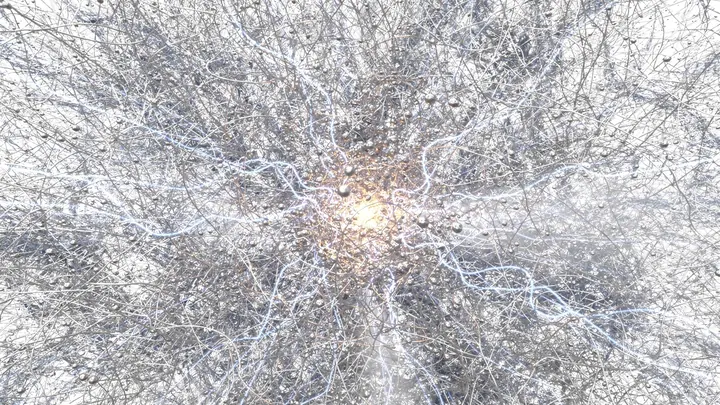
At night over the Siberian taiga, a faint blue light sometimes flickers. It's not the aurora borealis but a cosmic-ray shower: a single particle from deep space slams into the atmosphere and shatters into millions of secondary particles. They race toward the ground in a broad front, like a ripple from a stone dropped into water, and make the air glow.
Like long-distance runners, atomic nuclei, from light helium to heavy iron, race toward us across the Galaxy. At the finish line, in a detector on a high-altitude balloon, we see that heavy nuclei arrive a bit more exhausted than light ones. The difference is small, but it repeats from flight to flight.
High above Earth, a satellite flies, and inside it is an instrument the size of a small wardrobe. It catches particles that have been racing through the galaxy for billions of years and finally slam into the detector. Such particles are called cosmic rays, and they bring news of distant stellar explosions.
The ATIC balloon rose over Antarctica and caught particles older than Earth itself. Among them are atomic nuclei from sulfur to chromium, and the higher their energy, the larger their fraction compared to iron. The standard 'leaky box' model predicted the opposite: heavy nuclei should dissolve like salt in water. But the data stubbornly rose.
In the stream of charged particles flying toward us from the depths of the Galaxy, iron turned out to be the odd one out. The ATIC-2 instrument, lifted on a balloon over Antarctica, compared how the fraction of nuclei from sulfur to chromium relative to iron changes with energy.
High above the Antarctic ice sheet, a balloon with a detector floated for twenty days. It caught tiny particles that had been traveling toward us for millions of years from distant stellar explosions. Now scientists have sorted through the catch and reported how much energy the protons and nuclei of different elements carried.