Scientist

Michael Faraday

1791–1867 · Electromagnetism, Electrochemistry, Physics
English physicist and chemist, one of the greatest experimentalists in the history of science. He made fundamental contributions to the theory of electromagnetism: discovered electromagnetic induction, the laws of electrolysis, the rotation of the plane of polarization of light in a magnetic field. Invented the first electric motor and dynamo. His concept of the field became dominant in physics.

Biography

Born in London to a poor family, had almost no formal education. Worked as a bookbinder, then as a laboratory assistant to Humphry Davy. Became a professor at the Royal Institution, where he delivered the famous Christmas lectures. Declined many honors, including the presidency of the Royal Society.

Key discoveries

💡 Faraday was a deeply religious Christian and attended church every Sunday. Due to poor health, he declined offers to be buried in Westminster Abbey next to Newton.
"He considered that nothing is too wonderful to be true if it is consistent with the laws of nature."
Concepts
electromagnetismmagnetic reconnectionpolarimetry
Laws
Faraday effectFaraday's law of electromagnetic inductionlaw of conservation of electric charge
Scientists
James Clerk MaxwellShuji NakamuraWilhelm WienAlbert A. MichelsonRichard FeynmanJ. J. ThomsonLise MeitnerChristiaan Huygens

Related articles

How Ripples on Water Steer the Planet's Winds
The planet's winds are not free-flowing currents but rather obedient jets that can be nudged from an unexpected direction. The ocean surface, covered with waves, acts like a tuning knob: change its roughness, and giant air rivers shift by hundreds of kilometers.
Sumatra's Cyclone Factory: Ten Years of Observations
Sumatra's mountain range works like a stamping press: easterly winds hitting the slopes leave a chain of rotating imprints in the air behind the island. These vortices, like blanks on an assembly line, detach from the land and drift over the ocean, where some of them grow into tropical cyclones.
A Veil over the Beacon: The Slow Wind of GX 13+1
About 25,000 light-years from Earth, in the constellation Sagittarius, a dense veil wraps around the neutron star GX 13+1. It scatters X-ray photons the way fog scatters streetlight, and for a long time it hid the source's true power from astronomers.
Stellar2025-12-121 minarXiv:2512.11182express
Mixer Waves of the Solar Wind: How the Corona Heats Up
The solar wind isn't a calm stream but a bubbling soup of charged particles. Diving close to the Sun, the Parker probe picked up two types of stirring waves. Left-handed ones, like a whisk in a chef's hand, whip up the material when the temperature differs along and across the flow.
Stellar2026-01-061 minarXiv:2601.03344express
Wind for the swift: how turbulence heats the solar corona
In a hot gas of charged particles — plasma — chaotic electric fields work like a sieve. A slow particle gets surrounded by a cloud of opposite charges, which cancels the external field. A fast one sheds this armor and gets accelerated.
General Relativity2026-01-121 minarXiv:2601.07179express
How Gravitational Waves Twist Light
A sugar solution can twist light — many have seen this in polarization experiments. Surprisingly, a similar trick appears in the fabric of the cosmos itself.
Galaxies2026-01-122 minarXiv:2601.07907express
How the Milky Way's Wind Tears Apart Clouds
A hair dryer aimed at a block of ice strips vapor and droplets from its surface, and the ice slowly melts. The wind from the center of our Galaxy works in much the same way: it picks up cold gas clouds and carries them away, heating and shredding them along the way. Astronomers decided to systematically search this flow for molecules, the coldest and densest form of gas, for the first time.
Exoplanets2026-01-121 minarXiv:2601.07983express
When the Sun Dived into a Cloud
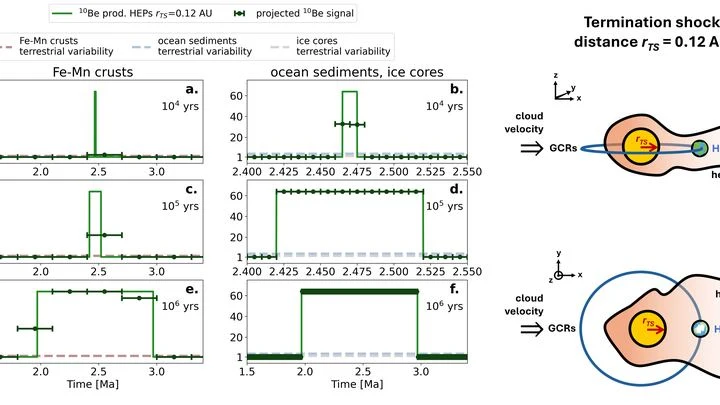
As it travels through the Galaxy, the Solar System occasionally dives into thick interstellar clouds — clumps of tenuous hydrogen and dust.
Stellar2026-01-152 minarXiv:2601.10818express
Vortex rings that survived a solar eclipse
A total solar eclipse offers rare minutes when the Moon blocks the Sun's bright disk, revealing its outer atmosphere — the corona. In white light, the corona extends tens of solar radii, and images show fine structures: vortex rings, waves like ripples on water, and huge plasma ejections.
Medical Physics2026-01-221 minarXiv:2601.15947express
A Camera That Can See Tissues Breathe
Cells breathe. They need oxygen, and they take it from the blood flowing through the tiniest vessels. If blood flow is weak or oxygen is scarce, cells start to suffocate. Doctors need to see this as early as possible. But how do you look inside living tissue without cutting it open? The new device does it in two ways at once.
Materials2026-01-251 minarXiv:2601.17807express
A Living Database for Solar Cells
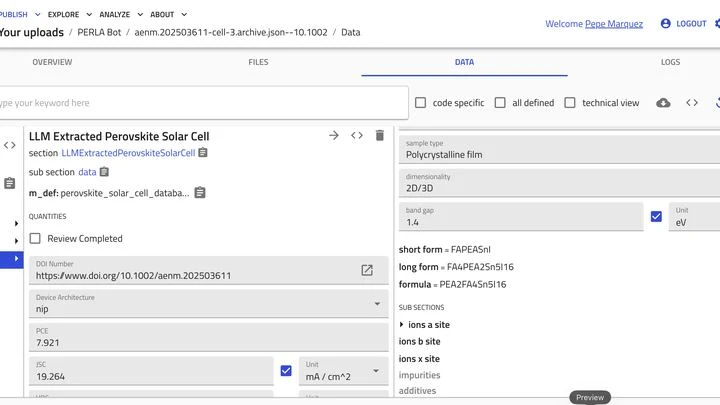
Scientific papers are published faster than people can read and organize them. In the field of perovskite solar cells, the main database has been stuck in 2021, even though research is in full swing. Now PERLA comes to the rescue — an autonomous living database that keeps an eye on the flow of publications on its own.
High Energy2026-01-262 minarXiv:2601.18139express
How a neural network tells black holes from neutron stars
For years, an X-ray telescope in orbit recorded how binary systems shine, where an ordinary star orbits a black hole or a neutron star. Matter from the companion falls onto the compact object, heats up to millions of degrees, and emits X-rays.
High Energy2026-01-271 minarXiv:2601.19480express
Wind from the Edge of a Stellar Disk
In the binary system 4U 1624-49, a neutron star pulls gas from its companion star. This gas spirals into a glowing disk, like water in a funnel. And from the edge of this funnel, a hot stream tears away — hydrogen and other elements fly off at speeds up to 320 kilometers per second.
Atomic Physics2026-01-301 minarXiv:2601.22981express
Light Kicks an Atom Sideways
A football kicked with spin doesn't fly straight: it bends to the side. A tightly focused beam of light does something similar: it starts pushing an atom not just forward but also sideways. Physicists measured this shift on a single calcium ion trapped in a light trap. The beam was aimed at the atom like a spotlight on a grain of sand.
Space Physics2026-02-032 minarXiv:2602.03724express
Solar Wind: Why the Kinks in the Magnetic Field Disappeared
The Parker Solar Probe and Solar Orbiter spacecraft fly close to the Sun and measure the solar wind — the stream of charged particles that constantly blows from our star.
cs.ET2026-02-072 minarXiv:2602.15048express
A Lattice That Senses Cracks Before They Appear
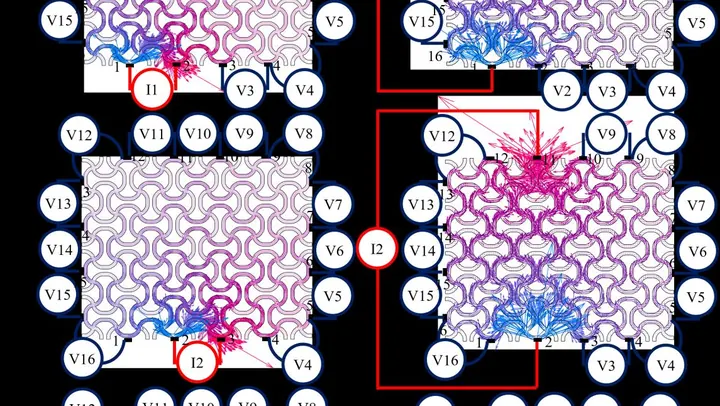
Ordinary materials break in silence. First, invisible struts inside them snap, and only then does a crack appear that you can see with your eyes. Engineers at Carnegie Mellon University have taught a material to 'talk' about such hidden damage. They 3D-printed a lattice resembling honeycomb but with a more intricate pattern.
Stellar2026-02-111 minarXiv:2602.10477express
Solar Eruption: How a Magnetic Loop Breaks into Space
The Sun regularly produces explosions that hurl huge clouds of charged particles into space. Such a cloud travels toward Earth and can knock out satellites, disrupt radio communications, and even leave cities without electricity.
Stellar2026-02-112 minarXiv:2602.11227express
The Sun's Tidal Rhythms
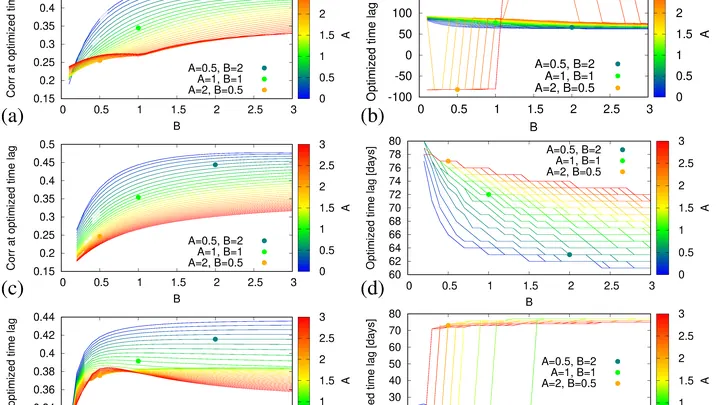
The Sun is not a calm sphere but a boiling cauldron that follows its own rhythms. Roughly every 11 years, its activity peaks: more dark spots appear on its surface, and streams of charged particles fly into space. But hidden within this grand cycle is a shorter one — about 1.7 years.
Stellar2026-02-122 minarXiv:2602.12475express
Solar Particles Don't Arrive on Schedule
The Sun sometimes hurls vast clouds of charged particles into space. Usually, the fastest ones, with the highest energy, arrive at the probe first, like sprinters on a long-distance track.
Stellar2026-02-142 minarXiv:2602.13644express
Four Sentinels of the Solar Wind
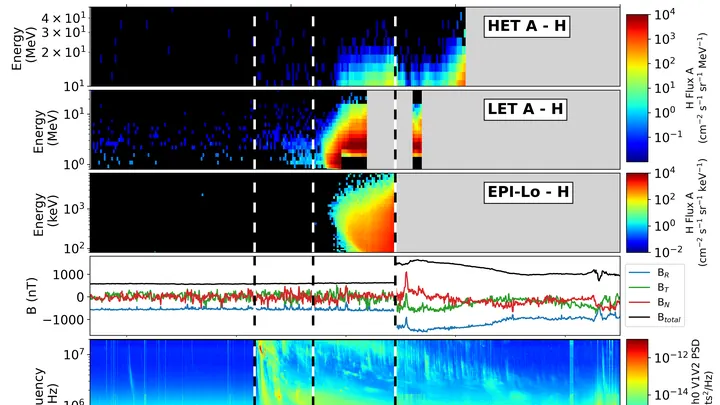
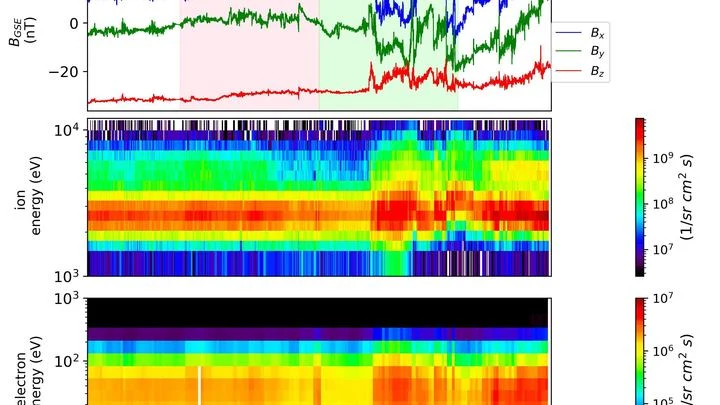
October 10, 2024. The Sun hurled a cloud of magnetized plasma toward Earth, and four spacecraft, stationed at a single point between the Sun and Earth, simultaneously recorded how that cloud churned. The distance between the outermost probes was just 80 Earth radii, about half a million kilometers.
HEP Phenomenology2026-02-151 minarXiv:2602.14217express
Earth's Magnetic Field vs. the Universe's Hidden Axis
A compass needle points north, but what if space itself has a hidden axis? Physicists have used Earth's magnetic field to test whether the universe's structure is truly the same in all directions.
Stellar2026-02-181 minarXiv:2602.16221express
The Sun Pulls Electrons Back, Yet They Still Escape
The Sun constantly emits a stream of charged particles — the solar wind. Among them are many electrons, some of which fly back toward the Sun. But observations show that fewer electrons return than expected.
Stellar2026-02-181 minarXiv:2602.16656express
Solar Cycles: How Magnetic Swings Sway the Future
Sunspots are traces of magnetic fields that emerge on the surface. They live their own lives: spots closer to the equator tilt more, while those farther away tilt less. These two effects, like two knobs on an old radio, control how much magnetic field reaches the Sun's poles and accumulates there for the next cycle.
High Energy2026-02-191 minarXiv:2602.17759express
Solar wind skews the cosmic ray map
Cosmic rays are charged particles that reach us from distant stellar explosions. But before hitting a detector, they must pass through the bubble of the solar wind. The Sun breathes: it inflates this bubble, then contracts it.
Stellar2026-02-231 minarXiv:2602.19953express
Solar Spicules: How the Corona Gets Its Heat
The Sun's surface boils like water in a pot. Hot gas rises, cools, and sinks: that's convection. Magnetic fields churn around, tearing and reconnecting. In this frenzy, spicules are born: narrow plasma jets that shoot thousands of kilometers upward.
Optics2026-02-281 minarXiv:2603.00562express
Light in a Crystal Twists Itself
Light passing through a thin crystal can change color and the direction of its oscillations. In a molybdenum disulfide flake just hundreds of atoms thick, an infrared beam turns green, and its polarization, the way the light wave oscillates, obeys the crystal's geometry.
Optics2026-03-012 minarXiv:2603.01218express
A Faraday Cage Sculpts Light
Light in a thin film of lithium niobate can be made to change color — for instance, turning an invisible infrared beam into green. To do that, the crystal needs to be 'marked': in some places its polarity points up, in others down. Previously, this marking was done by applying a voltage and watching the domain growth in real time. The slightest delay, and the pattern smears.
HEP Experiment2026-03-032 minarXiv:2603.02733express
Neural Network Reads Particle Beam from Screen
A particle beam in an accelerator is like a swarm of gnats: each one flies at its own speed and angle. To keep the swarm from scattering and to hit the target, engineers need to know exactly how all particles move at once — all six coordinates of their motion. But conventional sensors only show a flat shadow of the swarm on a screen, like a smudge on glass after an impact.
HEP Phenomenology2026-03-071 minarXiv:2603.07010express
Applied Physics2026-03-072 minarXiv:2603.07243express
How Touch Sparks Electricity
When two different materials are pressed together and then pulled apart, a spark jumps between them. Anyone who has pulled off a wool sweater in the dark or gotten a shock from a doorknob knows the feeling. For a long time, it was thought that charges simply hop from one surface to another due to differences in material properties.
High Energy2026-03-112 minarXiv:2603.10870express
Black Hole Corona: The Wind That Polarizes Light
The black hole Cygnus X-1 is one of the most studied in our galaxy. It pairs with a normal star, pulling matter from it. The gas spirals into a glowing disk, like water down a drain, and above the disk hangs a scorching corona — a cloud of electrons at temperatures of hundreds of millions of degrees.
Plasma Physics2026-03-131 minarXiv:2603.13004express
Laser learns to polarize gamma rays
Laser light is like a perfectly aligned row of soldiers on parade: all waves oscillate in the same plane. Such light is called polarized. In a new study, physicists have for the first time produced polarized gamma rays by colliding electrons with a powerful laser pulse.
Classical Physics2026-03-131 minarXiv:2603.13448express
The Invisible Ocean That Holds the Atom
According to ordinary mechanics, an electron in an atom should spiral into the nucleus and crash into it, like a surfer losing speed and falling off the board. But atoms live for billions of years. Because space isn’t empty. Even in absolute vacuum, an invisible electromagnetic sea ripples — the zero-point field. Its waves continuously nudge the electron.
Medical Physics2026-03-151 minarXiv:2603.14555express
Peering Inside Fibers Without Tomography
Fibers in composites, paper, or biological tissues are often hidden from view, but their orientation determines the strength and properties of the material. Previously, to see fiber directions, you had to take many images at different angles and assemble a three-dimensional picture, like slicing a loaf of bread into thin pieces. For thin samples, this approach doesn't work: you can't slice what isn't thick enough.
Fluid Dynamics2026-03-161 minarXiv:2603.15896express
How Rain Launches Microplastics into the Air
The Sun drives the water cycle, and rain returns it to the ground. But now, every drop is a tiny hammer striking the surface. Floating plastic particles (microplastics, mostly carbon) upon impact jump up like popcorn kernels on a hot skillet. But instead of popping, they get wrapped in a thin water film and turn into weightless beads.
Stellar2026-03-161 minarXiv:2603.15930express
Solar Wind: Fast Streams Inside Slow Ones
The Sun's corona looks like a shaggy dandelion: bright petal-like loops hold hot gas near the surface, while long, tenuous jets escape into space between them. These jets, the heliospheric current sheet, stretch across the entire solar system.
Galaxies2026-03-171 minarXiv:2603.16796express
A Magnetic Map Around a Black Hole
Radio waves passing through magnetized gas have their polarization slightly rotated, like a compass needle deflecting near a magnet. This rotation, called the Faraday effect, revealed the invisible environment around the supermassive black hole in galaxy NGC 1275.
Ocean Conductor: How Warm Blobs in the Arabian Sea Steer the Monsoon
In summer, the Arabian Sea breathes like a pair of bellows: one moment it pumps heat, the next it exhales moisture over a billion people. But sometimes this breathing stumbles, and the water off the coasts of India and Pakistan runs a few degrees hotter than usual.
Mesoscale2026-03-191 minarXiv:2603.18823express
Current flows one way without a magnet
Normally, current flows equally well in both directions if there's no magnet. A magnetic field or magnetic material breaks that symmetry: electrons start to prefer one direction. But in a new study, physicists found a way to do without magnets. In a crystal, atoms may not sit perfectly ordered but with some disorder.