AI agent independently conducted a physics analysis express
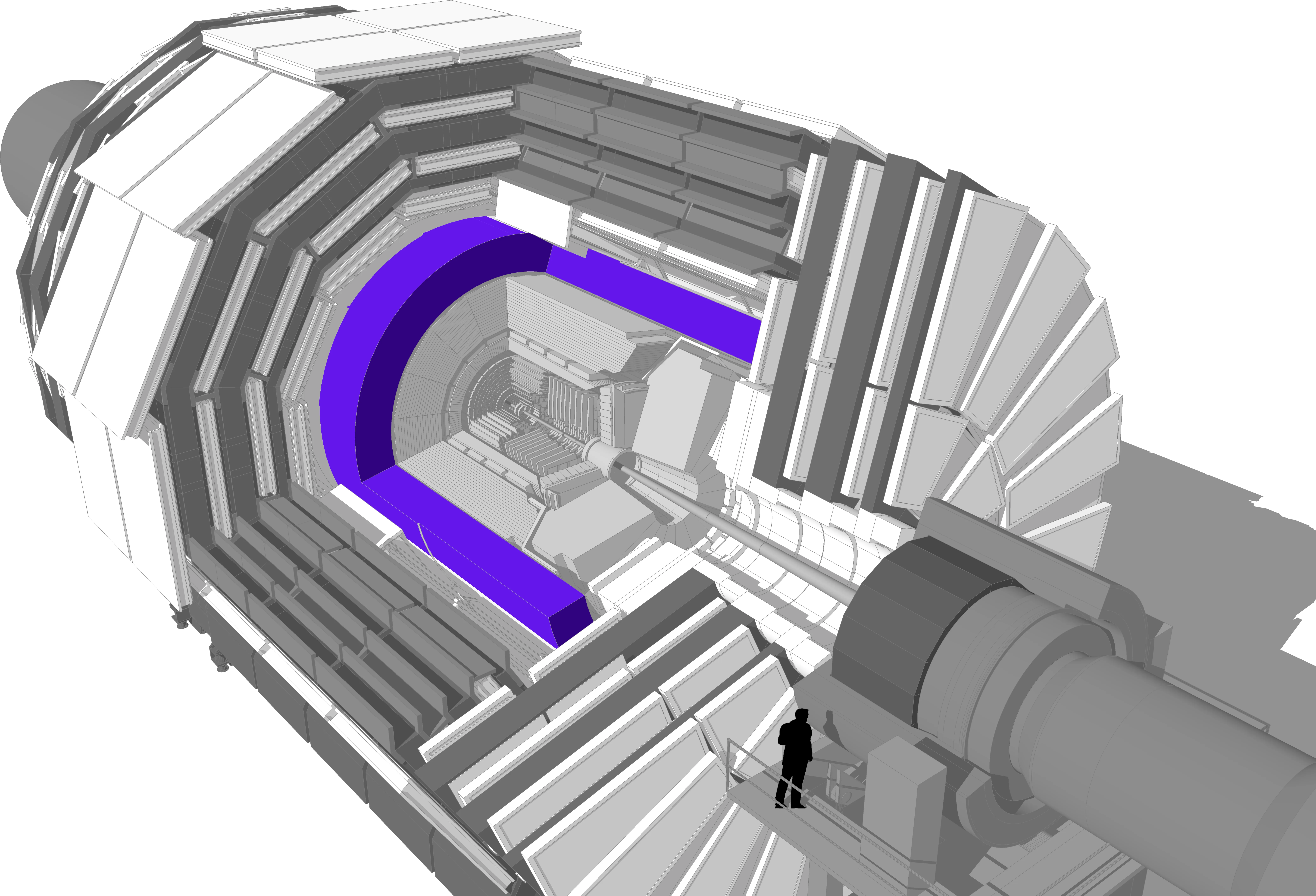
A physicist analyzing particle collisions typically spends weeks on dull work: cleaning noise from data, estimating how many false signals will slip through, double-checking every number. Now that routine can be handed to a program. The researchers gave Claude Code, a large language model, a set of data from the ALEPH, DELPHI, and CMS detectors, tools for processing, and a folder of old papers. From there, it worked on its own.
First, the program selected the relevant events, like a chef who, from a mountain of ingredients, picks only the fresh vegetables for the soup. Then it estimated the background: how often the detector might have erred and recorded random noise instead of a real particle. It calculated uncertainties, checked the statistics, and wrote a draft of the paper. One result is a measurement of the Higgs boson decay to tau leptons using CMS data. Another is the first-ever analysis of the Lund plane on LEP data, which no one had published before.
The authors named their framework Just Furnish Context—"just give context." The idea is simple: you don't need to spell out every step for the agent; just put the data, tools, and papers in front of it. It will figure out what to do on its own. It's like giving an intern the keys to the lab and a library: they'll manage if the materials are good.
Of course, no one is saying physicists will be out of a job. On the contrary: freed from routine, scientists can think about new ideas, devise methods, and check whether the machine made a mistake. But we need to prepare students for this reality now — teaching them not only to write code by hand but also to manage intelligent assistants.
Original abstract
as written by the authors arXiv:2603.20179
Large language model-based AI agents are now able to autonomously execute substantial portions of a high energy physics (HEP) analysis pipeline with minimal expert-curated input. Given access to a HEP dataset, an execution framework, and a corpus of prior experimental literature, we find that Claude Code succeeds in automating all stages of a typical analysis: event selection, background estimation, uncertainty quantification, statistical inference, and paper drafting. We argue that the experimental HEP community is underestimating the current capabilities of these systems, and that most proposed agentic workflows are too narrowly scoped or scaffolded to specific analysis structures. We present a proof-of-concept framework, Just Furnish Context (JFC), that integrates autonomous analysis agents with literature-based knowledge retrieval and multi-agent review, and show that this is sufficient to plan, execute, and document a credible high energy physics analysis. We demonstrate this by conducting analyses on open data from ALEPH, DELPHI, and CMS to perform electroweak, QCD, and Higgs boson measurements. We present two of those results in a condensed short paper form -- a CMS Run1 Open Data $$H\to \tau^+\tau^-$$ to demonstrate performance on a well-established result, and the first Lund plane measurement on LEP data -- a genuinely novel result and, to our knowledge, the first produced autonomously by an AI agent. Rather than replacing physicists, these tools promise to offload the repetitive technical burden of analysis code development, freeing researchers to focus on physics insight, truly novel method development, and rigorous validation. Given these developments, we advocate for new strategies for how the community trains students, organizes analysis efforts, and allocates human expertise.
The new Lund plane analysis on LEP data was done without human involvement — only by an agent based on a large language model.