A quantum assistant is an artificial intelligence system that leverages principles from quantum information theory to help scientists solve complex problems. Unlike classical AI, which processes bits as 0 or 1, a quantum assistant can exploit quantum superpositions and entanglement to explore multiple possibilities simultaneously, making it particularly effective for optimization, simulation, and data analysis tasks in physics, chemistry, and materials science. It acts as a collaborative partner, suggesting hypotheses, designing experiments, and interpreting results in ways that augment human intuition.
History
The concept emerged in the late 2010s with the rise of quantum machine learning, but the specific term 'quantum assistant' gained traction in the early 2020s as AI began integrating with quantum hardware for practical research.
How it works
The quantum assistant typically combines machine learning algorithms with quantum computing resources. It encodes problem parameters into quantum states, applies quantum gates to evolve the system, and measures the output to extract solutions. For tasks like simulating atomic interactions or optimizing complex systems, it can use variational quantum eigensolvers or quantum approximate optimization algorithms. The AI component learns from outcomes, refining its strategies over time to become more efficient at guiding the quantum hardware toward accurate answers.
In practice
It is used in materials discovery, drug design, and fundamental physics simulations, such as modeling neutron star interiors or designing photonic chips.
Fun fact
Some quantum assistants can run on classical computers by simulating quantum behavior, making them accessible to labs without quantum hardware.
A telescope stares at a star for many nights in a row. Somewhere in the stream of light hides a tiny dip in brightness — an Earth-sized planet briefly blocking part of the star. Such a dip lasts a few hours and repeats once a year or less. Catching it is like hearing a single quiet click in a noisy hall.
Assessing image quality is a job for a meticulous inspector with a toolbox. The IQA-T1 neural network acts exactly like that: it doesn't just stare at the picture, but applies either a spectroscope or a light meter.
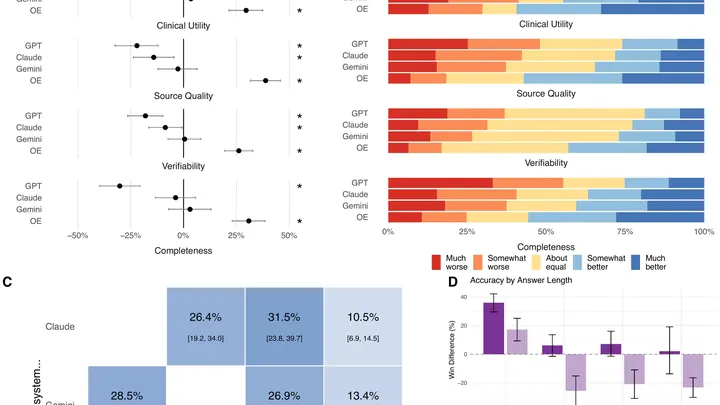
Every week, doctors ask AI assistants millions of questions at the bedside. But these tools are usually tested on exam-style problems, not on what clinicians actually ask in practice. A team of researchers set out to fix that.
They collected 620 real questions from physicians across 30 specialties — from cardiology to oncology.
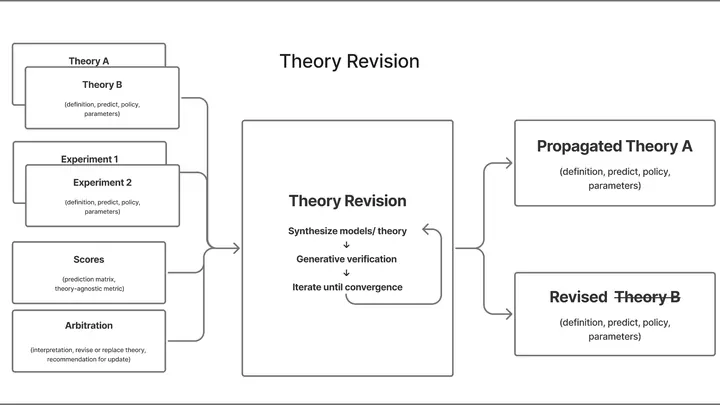
A closed loop: the machine proposes an idea, tests it on people, sees the failures, and spawns a new, more accurate guess. That's how AutoCog works — an automatic cognitive scientist. Previously, in the science of thinking (cognitive science), the hardest part, coming up with a theory, was done only by humans.
Computational studies of material behavior have long suffered from two extremes: either fast but inaccurate models, or accurate but slow physical calculations. Modern programs, trained on data, have nearly resolved this dilemma — now the bottleneck is not computing power, but human routine: setting up simulations and checking results.
Paimon works like an autonomous chef.
A laser beam is split into dozens of thin filaments, passes through frosted glass, and reconverges to a single point. This is the workbench where the program took a seat. It received no instructions — only a general goal: figure out how light changes when passing through a scattering medium, and find something new.
A neutron spectrometer is like a blind geologist who taps on rock and guesses what's inside by the sound. It sends a beam of neutrons into a crystal and watches how they scatter. From this pattern, you can deduce how atomic magnets, spins, oscillate. But where exactly to dig and how long to listen used to be decided by a human.
Now, the TAS-AI algorithm has taken the helm.
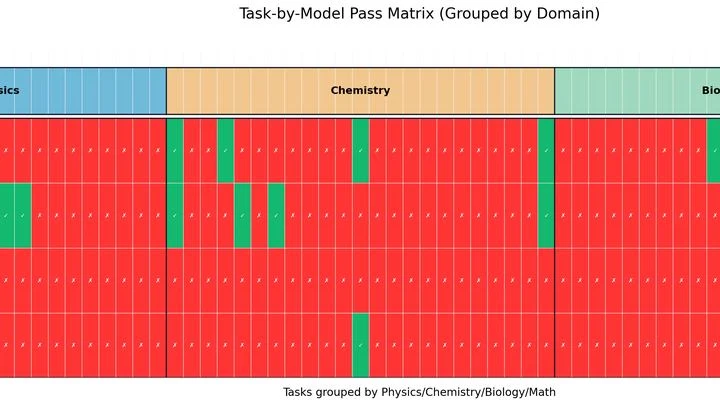
The best AI assistant for scientists scored worse on this exam than a C student on a pop quiz. Just 21% correct answers, and that's the ceiling for the four strongest models. The problems for the new test were written not by programmers but by graduate students: people who deal with real science every day.
The test is called COMPOSITE-STEM.
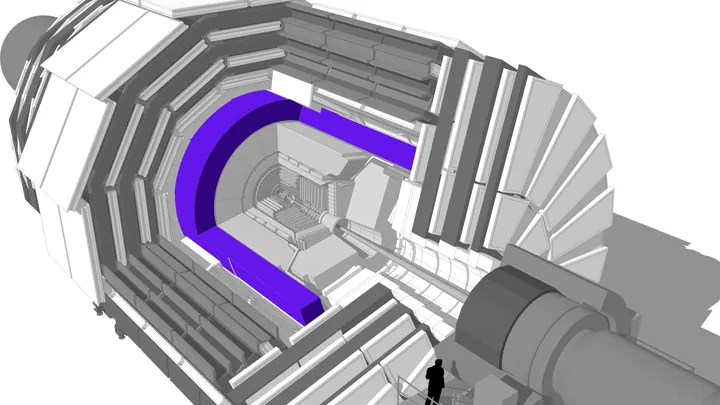
A physicist analyzing particle collisions typically spends weeks on dull work: cleaning noise from data, estimating how many false signals will slip through, double-checking every number. Now that routine can be handed to a program.
Science is like a city where residents pave the streets themselves. Where paths are already worn, new houses go up, while untouched vacant lots go unnoticed — not because building there is impossible, but because no one ever looks.
Science is a vast kitchen where scientist-cooks seek new recipes. Once, they sifted ingredients by hand; now artificial intelligence, a seasoned chef, lends a hand. AI memorizes millions of flavors and suggests surprising pairings: through information search, the algorithm uncovers hidden patterns.
In 1867, James Clerk Maxwell imagined a demon that sorts gas molecules and thereby violates the second law of thermodynamics. The demon needs to know the speeds of the particles. In the quantum world, a similar task arises: keep entanglement from growing like an avalanche, but you cannot observe the entire system.