Event selection is a data analysis technique used in experimental physics to isolate rare or faint signals from a noisy background. In any measurement, detectors record a vast number of events, most of which are uninteresting background noise. Event selection applies a set of criteria — cuts on energy, timing, spatial correlations, or more complex machine-learned patterns — to decide which events are kept for further analysis and which are discarded. This is crucial in fields like gravitational wave astronomy, particle physics, and quantum optics, where the signal of interest might be buried in millions of noise events.
History
The technique has been used since the early days of particle physics in the mid-20th century, evolving from simple hardware triggers to sophisticated software-based selection. Machine learning-based event selection became widespread in the 2010s, particularly in high-energy physics experiments at the Large Hadron Collider.
How it works
The process begins with defining what a signal event looks like, based on theoretical predictions or simulations. Then, for each detected event, a set of features is computed — for example, the shape of a pulse, the direction of a particle track, or the correlation between two detectors. Events that match the expected signature are kept, while others are rejected. Modern approaches use machine learningclassifiers that can learn subtle patterns distinguishing signal from noise, often achieving far better efficiency than simple threshold cuts.
In practice
Essential for detecting gravitational waves from black hole mergers, finding rare particle decays, and extracting quantum signals from noise in experiments like quantum key distribution.
Fun fact
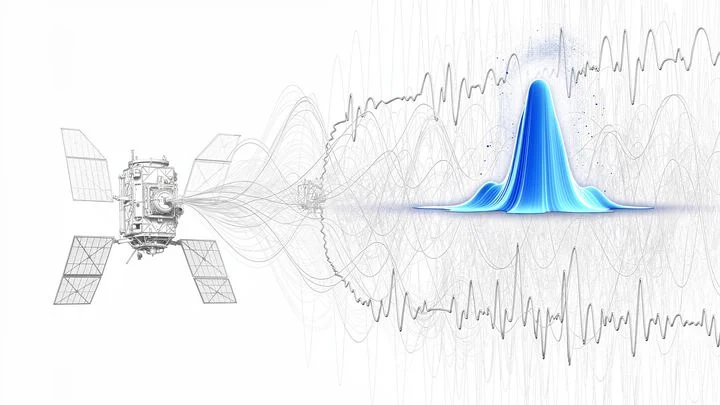
In the search for gravitational waves, event selection algorithms must pick out signals that stretch and compress spacetime by less than the width of a proton, from data streams containing vibrations from earthquakes, traffic, and other terrestrial noise.
One hundred milliseconds. In that time, after a lightning strike or a short circuit, the power system either returns to normal operation or loses stability. A new-generation Neural Network Oscillations learns to sense this moment, like an experienced tightrope walker anticipating a gust of wind.
Two hundred million stars. In the heart of the Galaxy, where the future survey by the Nancy Grace Roman telescope will aim, about 250 times during its mission the light of one of them will flicker at an invisible touch.
In 2019, the world saw the first image of a black hole's shadow — an orange doughnut on a black background, becoming a symbol of scientific progress. But this image wasn't captured by a camera: it was born from mathematical alchemy, where data from eight radio telescopes, which gathered only crumbs of signal, merged into a single picture.
Unlike regular cameras, event-based ones only record moments when light becomes brighter or dimmer. They don't produce snapshots; instead, they send an endless stream of such flashes. Scientists turned this stream into a sharp picture of the Earth while flying over it on a satellite. Each flash is like a piece of a mosaic; together they form a still image.
Traditional hearing aids resemble a chef who cooks from a recipe blindly. They analyze the sound chaos from the microphone and amplify speech based on it. In a noisy café, this approach often errs. The new system behaves like an experienced cook: first processes the signal, then samples the result.
Human hearing is wired so that the brain prioritizes familiar patterns — a friend's voice, the patter of rain, a car horn. But a new system works on a different principle: it registers any sound burst, even one never encountered before.
The gamma sky, captured by the Fermi telescope, is a grand symphony of thousands of sources. Here, the rhythmic pulsations of pulsars, the powerful chords of active galactic nuclei, but most of all — unidentified objects, whose part remains a mystery.
A black hole is not a frozen void, but a living magnetic engine. Its 'heart'—the accretion disk, pulsates: inhale, matter spirals into the funnel, exhale — magnetic reconnection tears the field lines, and plasma shoots away from the horizon.
Picking out a single faulty microchip from a million, without any clue what the fault looks like, is a classic needle-in-a-haystack problem. A classical computer would test each chip one by one.
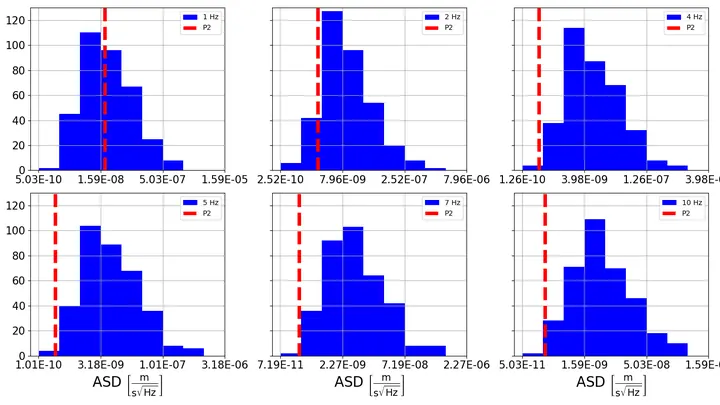
A giant musical instrument hides underground. It picks up not sound but the trembling of space itself — gravitational waves from the mergers of dead stars. But this instrument has a problem: it is bothered by Earth's 'breathing.' Winds, storms, even the changing seasons make the ground vibrate, creating noise.
Two heavy balls orbit on the surface of a pond. Ripples spread from them: these are gravitational waves. As the balls spiral closer, the waves carry away energy, and the ripples become more frequent.
When matter is compressed to pressures of millions of atmospheres and heated to thousands of degrees, it is neither solid nor gas. This warm dense state is like the interiors of giant planets or the moment of a meteorite impact. You can't look inside directly, but you can shine X-rays and see how they scatter off electrons.
Particle detectors such as resistive plate chambers (RPCs) work like sensitive traps: when a charged particle flies through, it generates an electrical signal. But sometimes the chamber fires a false hit, as if an invisible hand pressed a doorbell. These spurious signals muddy the picture and make it harder to pinpoint the particle's path.
To spot a dim star above a brightly lit city, astronomers subtract one image from another — removing the glare of streetlights. They do the same with living neurons: their faint flashes drown in noise, but if you subtract everything unchanging, only they remain.
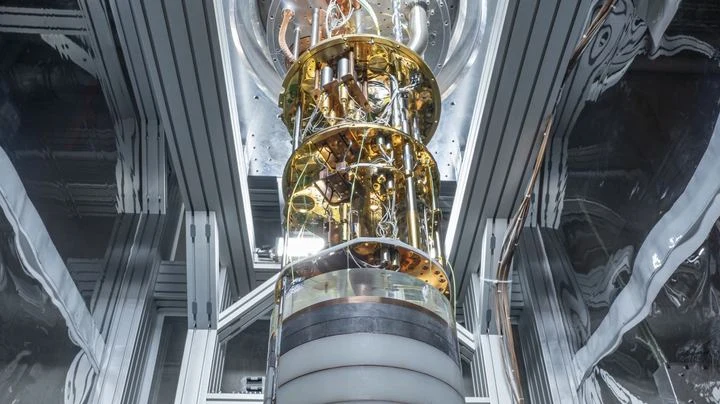
In a dark chamber where the temperature sits just four degrees above absolute zero, a sapphire crystal the size of a grain of rice lies waiting. When a neutrino, a ghostly particle that barely notices matter, flies through it, the crystal shudders and warms by a tiny fraction of a degree.
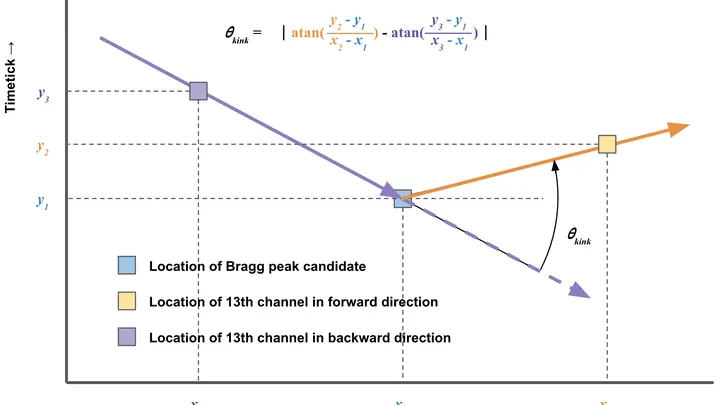
The MicroBooNE detector is a large tank of liquid argon that catches particles flying through it. When a particle passes, it leaves a trail of charge and a flash of light. These trails combine into a three-dimensional picture of the event, as if the particle were drawing its path in a transparent cube.
In a vast, dark hall, they're searching for a single person who makes almost no sound. That's how physicists hunt for sterile neutrinos — ghostly particles that pass through matter, leaving barely a trace.
In the ocean, sometimes a huge solitary wave appears out of nowhere and then vanishes. Such rogue waves are rare but dangerous. Similar rare and intense spikes occur in other systems, from financial markets to lasers. The problem is that they are hard to predict, let alone trigger on demand.
Detecting a faint signal against a noise background is like trying to hear a distant bell in a storm. Ordinary amplification only makes the din more deafening. Quantum error correction solves the problem in an unexpected way.
In 1997, the Pacific Ocean warmed so much that corals bleached from Indonesia to the Galápagos, and floods and droughts swept across five continents. Such events, which climate scientists call extreme El Niños, occur every few decades, and to understand how often they will arrive in the future, we need thousands of years of observations.