Light Instead of Current: Switching Magnetic Domains express
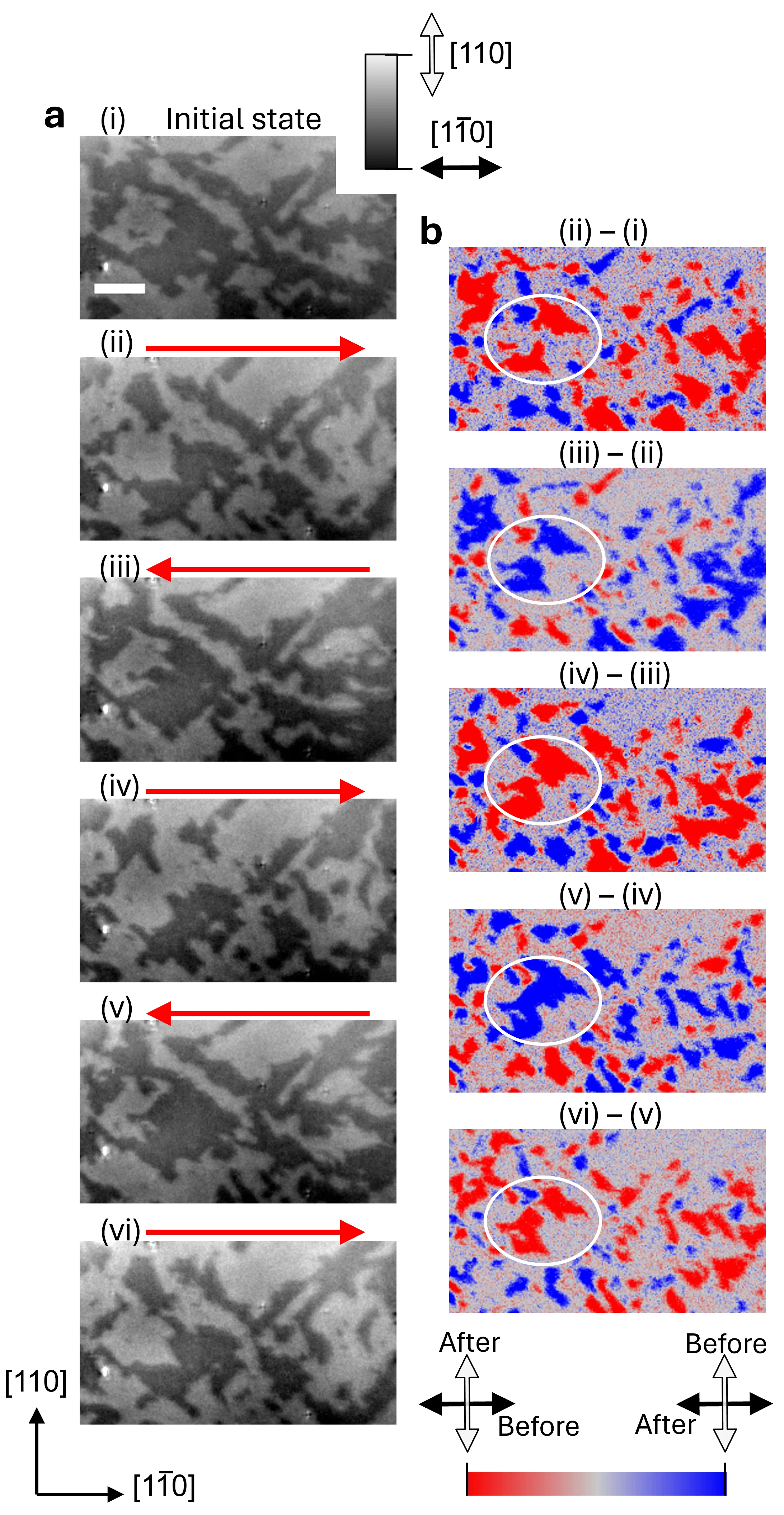
In a thin nickel oxide film, magnetic regions are arranged in strict order like mosaic pieces. A single laser pulse instantly heats the material, and the mosaic falls apart: domains lose their orientation and mix. Scientists captured this process using magneto-optical imaging — a technique that reveals magnetic structure through changes in light polarization.
But the trick doesn't end there. If the laser beam doesn't just shine on one spot but slowly moves across the surface, it creates a temperature difference. This difference acts on domain boundaries like an invisible hand, nudging them sideways. By changing the direction of the beam's motion, the researchers reversibly switched domains by 90 degrees — all without a single wire or electric current.
This way of controlling magnetic order matters for future memory. Antiferromagnets don't produce an external magnetic field, so neighboring memory cells don't interfere with each other. And optical switching can be hundreds of times faster than current-induced magnetization reversal. The film again resembles a mosaic, but now its pattern can be changed with a single sweep of the beam, like an artist who doesn't touch the canvas with a brush but merely directs light.
Antiferromagnets barely respond to external magnetic fields, so their domains were long considered "invisible" to conventional methods. Magneto-optical imaging allowed them to be seen directly for the first time.
In Arthur C. Clarke's novel "The Light of Other Days," information is written by light directly into the structure of matter — similar to optical domain switching, only in science fiction it works at a distance and without heating.