A temperature gradient is the rate at which temperature changes over a given distance. In physics, it is the driving force behind heat transfer — from the microscopic jostling of atoms in a warm rod to the colossal convection currents inside stars and planets. Wherever there is a temperature difference, energy tends to flow from hot to cold, and this flow can organize matter in surprising ways, from generating magnetic fields to spinning up stars.
History
The concept of temperature gradient was formalized in the early 19th century by Jean-Baptiste Joseph Fourier, who in his 1822 work 'Théorie analytique de la chaleur' introduced the heat equation relating heat flow to the temperature gradient.
How it works
The gradient is a vector: it points in the direction of the steepest temperature increase, and its magnitude tells how quickly temperature rises per meter. In a fluid, a strong gradient makes hot, less dense material rise and cool, denser material sink — convection. This motion of electrically conducting fluid, combined with rotation, can stretch and twist magnetic field lines, a process called a dynamo. In solids, the gradient drives heat conduction via atomic vibrations or free electrons, and in plasmas it can also set up electric fields and currents.
In practice
Temperature gradients are exploited in thermoelectric generators (used in space probes like Voyager) to convert heat from radioactive decay into electricity, and in heat exchangers, cooling systems, and weather prediction models.
Fun fact
The Sun's magnetic cycle — the 11-year sunspot rhythm — is driven by the temperature gradient across the solar convection zone, which makes the plasma churn like a boiling pot.
Units by system: SI: kelvin per meter · CGS: kelvin per centimeter
Drop a pebble into a pond, and ripples spread across the water. In much the same way, any body, even the tiniest, perturbs the gravitational field around it. In empty, cold space, these perturbations, like ripples on a calm surface, make two nearby objects always repel each other.
Cosmic rays do not travel in straight lines. Charged particles accelerated to enormous speeds loop through the Galaxy's magnetic field like dust motes in a gust of wind. It's usually assumed that they simply scatter along and across field lines.
A hot infant and a cold adult — the same neutron star looks different. Just born in a supernova explosion, it is scorching hot at tens of billions of degrees. But as time passes, it cools, contracting like cooling metal. For the star PSR J1012+5307, this transition means an almost twofold reduction in radius.
The planet WASP-121 b is a gas giant, heated to 2500°C. It always faces its star with one side, like a globe frozen under a lamp. But as it passes in front of the star's disk, its rotation reveals different facets to us — as if that globe were slowly turned, letting us peer into every corner.
The Sun is a boiling cauldron of hydrogen and helium, where scorching gas is caught in magnetic snares. When invisible ropes reconnect, energy comparable to billions of thermonuclear explosions is released. Where does it go?
Tea in a cup cools quietly on the table. But if you zoom past at near-light speed, the thermometer will read higher — even though no one heated the tea. Calculations confirm: the needle will creep up.
A century ago, physicists split into three camps.
A lithium-ion battery is like a multi-story building where lithium ions live on every floor. When you charge the battery, the ions move from floor to floor, and the whole building warms up a bit. Usually, this heat dissipates evenly, like from underfloor heating. But sometimes one spot gets too hot, and then the whole building can go up in flames.
Interstellar space is not empty: it is filled with tenuous gas, which is warm in some places and cold in others. The boundaries between such regions resemble the walls between soap bubbles.
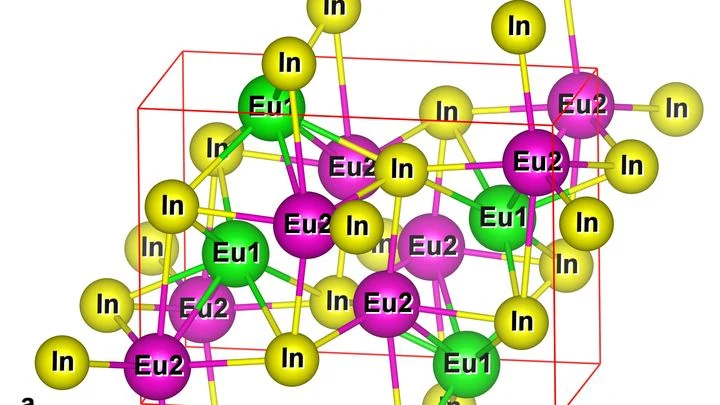
A piece of europium-indium alloy, when cooled in a magnetic field, behaves like water that does not freeze all at once but first in one corner of the glass, then in another.
Ice on a warm frying pan doesn't just melt: it starts to move. A thin layer of water forms beneath it, and the piece glides as if on oil. The speed of this sliding depends on how quickly heat travels through the water film and how steep the incline is.
In an ordinary wire, heat drives electrons: that's the Seebeck effect, familiar from thermocouples. But in magnets, things are trickier: charge carriers also carry spin, their own little 'top.' In some materials, called altermagnets, electrons with different spins interact differently with the crystal lattice, so a…
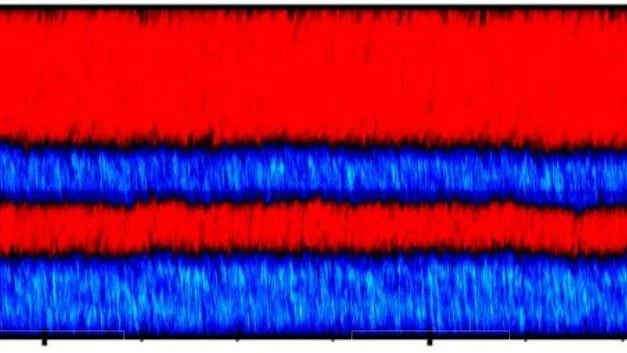
A pot of water heated from below is a simple example of turbulence. Hot fluid rises, cold fluid sinks, and the flow spontaneously breaks into rotating cells that look like horizontal rolls. In a new study, physicists took a wide rectangular container (ten times longer than its height) and tracked how many such rolls appear.
Deep beneath our feet, at the very center of Earth, lies a solid iron core. But it's not pure iron — there are lighter elements too, such as hydrogen. Exactly how hydrogen is distributed within the core has long been a mystery.
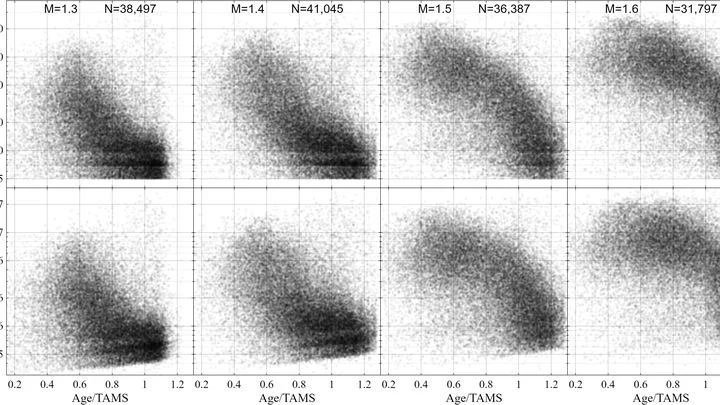
The Gaia space telescope has measured how fast more than a hundred thousand stars spin. It turns out that a star's rotation speed depends on its temperature. For stars cooler than 6500 degrees, the surface moves at 10–20 kilometers per second.
Water in a glass cools, ice melts, and a kettle heats the stove: that's how the world works: heat always flows from hot to cold. This is the second law of thermodynamics, a law that has never been broken.